


Two-Stage Screw Air Compressor in China: 2026 Manufacturer Selection Guide
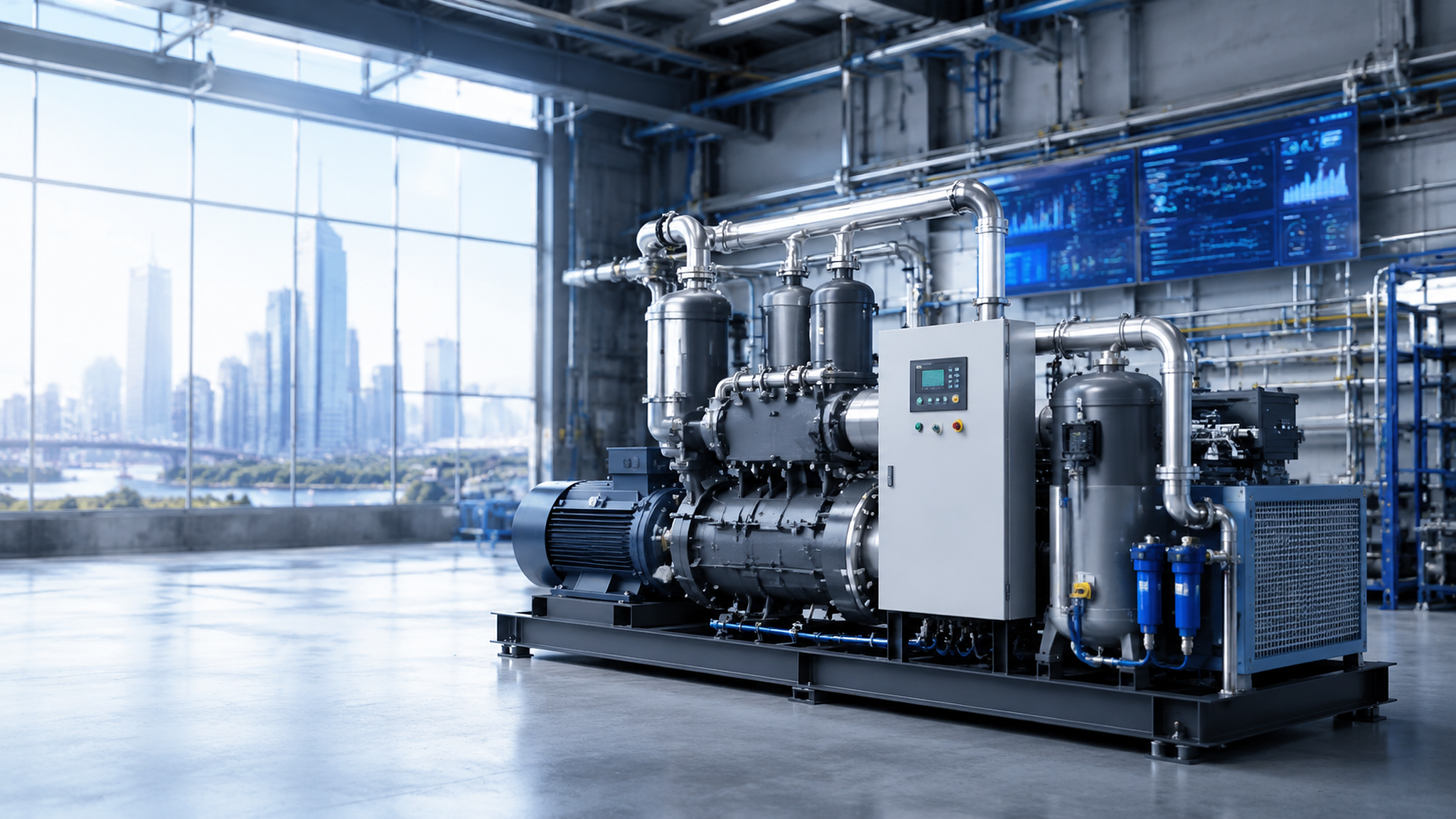
What should you look for when purchasing Two-Stage Screw Air Compressor in China? It is a question that facility managers and procurement professionals grapple with regularly, and for good reason. A compressor purchase represents a significant capital investment that directly impacts production efficiency, energy costs, and maintenance budgets for years to come. Making the wrong choice can cost a factory hundreds of thousands of yuan in unnecessary electricity bills and lost productivity over the equipment’s lifespan.
This guide provides a structured framework for evaluating Two-Stage Screw Air Compressor options in the China market. We cover specification analysis, manufacturer evaluation, cost modeling, and implementation planning — everything you need to make a confident, well-informed purchasing decision that aligns with your facility’s specific requirements and operational goals.
Step-by-Step Guide to Selecting Two-Stage Screw Air Compressor in China
Selecting the right Two-Stage Screw Air Compressor for your China facility does not need to be complicated, but it does require a systematic approach. This step-by-step guide provides a structured process that will help you evaluate your options and make a confident decision.
Step 1: Define Your Compressed Air Demand — Measure your actual air consumption over a representative period. If measurement is not possible, estimate demand by inventorying all air-consuming equipment and calculating total demand with appropriate diversity factors. Add 20-30% for future expansion and system losses.
Step 2: Determine Your Air Quality Requirements — Identify the highest air quality requirement among your applications. If any application requires oil-free air, that will drive the compressor selection toward oil-free technology. Also determine the required pressure dew point and particulate filtration level.
Step 3: Evaluate Technology Options — Based on your demand profile and air quality requirements, evaluate the available technology options. For variable demand with 4,000+ annual operating hours, VFD technology is strongly recommended. For constant high-pressure applications, two-stage compression should be considered.
Step 4: Compare Supplier Proposals — Request proposals from at least three qualified suppliers. Evaluate proposals based on lifecycle cost, not purchase price. Verify service capabilities and warranty terms. Request references and follow up on them.
Step 5: Make a Confident Decision — Combine the technical evaluation, financial analysis, and supplier assessment into a weighted decision framework, balancing quantitative factors with qualitative factors.
Heat Recovery Systems: Unlocking Hidden Value in Two-Stage Screw Air Compressor
One of the best-kept secrets in industrial compressed air is that approximately 90% of the electrical energy consumed by a screw compressor is converted into heat. In a typical Two-Stage Screw Air Compressor installation, this heat is simply dissipated to the atmosphere through the cooling system — representing a substantial missed opportunity for energy recovery. Modern heat recovery systems can capture 70-80% of this waste heat and repurpose it for facility heating, process hot water, preheating boiler feedwater, or other thermal applications.
For China manufacturing facilities operating compressors year-round, the potential savings from heat recovery are substantial. A 75kW compressor operating 6,000 hours per year generates approximately 400,000 kWh of thermal energy annually — equivalent to the heating needs of 30-40 typical homes. Capturing even 70% of this energy can reduce facility heating costs by ¥100,000-200,000 per year, depending on local energy prices and the efficiency of the heat recovery system.
Heat recovery systems are available in several configurations to suit different facility requirements. The simplest approach uses the compressor’s existing oil cooling circuit to transfer heat to a water loop, which can then be used for space heating via fan coils or radiant heating panels. More sophisticated systems integrate with the facility’s central heating or process hot water system, providing year-round thermal energy.
When evaluating Two-Stage Screw Air Compressor for your China facility, consider whether heat recovery capability should be a selection criterion. While not all compressor installations are suitable for heat recovery, for facilities with significant year-round heating requirements, the additional investment in heat recovery infrastructure can deliver returns that rival or exceed the energy savings from the compressor’s efficiency features alone.
Compressed Air Quality Standards for China Industries
The quality of compressed air required varies significantly across different industrial applications, and selecting the appropriate air quality level for your operations has important implications for both equipment selection and operating costs. The international standard ISO 8573-1 defines nine purity classes for compressed air based on solid particle content, water content, and oil content, with Class 1 being the highest purity and Class 9 the lowest.
For general China manufacturing applications such as pneumatic tools, material handling, and machine actuation, ISO Class 4-5 air quality is typically sufficient. This level of air quality can be achieved with a standard oil-injected Two-Stage Screw Air Compressor followed by a refrigerant dryer and basic particulate filtration — a relatively modest investment in air treatment equipment.
Higher quality requirements drive significantly higher air treatment costs. ISO Class 1-2 air quality, required for applications such as pharmaceutical manufacturing, food and beverage processing, electronics fabrication, and critical instrumentation, demands oil-free compressors or comprehensive filtration, desiccant or membrane drying, and careful attention to the entire compressed air system. The total cost of a Class 1 compressed air system can be 2-3 times that of a Class 4 system, making it important to match air quality specifications precisely to actual production requirements.
When evaluating Two-Stage Screw Air Compressor options for your China facility, clearly define your air quality requirements before selecting equipment. Overspecifying air quality drives unnecessary capital and operating costs, while underspecifying risks product quality issues or equipment damage. If your air quality requirements vary across different production areas, consider a zoned approach with appropriate treatment at each zone level.
Troubleshooting FAQ: Common Two-Stage Screw Air Compressor Issues
Why does my Two-Stage Screw Air Compressor keep tripping the overload relay?
Most common cause is low supply voltage. Check voltage at compressor terminals during operation. Other causes include mechanical binding, incorrect relay setting, failing motor, or excessive ambient temperature.
What causes oil in the compressed air lines?
Most common is a saturated or damaged oil separator element. Other causes include restricted oil return line, overfilling with oil, high system back pressure, or using wrong oil type.
Why is my compressor running continuously without unloading?
Most likely cause is an air leak in the distribution system. Other possibilities include faulty pressure switch/transducer or restricted intake filter. Check for leaks first using ultrasonic detection or by checking pressure drop when the compressor is stopped.
Common Two-Stage Screw Air Compressor Problems and Troubleshooting Guide for China Users
Even the best-maintained Two-Stage Screw Air Compressor can experience operational issues. This troubleshooting guide covers the most common problems and provides a systematic approach to resolving them.
Problem: Compressor fails to start — Check power supply and electrical connections. Verify safety interlocks are satisfied. Check controller display for error codes. For VFD units, verify the VFD is powered and not reporting a fault.
Problem: Low discharge pressure — Check for excessive air demand. Inspect air filter for clogging. Check for leaks in the distribution system. Verify pressure control settings and sensor function.
Problem: High discharge temperature — Check oil level. Inspect oil cooler for dirt or debris. Verify ambient temperature is within design range. Check oil filter for clogging.
Problem: Excessive oil consumption — Check oil separator element for saturation. Inspect oil return line and check valve. Verify correct oil level. Check for air filter restrictions.
Problem: Unusual noise or vibration — Check for loose mounting bolts. Inspect coupling alignment (direct-drive) or belt condition (belt-driven). Listen for bearing noise. For persistent issues, conduct vibration analysis.
Preventive Maintenance Schedule for Two-Stage Screw Air Compressor in China
A well-planned preventive maintenance (PM) program is essential for maximizing the life and efficiency of your Two-Stage Screw Air Compressor investment. Studies show that a properly maintained compressor consumes 5-10% less energy than one receiving only reactive maintenance, and its service life can be extended by 30-50%.
Daily tasks: Check oil level; inspect for oil leaks; monitor discharge temperature; check operating pressure and temperature readings; listen for unusual noises; drain condensate from the receiver tank.
Weekly and monthly tasks: Inspect and clean air filter elements; check belt tension; verify safety valve operation; inspect electrical connections; check VFD cooling fan; review operating data for trends.
Quarterly and annual tasks: Perform oil analysis; replace oil and oil filter; replace air filter and oil separator; inspect and clean cooling system; check sensor calibration; conduct full system performance test.
For China manufacturers, maintaining a detailed maintenance log that records all inspections, measurements, and component replacements is essential for tracking the compressor’s condition over time.

Visual Guide: How Two-Stage Screw Air Compressor Compares
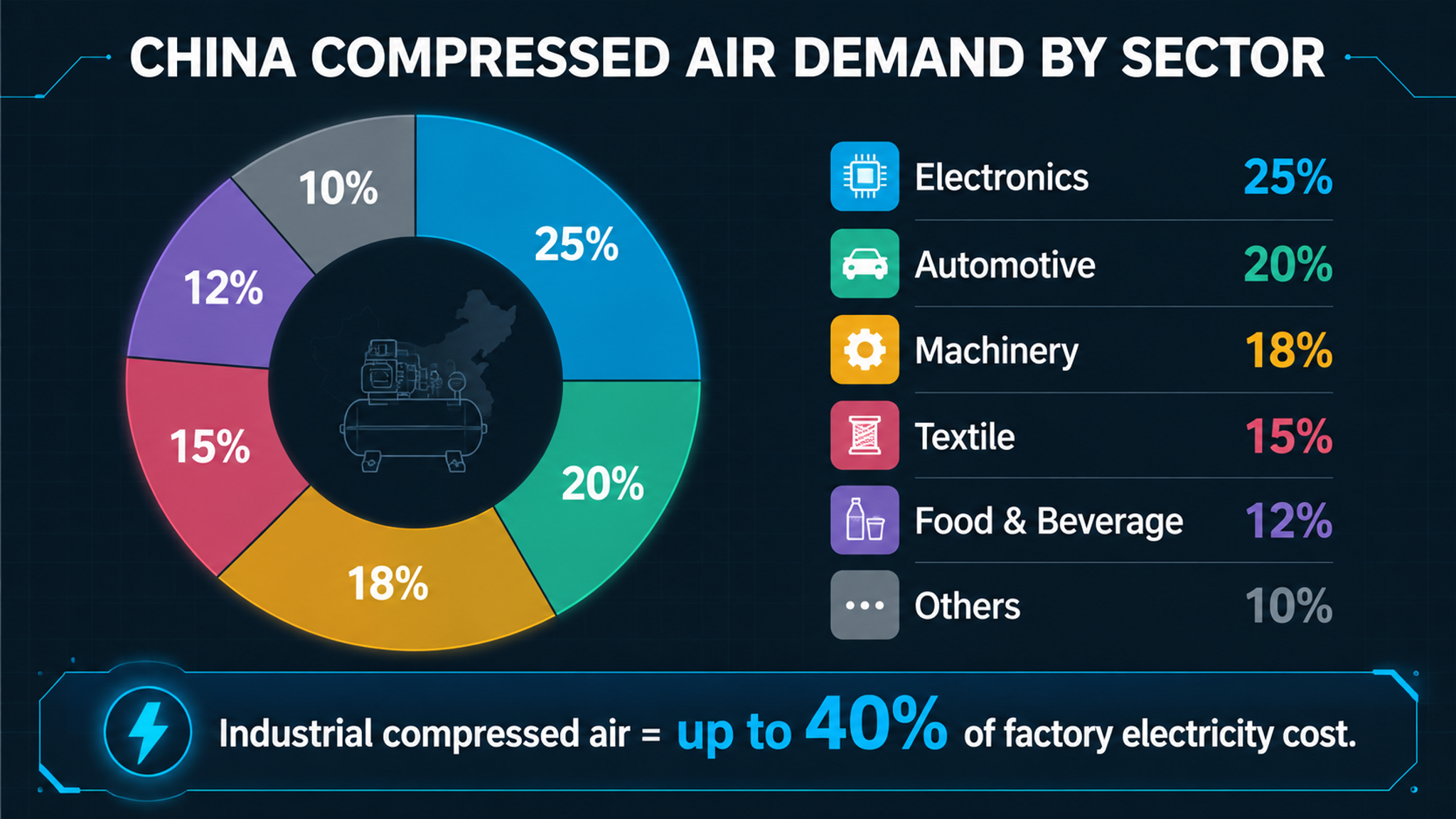
Visual Guide: Compressor Selection Process
[Flowchart: A step-by-step visual guide to selecting the right Two-Stage Screw Air Compressor in China, starting from demand measurement and air quality requirements through technology evaluation, supplier comparison, and final decision.]
Two-Stage Screw Air Compressor for Automotive and Parts Manufacturing in China
The automotive parts manufacturing sector in China is characterized by high-volume production, demanding quality standards, and significant compressed air requirements. From robotic welding cells and automated assembly lines to paint spraying booths and pneumatic testing equipment, automotive production depends heavily on reliable compressed air supply.
Key compressed air requirements for China automotive manufacturers include high reliability, consistent air quality, and energy efficiency. These requirements make automotive manufacturers natural candidates for premium Two-Stage Screw Air Compressor with comprehensive monitoring and service support agreements.
Two-stage compression technology is particularly well-suited for automotive applications, as many automotive processes require pressures at the higher end of the industrial range (10-13 bar). The efficiency advantage of two-stage compression is most pronounced at these higher pressures. VFD technology is also widely adopted, as the demand profile in automotive plants typically varies significantly between production shifts.
For China automotive parts manufacturers, the selection of Two-Stage Screw Air Compressor should be approached as a strategic decision with long-term implications for production reliability and operating costs.
Two-Stage Screw Air Compressor for Metalworking and Machinery Manufacturing in China
Metalworking and machinery manufacturing facilities in China use compressed air for a wide range of applications including CNC machine tools, pneumatic clamping systems, chip removal, and surface finishing equipment. The compressed air requirements vary widely depending on the specific processes involved.
CNC machining centers — common in China metalworking facilities — typically require compressed air at 6-8 bar for tool changing, workholding, and chip evacuation. These applications are sensitive to pressure drops and benefit from stable pressure supplied by well-designed systems. The intermittent nature of machining operations often creates variable air demand patterns that favor VFD compressor technology.
Surface finishing and coating operations require clean, oil-free air to prevent surface defects. For these applications, appropriate filtration and drying equipment is essential, and oil-free compressors may be specified for the most demanding finishing operations.
For China metalworking and machinery manufacturers, the selection of Two-Stage Screw Air Compressor should consider both general shop air requirements and any special requirements for finishing or coating processes.
Environmental Data: Carbon Emissions and Sustainability
In the China power grid, the average carbon emission factor is approximately 0.8-0.9 kg CO₂ per kWh. For a 75kW compressor operating 6,000 hours per year, annual carbon emissions are approximately 325 metric tons of CO₂. A 30% reduction in energy consumption would reduce emissions by approximately 98 metric tons annually.
Beyond energy-related emissions, other environmental considerations include oil management, noise emissions, and end-of-life recyclability. These factors contribute to a comprehensive sustainability profile for China manufacturers committed to environmental responsibility.
ROI Calculation: Making the Financial Case for Premium Two-Stage Screw Air Compressor
Building a convincing return on investment (ROI) case for premium-efficiency Two-Stage Screw Air Compressor is essential for securing internal approval and budget allocation. For China manufacturers, the financial analysis should quantify both the hard savings and the soft benefits.
The basic ROI calculation follows this formula: Total Investment = Equipment Cost + Installation Cost + Training Cost. Annual Savings = Energy Savings + Maintenance Savings + Quality Savings + Tax Benefits. Simple Payback = Total Investment ÷ Annual Savings. For well-selected compressor upgrades in China facilities, simple payback periods typically range from 12 to 30 months.
A more sophisticated analysis uses discounted cash flow (DCF) methodology to account for the time value of money. Using Net Present Value (NPV) and Internal Rate of Return (IRR) metrics, the analysis considers: the initial investment; projected annual savings over the equipment’s expected life of 10-15 years; the cost of capital; inflation in electricity costs; and the residual value at end of life.
For China manufacturers, the financial case for premium Two-Stage Screw Air Compressor is typically compelling. A well-selected premium compressor with VFD technology and high-efficiency motor will almost always generate a positive NPV over its operating life, with IRR values typically exceeding 30%.
Investment Perspective: Two-Stage Screw Air Compressor as a Strategic Asset
Viewing Two-Stage Screw Air Compressor through the lens of strategic asset management can transform how China manufacturers approach their compressed air investments. A compressor is not merely a utility — it is a production-critical asset whose performance directly impacts competitiveness, efficiency, and environmental performance.
Strategic metrics include: energy cost per unit of production output; compressed air availability as a percentage of production time; and compressed air cost as a percentage of total facility operating costs. Manufacturers who adopt this strategic approach achieve measurably better outcomes.
For China manufacturers ready to take this strategic approach, PRCompressor (Panrui) offers the expertise, product range, and support infrastructure needed to succeed. Contact us at 13713647073 or prcompressor.com.
Keywords: china manufacturer, industrial air compressor, industrial compressed air, china compressor, screw air compressor, compressor energy efficiency, compressor buyer’s guide, compressor supplier, two-stage screw air compressor, energy saving compressor
Contact PRCompressor (Panrui) for two-stage screw air compressor in China: Phone 13713647073 | prcompressor.com