


Mines, cement plants, foundries, and tropical industrial sites expose compressors to dust, humidity, and ambient temperatures that can exceed 45°C. Under these conditions, standard cooling and filtration components may no longer be enough to prevent overheating and premature wear.
What Happens at High Ambient Temperature
- Cooling efficiency falls as the temperature difference between the machine and the surrounding air decreases.
- Oil ages faster and loses some of its lubricating and cooling ability.
- Electronic components and motors run closer to their thermal limits.
- High-temperature alarms become more frequent during the hottest part of the day.
Features to Specify for Harsh Conditions
- Heavy-duty pre-filters and high-efficiency intake filtration for dust and sand.
- Oversized air-cooled or water-cooled heat exchangers.
- IP65-rated motors and enclosures where dust or washdown exposure is present.
- High-temperature thermostats and robust cooling fan motors.
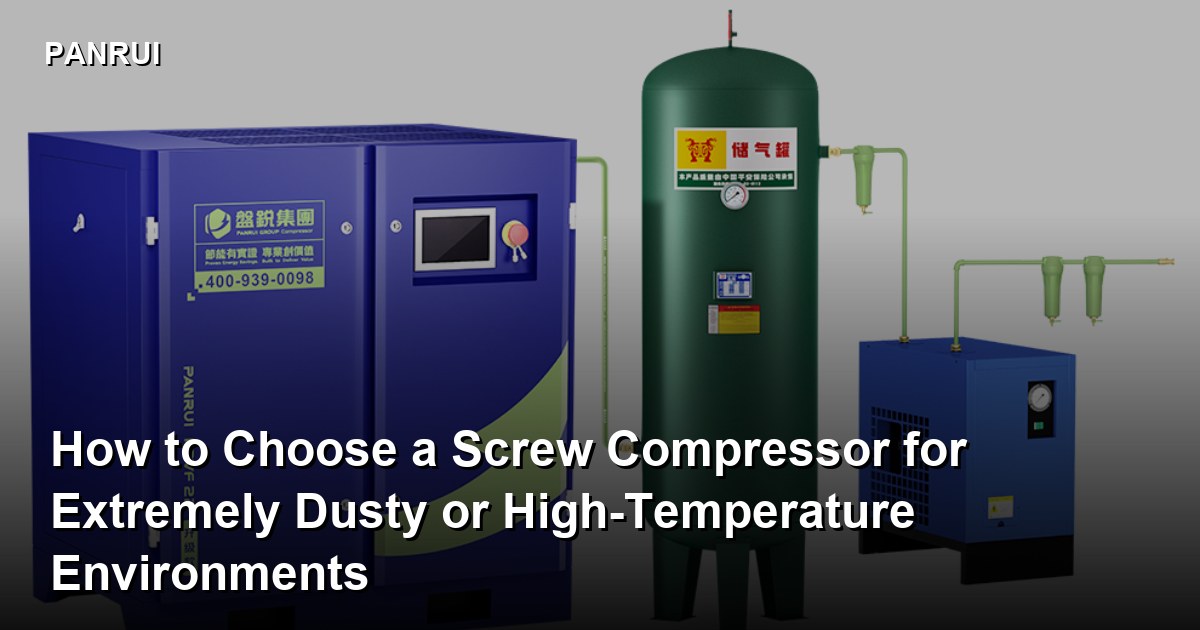
A true heavy duty screw compressor is selected by matching the cooling package, filter media, and electrical protection to the site conditions rather than simply increasing the nominal kW rating.
Efficiency Still Matters in Harsh Sites
IE4 permanent magnet motors and variable-speed control reduce heat generation at part-load operation. A PM VSD screw compressor can improve reliability in sites where the compressor runs at variable demand and where excessive heat is already a concern.
The right specification combines environmental protection, thermal headroom, and efficiency. This reduces high-temperature shutdowns and keeps the compressor serviceable in locations where air quality and ambient conditions are difficult.