


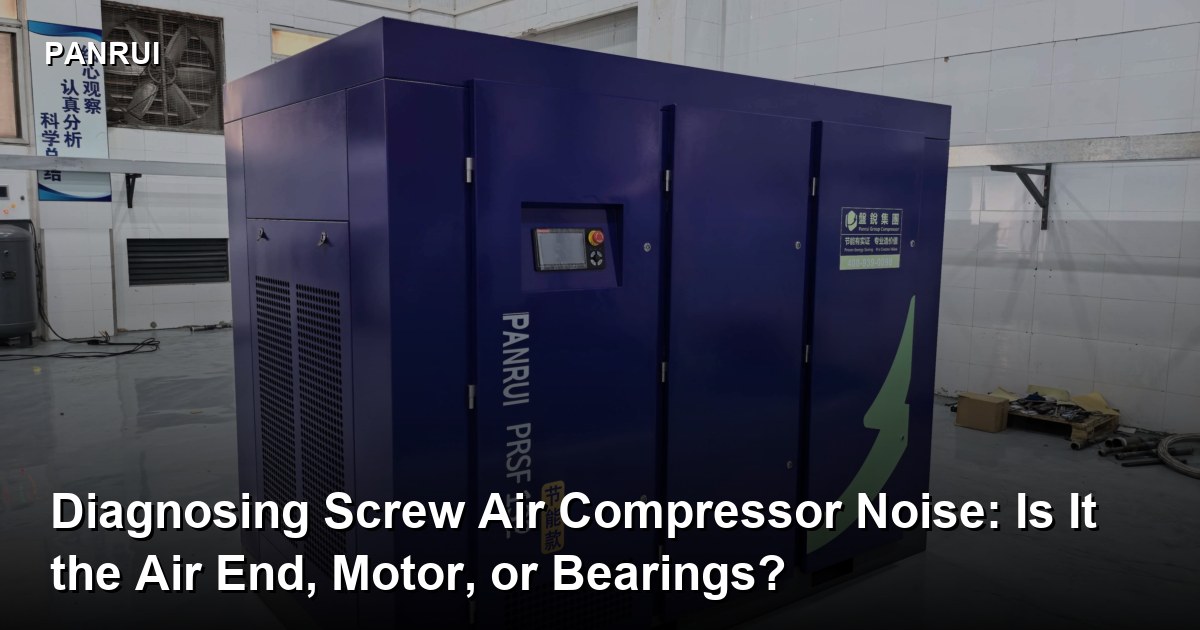
Unusual noise from a screw compressor can come from the airend, motor, bearings, coupling, or ancillary components. Diagnosing the source early is important because some failures become far more expensive if the machine is allowed to run.
Normal Noise vs. Mechanical Rubbing
- Normal screw compressor noise is relatively steady and may change with load.
- A metallic rubbing or scraping sound from the airend may indicate rotor contact or internal damage.
- A sudden change in noise after maintenance can point to incorrect clearances or assembly.
- High-frequency whine may come from the airend or a drive component.
Motor and Bearing Sounds
- Worn motor bearings often produce a rough rumble that increases with speed.
- A slipping belt can squeal during start-up or load changes.
- Worn coupling elements can create rattling or knocking.
- Loose fasteners and guards can cause vibration that mimics a bearing fault.
What to Do When You Hear a Problem
- Record the noise on video so a technician can evaluate it remotely.
- Check oil level, temperature, and pressure before shutting down.
- Inspect the coupling, belt, guards, and mounting bolts.
- Stop the machine immediately if noise is severe or accompanied by high temperature or vibration.
Replacing a damaged bearing early is far cheaper than repairing a seized airend. Using a high quality screw compressor air end and maintaining clean oil helps prevent the most serious failures.
If the source cannot be confirmed, request service support from the rotary screw air compressor manufacturer before continuing production.