


Two-Stage Screw Air Compressor in Dongguan: 2026 Complete Buyer’s Guide
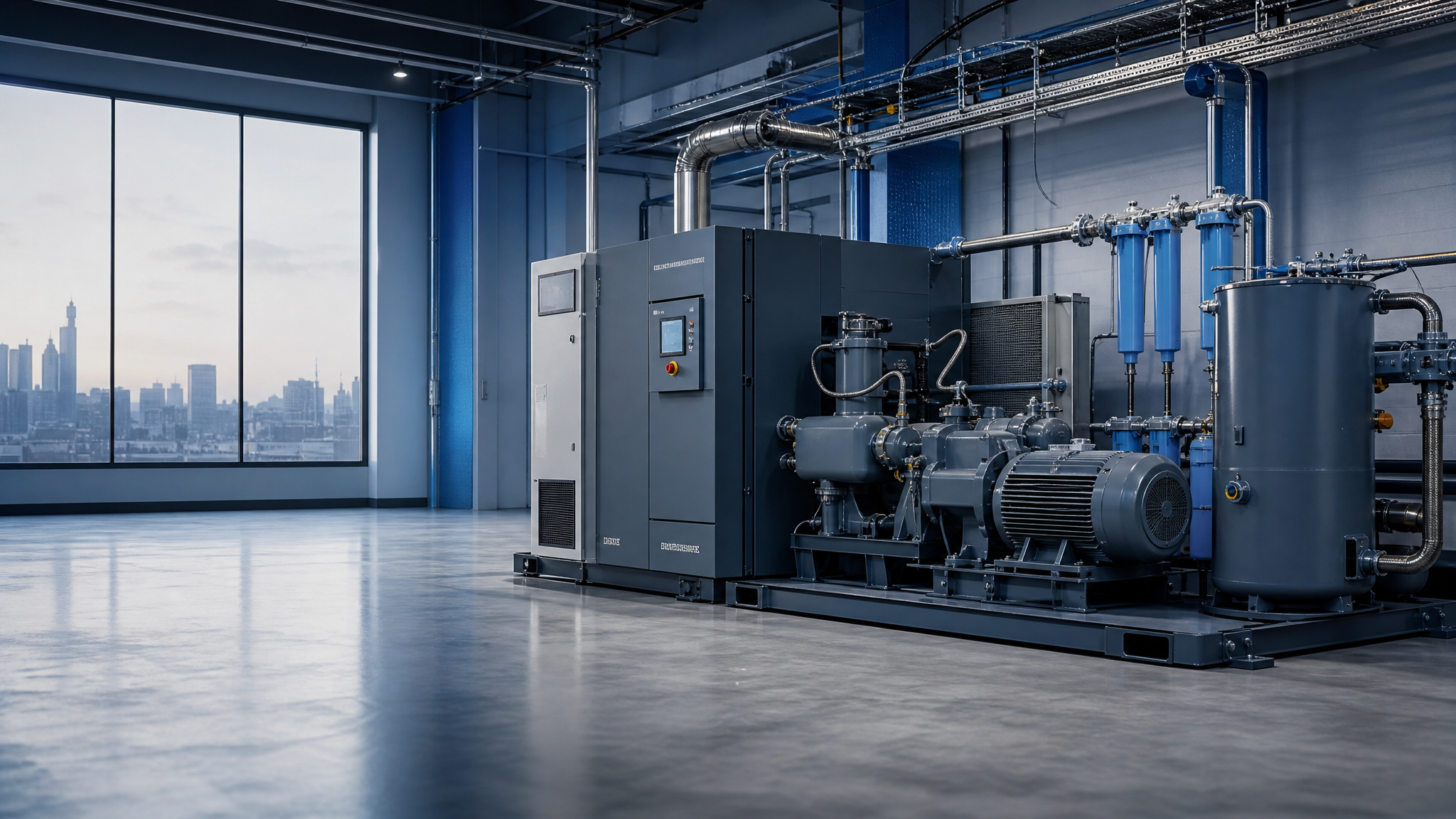
The screw air compressor market in Dongguan offers a diverse range of technologies, from fixed-speed oil-injected units to variable frequency drive (VFD) permanent magnet models and two-stage compression systems. Each technology has distinct advantages and optimal use cases, making it essential for buyers to understand the technical trade-offs involved in selecting Two-Stage Screw Air Compressor. The right choice depends on your specific operational profile, air demand pattern, and performance requirements.
In this detailed guide, we compare the major Two-Stage Screw Air Compressor technologies available in the Dongguan market, examining their operating principles, efficiency characteristics, maintenance requirements, and total cost of ownership. We also provide a structured evaluation framework and practical recommendations to help you select the optimal solution for your manufacturing operation.
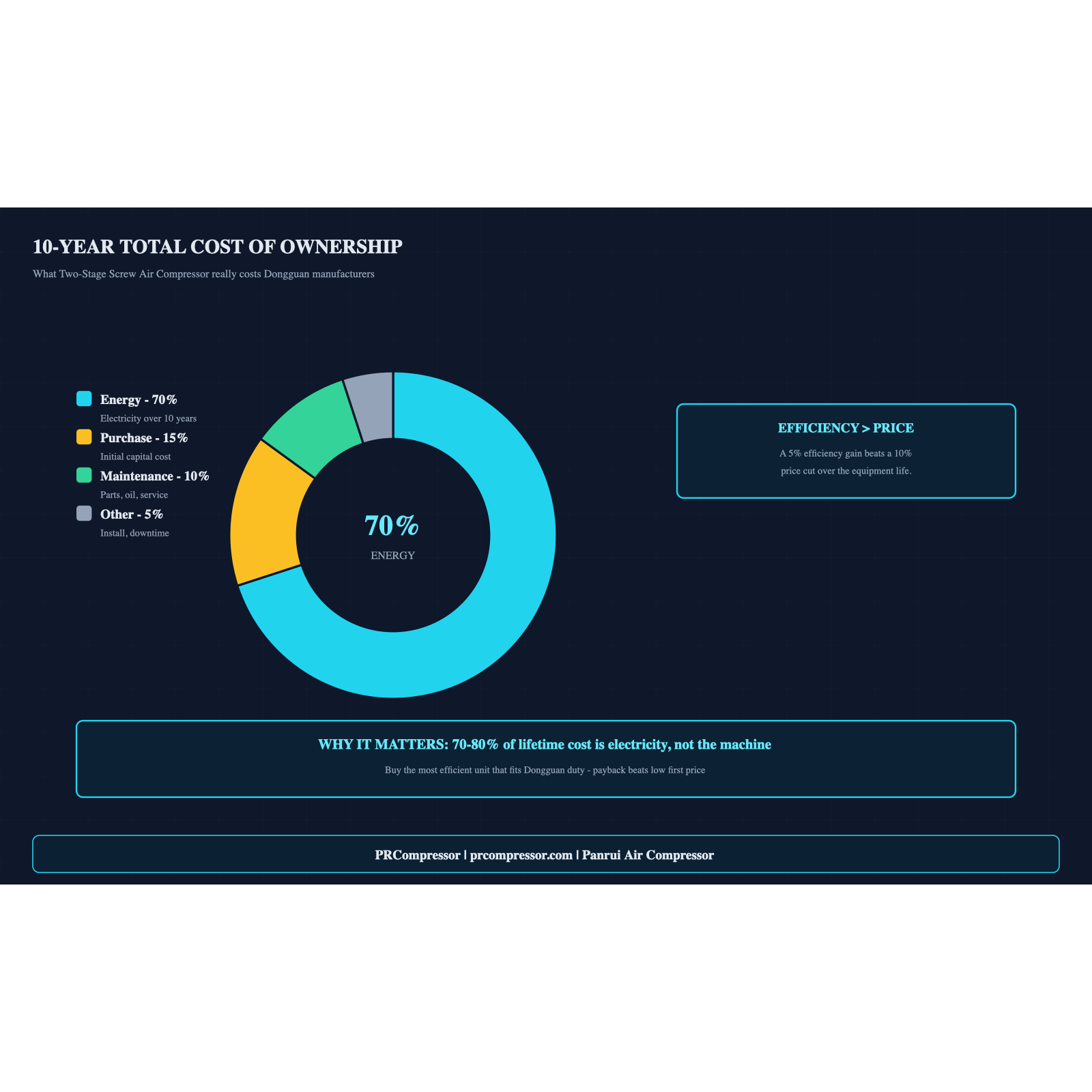
Visual Guide: How Two-Stage Screw Air Compressor Compares
Supply Chain Considerations for Two-Stage Screw Air Compressor in Dongguan
The reliability of your compressed air system depends not only on the compressor itself but also on the supply chain that supports it. For Dongguan manufacturers, understanding the supply chain dynamics for Two-Stage Screw Air Compressor — including lead times, parts availability, and the stability of supplier relationships — is essential for ensuring uninterrupted operation and minimizing downtime risk.
Lead times for new Two-Stage Screw Air Compressor equipment in the Dongguan market vary significantly by manufacturer and model configuration. Domestic manufacturers typically offer the shortest lead times — 7-14 days for standard configurations and 20-30 days for customized units. International brands typically require longer lead times — 4-8 weeks for standard units and 8-12 weeks for special configurations.
Spare parts availability is another critical supply chain consideration. Compressor downtime due to waiting for spare parts can be extremely costly for manufacturing operations. When evaluating Two-Stage Screw Air Compressor suppliers, assess their spare parts inventory levels for the region, their ability to expedite critical parts shipments, and their policies regarding parts availability commitments.
For Dongguan manufacturers with multiple facilities or significant compressed air capacity, developing a strategic relationship with a primary supplier can yield supply chain benefits including priority allocation of scarce parts, preferential pricing, and enhanced technical support.
Financing Options for Two-Stage Screw Air Compressor Investments in Dongguan
The capital investment required for Two-Stage Screw Air Compressor can be substantial, particularly when premium-efficiency equipment is being considered. Fortunately, Dongguan manufacturers have access to several financing options that can make the investment more manageable and accelerate the realization of energy savings.
Traditional equipment financing — including bank loans and equipment leasing — is the most common approach. Equipment leasing offers advantages including preserving working capital and matching payments to the equipment’s useful life. Some compressor suppliers offer their own financing programs with competitive terms designed to facilitate equipment sales.
Energy performance contracting (EPC) is an increasingly popular alternative for efficiency-focused projects. Under an EPC arrangement, a third-party energy service company (ESCO) finances the equipment upgrade, and the manufacturer repays the investment from the energy savings generated by the new equipment. The ESCO guarantees the savings, making this approach attractive for facilities with limited capital budgets.
Government subsidies and incentives for energy-efficient equipment are also available in many regions of China, including Dongguan. These programs typically provide direct subsidies or tax credits for investments in equipment that exceeds minimum efficiency standards. Working with a knowledgeable Two-Stage Screw Air Compressor supplier who understands the available incentives can significantly improve the financial case for premium-efficiency equipment.
Payback Period Analysis for Two-Stage Screw Air Compressor Investments in Dongguan
Payback period is the most commonly used metric for evaluating compressor upgrade projects in Dongguan manufacturing facilities. Replacing an older fixed-speed compressor with a modern premium VFD model typically achieves payback in 12-24 months. Upgrading from standard-efficiency to premium-efficiency typically achieves payback in 18-36 months.
System-level improvement projects often achieve the shortest payback periods. Fixing compressed air leaks can reduce total system energy consumption by 20-30% at costs recovered within 3-6 months. Reducing system pressure by 1 bar saves 6-8% of compressor energy at essentially no cost. These quick-payback projects should be implemented alongside major equipment investments.
For Dongguan manufacturers developing a compressed air system investment plan, a phased approach that prioritizes quick-payback system improvements while also planning for longer-payback equipment upgrades typically provides the best overall financial outcome.
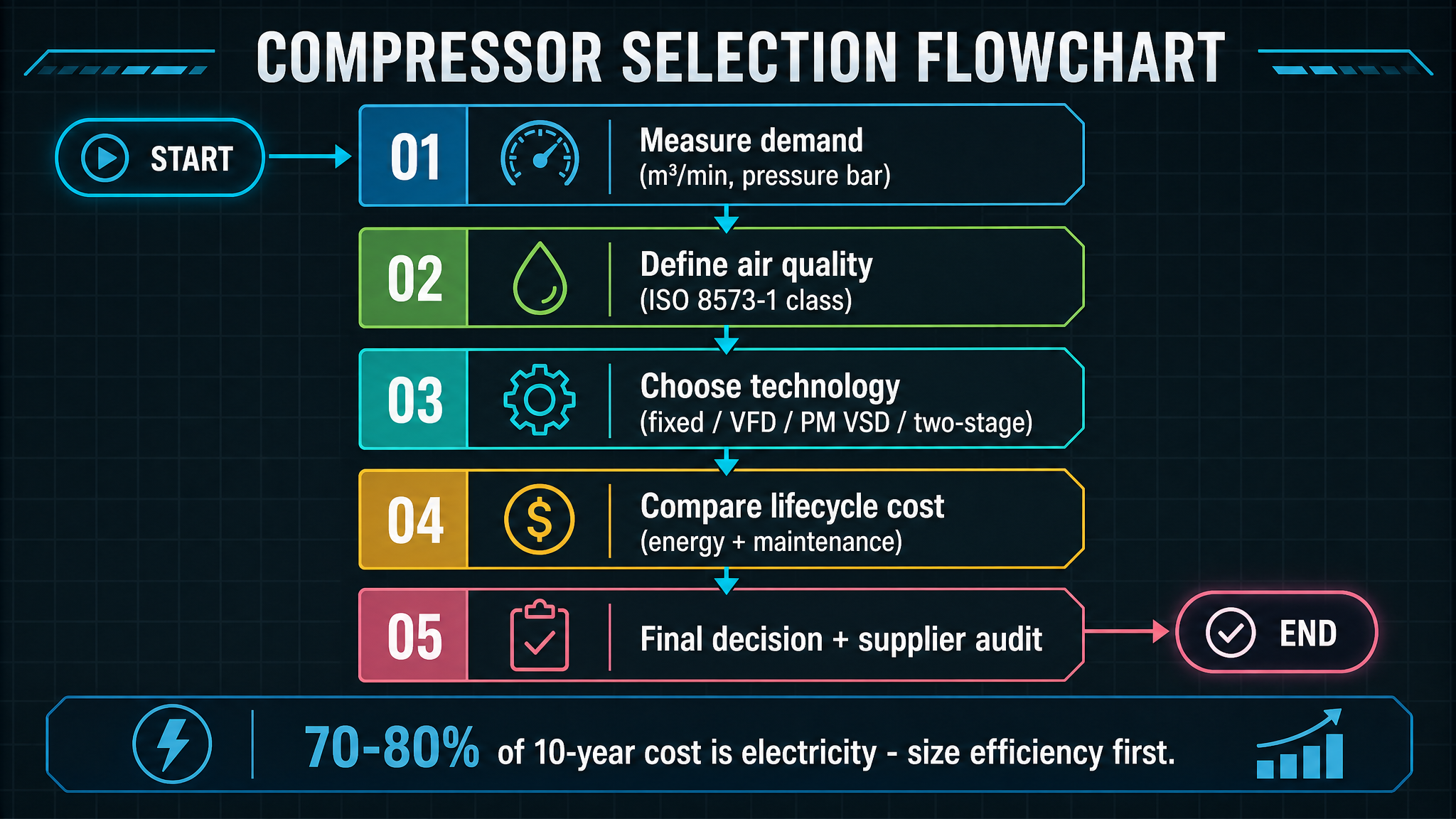
Visual Guide: Compressor Selection Process
[Flowchart: A step-by-step visual guide to selecting the right Two-Stage Screw Air Compressor in Dongguan, starting from demand measurement and air quality requirements through technology evaluation, supplier comparison, and final decision.]
Common Mistakes to Avoid When Buying Two-Stage Screw Air Compressor in Dongguan
Experience shows that Dongguan manufacturers often make predictable mistakes when purchasing Two-Stage Screw Air Compressor. Being aware of these common errors will help you avoid them and make a better procurement decision.
Mistake 1: Buying on Price Alone — The most common and most costly mistake. The compressor with the lowest purchase price is almost never the most economical choice over its operating life. Evaluate proposals based on 5-year or 10-year total cost of ownership, not purchase price.
Mistake 2: Oversizing the Compressor — Many facilities purchase compressors significantly larger than actual needs, causing inefficient part-load operation and wasted energy. Conduct a proper demand assessment and size the compressor to match actual requirements.
Mistake 3: Neglecting System Design — Focusing exclusively on the compressor while neglecting piping, storage, air treatment, and condensate management can negate the benefits of even the best compressor. Evaluate the complete system.
Mistake 4: Ignoring Service Capability — Choosing a compressor without verifying the supplier’s service capabilities in your area is a recipe for future frustration. Verify service network coverage and response time commitments.
Mistake 5: Skipping the Audit — Investing in new equipment without first understanding your current system’s performance is like treating symptoms without a diagnosis. Invest in a professional audit before making procurement decisions.
Two-Stage Screw Air Compressor for Plastic and Rubber Processing in Dongguan
Plastic and rubber processing facilities in Dongguan use compressed air for injection molding machines, blow molding equipment, extrusion lines, and pneumatic conveying systems. These applications have distinct compressed air requirements.
Injection molding uses compressed air for mold actuation, part ejection, and auxiliary equipment operation. The demand profile is characterized by short-duration, high-flow peaks during mold opening and closing cycles, with lower continuous demand for auxiliary equipment. This demand pattern makes properly sized receiver capacity important.
Pneumatic conveying systems for plastic pellets and powders require consistent air pressure and flow to maintain stable material transport. Any interruption or significant variation can cause material blockages. For Dongguan plastic processing facilities, the compressed air system’s reliability directly impacts production continuity.
For Dongguan plastic and rubber processing manufacturers, the selection of Two-Stage Screw Air Compressor should consider both the general plant air requirements and the specific requirements of the plastic processing applications.
Air Leak Management: The Hidden Opportunity in Every Two-Stage Screw Air Compressor Installation
Compressed air leaks are the single largest source of energy waste in industrial compressed air systems, and they are far more costly than most facility managers realize. Industry studies consistently show that the average industrial compressed air system loses 25-35% of its output through leaks. For a Dongguan factory operating a 75kW Two-Stage Screw Air Compressor 6,000 hours per year at ¥0.80/kWh, this means ¥90,000-126,000 worth of compressed air is escaping into the atmosphere every year — money that could be saved through a systematic leak management program.
The sources of compressed air leaks are varied and often numerous. Common leak points include pipe joints and fittings, quick-connect couplings, pneumatic tool connections, condensate drains, pressure regulators, and the connections to end-use equipment. A single 3mm leak at 8 bar pressure wastes approximately 560 m³ of compressed air per year — equivalent to the full output of a 15kW compressor running continuously for over 1,000 hours.
Effective leak management follows a structured approach: identification, quantification, repair, and ongoing monitoring. Ultrasonic leak detectors enable rapid identification of even small leaks during normal operating hours. Once identified, leaks should be tagged, logged, and assigned for repair based on their severity. Regular leak surveys should be part of every facility’s maintenance program.
For Dongguan facilities investing in new Two-Stage Screw Air Compressor, establishing a leak management program at the same time ensures that the efficiency benefits of the new equipment are not undermined by system losses. The cost of a leak management program is typically recovered within 3-6 months through reduced compressor energy consumption and extended equipment life from reduced runtime.
Compressed Air Quality Standards for Dongguan Industries
The quality of compressed air required varies significantly across different industrial applications, and selecting the appropriate air quality level for your operations has important implications for both equipment selection and operating costs. The international standard ISO 8573-1 defines nine purity classes for compressed air based on solid particle content, water content, and oil content, with Class 1 being the highest purity and Class 9 the lowest.
For general Dongguan manufacturing applications such as pneumatic tools, material handling, and machine actuation, ISO Class 4-5 air quality is typically sufficient. This level of air quality can be achieved with a standard oil-injected Two-Stage Screw Air Compressor followed by a refrigerant dryer and basic particulate filtration — a relatively modest investment in air treatment equipment.
Higher quality requirements drive significantly higher air treatment costs. ISO Class 1-2 air quality, required for applications such as pharmaceutical manufacturing, food and beverage processing, electronics fabrication, and critical instrumentation, demands oil-free compressors or comprehensive filtration, desiccant or membrane drying, and careful attention to the entire compressed air system. The total cost of a Class 1 compressed air system can be 2-3 times that of a Class 4 system, making it important to match air quality specifications precisely to actual production requirements.
When evaluating Two-Stage Screw Air Compressor options for your Dongguan facility, clearly define your air quality requirements before selecting equipment. Overspecifying air quality drives unnecessary capital and operating costs, while underspecifying risks product quality issues or equipment damage. If your air quality requirements vary across different production areas, consider a zoned approach with appropriate treatment at each zone level.
Multi-Compressor System Design: Rightsizing for Variable Demand
For larger Dongguan manufacturing facilities with varying compressed air demand, a single compressor — even a highly efficient VFD model — may not be the optimal solution. Multi-compressor systems, properly designed with a mix of base load and trim compressors, can achieve significantly better part-load efficiency than any single compressor operating alone. The key is to select and configure the compressors so that each unit operates in its most efficient range as the total system demand varies.
The standard configuration for efficient multi-compressor systems pairs one or more VFD compressors serving as trim units with fixed-speed base load compressors. The VFD unit modulates to match the difference between base load output and total system demand, while the base load units operate at their most efficient full-load condition. Modern sequencers optimize the startup and shutdown of base load units based on system pressure and demand trends, minimizing the number of starts and ensuring each unit operates in its optimal efficiency range.
For Dongguan facilities with demand profiles that vary significantly between production shifts or seasons, this approach can deliver system-level efficiencies that approach 90% or more of individual compressor full-load efficiency — far better than the 60-70% system efficiency typical of uncontrolled multi-compressor installations. The additional investment in a sequencer and the incremental cost of multiple smaller compressors versus one large unit is typically recovered within 12-18 months through energy savings.
When planning a multi-compressor system, consider the following design principles: limit the number of compressor sizes to 2-3 for simplicity; ensure total installed capacity covers peak demand plus 20-30% redundancy; select compressors with complementary efficiency characteristics; and include adequate receiver capacity to stabilize pressure during transient demand changes.
Emergency Response Plan for Two-Stage Screw Air Compressor Failures in Dongguan
Even with the best preventive maintenance program, failures can occur. Having a well-rehearsed emergency response plan can mean the difference between a brief interruption and a prolonged shutdown.
Plan Element 1: Immediate Response Procedures — Document who to notify, what information to collect, and how to restore minimum compressed air supply including backup compressor startup procedures and prioritization of critical consumers.
Plan Element 2: Equipment Information — Maintain accessible documentation for all compressors including manufacturer and model information, key specifications, warranty status, service contract information, and critical spare parts locations.
Plan Element 3: Service Provider Contact — Establish relationships with at least two qualified service providers. Document their emergency contact numbers, typical response times, and capabilities.
Plan Element 4: Backup Capacity Planning — Develop a plan for maintaining compressed air supply during extended outages, including rental compressor arrangements, mutual aid agreements, or maintaining a spare compressor on-site.
Conclusion: Why Two-Stage Screw Air Compressor Quality Matters for Dongguan Manufacturers
The quality of your compressed air system directly impacts your production quality, operational efficiency, and profitability. Manufacturers who consistently achieve the best results are those who recognize that quality — in equipment, installation, maintenance, and supplier partnership — determines long-term satisfaction.
A quality Two-Stage Screw Air Compressor investment delivers reliable production that is never interrupted by unexpected failures, energy efficiency that minimizes operating costs, consistent air quality that supports product quality, and a long service life that maximizes return on investment.
PRCompressor (Panrui) has served Dongguan manufacturers for over 14 years, delivering quality Two-Stage Screw Air Compressor solutions backed by comprehensive service support. Our product line spans from 5.5kW to 500kW, covering every configuration to suit your application.
Contact us at 13713647073 or visit prcompressor.com for a free consultation.
Keywords: energy saving compressor, compressor energy efficiency, compressor buyer’s guide, dongguan manufacturer, two-stage screw air compressor, dongguan compressor, industrial air compressor, screw air compressor, industrial compressed air, compressor supplier
Contact PRCompressor (Panrui) for two-stage screw air compressor in Dongguan: Phone 13713647073 | prcompressor.com