

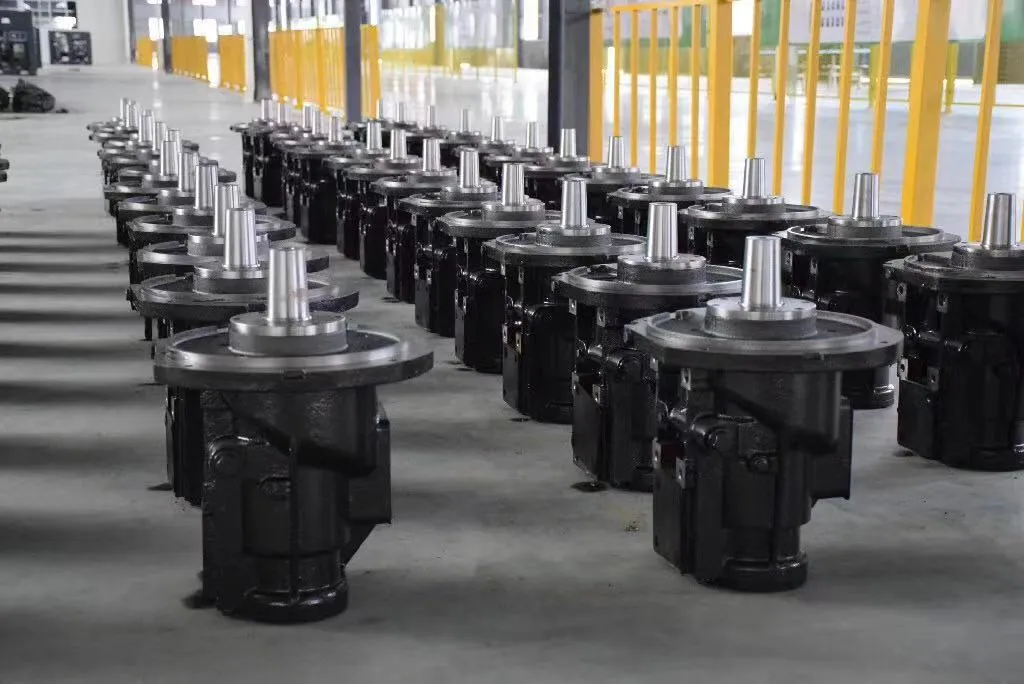
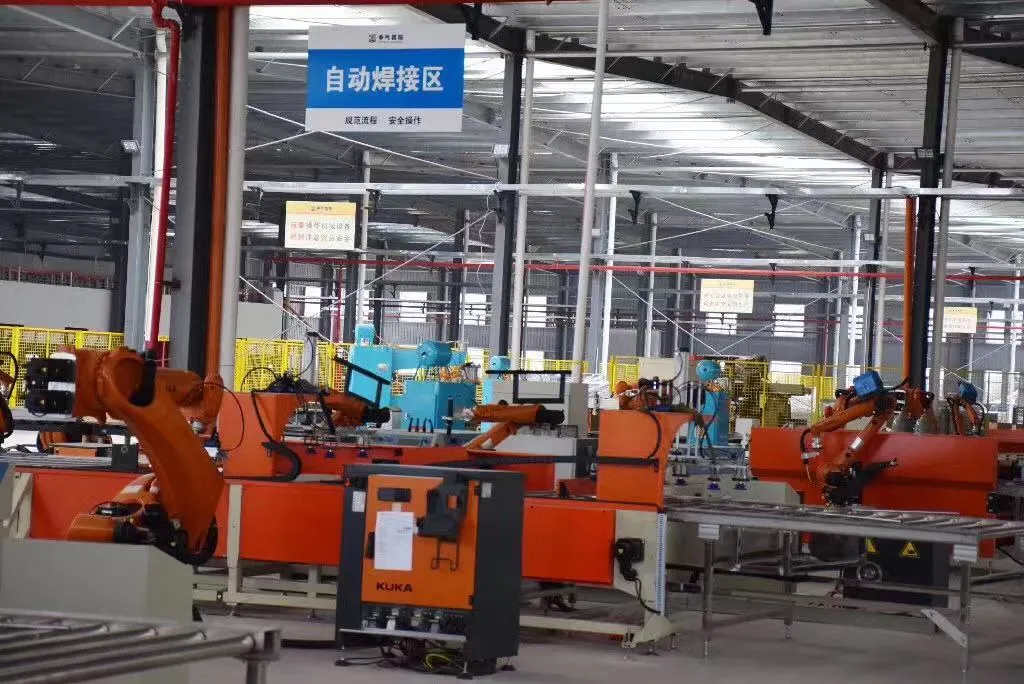
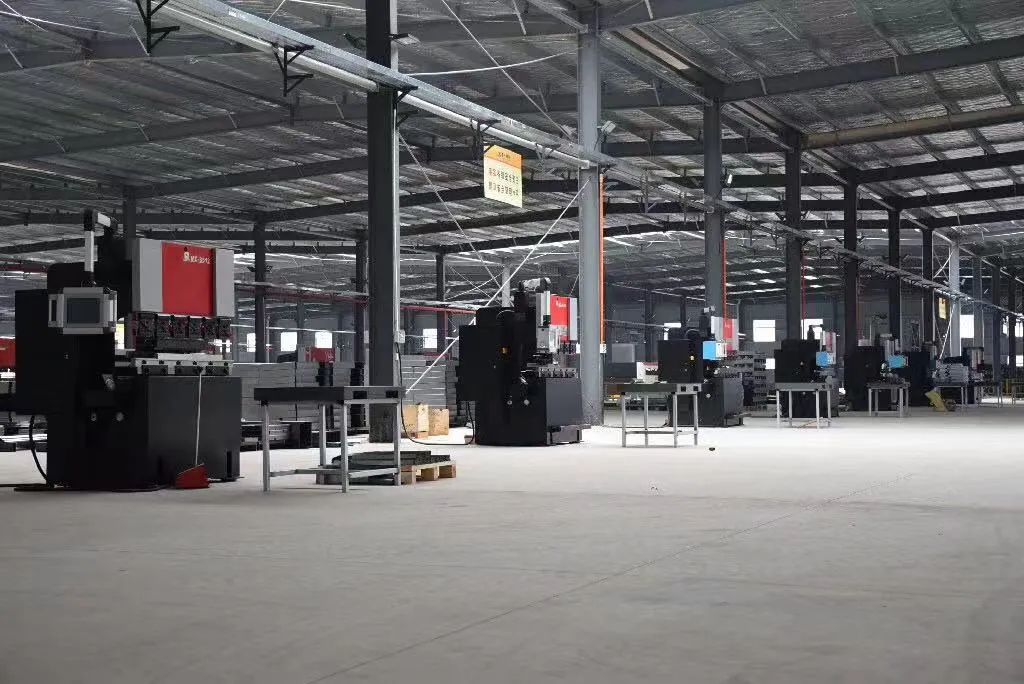
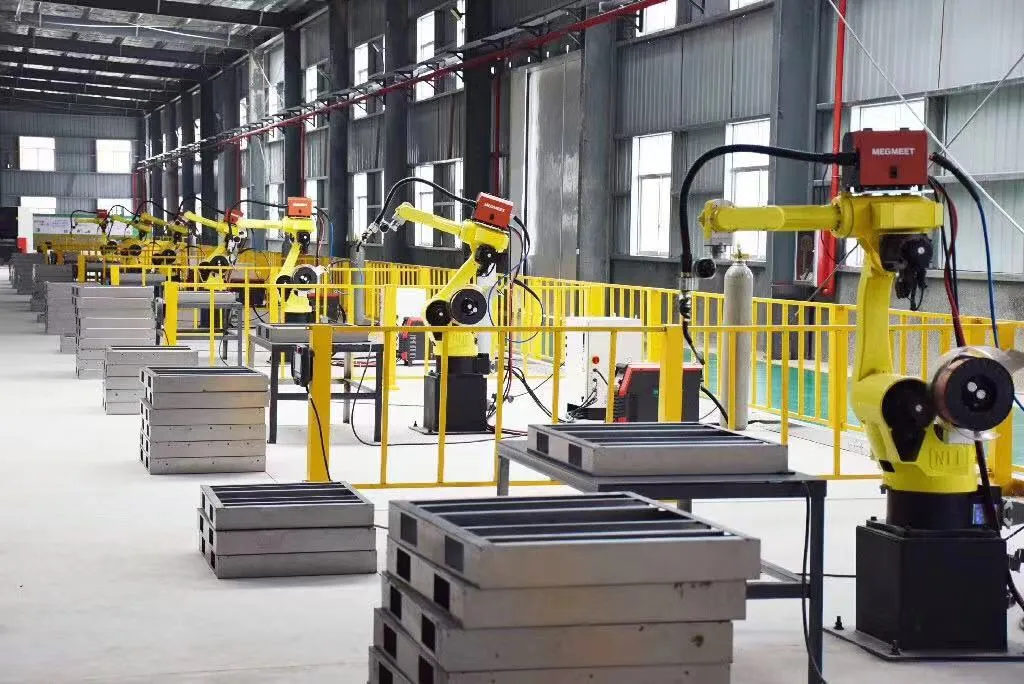

The Ultimate Guangdong PM VSD Screw Compressor Guide (2026)
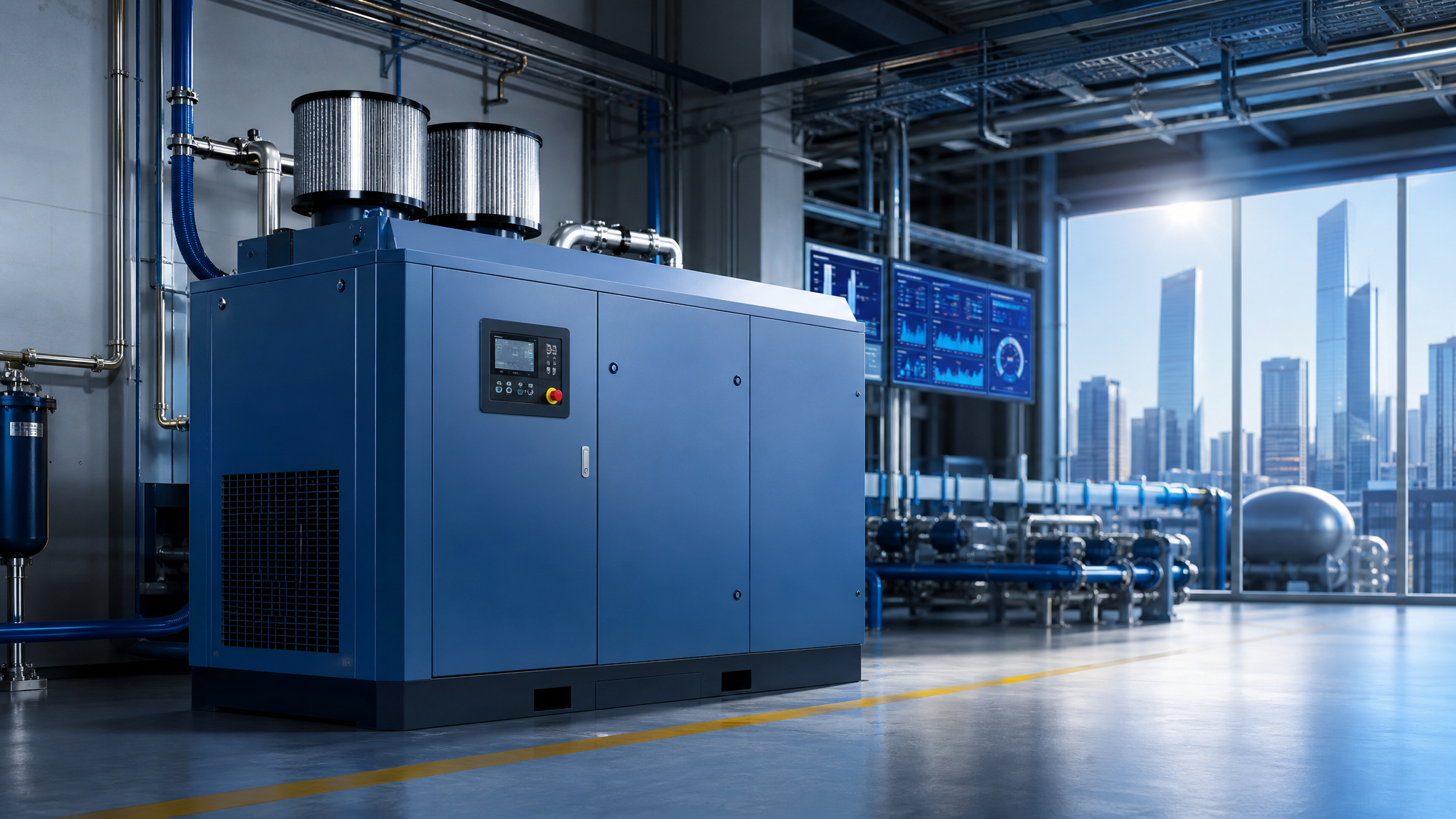
The screw air compressor market in Guangdong offers a diverse range of technologies, from fixed-speed oil-injected units to variable frequency drive (VFD) permanent magnet models and two-stage compression systems. Each technology has distinct advantages and optimal use cases, making it essential for buyers to understand the technical trade-offs involved in selecting PM VSD Screw Compressor. The right choice depends on your specific operational profile, air demand pattern, and performance requirements.
In this detailed guide, we compare the major PM VSD Screw Compressor technologies available in the Guangdong market, examining their operating principles, efficiency characteristics, maintenance requirements, and total cost of ownership. We also provide a structured evaluation framework and practical recommendations to help you select the optimal solution for your manufacturing operation.
Quick Answers: Popular Questions About PM VSD Screw Compressor
How often should I replace air filters on my PM VSD Screw Compressor?
In clean environments, filters typically last 2,000-4,000 hours. In dusty environments, they may need replacement every 500-1,000 hours. The best indicator is the filter differential pressure gauge — replace when it indicates maximum allowable pressure drop.
Can I use standard compressor oil in any PM VSD Screw Compressor brand?
No. Different brands require different oil specifications. Critical specifications include viscosity grade, base oil type, and additive package. Some manufacturers formulate proprietary oils. Always consult the compressor manual before changing oil types or brands.
How does ambient temperature affect PM VSD Screw Compressor performance?
Higher intake air temperature increases the energy required for compression by approximately 3% per 10°C. In summer conditions (35-40°C), compressor performance can be 5-10% lower than under standard rating conditions (20°C).
Economic Data: Energy Costs and Savings Potential for Guangdong
Industrial electricity rates in Guangdong currently range from ¥0.75 to ¥1.25 per kWh, averaging ¥0.90/kWh. For a 75kW compressor operating 6,000 hours per year at 85% load factor: annual consumption is 382,500 kWh costing ¥344,250. A 30% reduction would save approximately ¥103,275 annually.
Industrial electricity rates are expected to increase by 3-5% annually over the next 5-10 years, making efficiency investments even more valuable. Including a conservative 3% annual escalation in electricity costs in your TCO analysis provides a more realistic picture of long-term savings.
PM VSD Screw Compressor for Chemical and Petrochemical Processing in Guangdong
Chemical and petrochemical processing facilities in Guangdong have some of the most demanding compressed air requirements, driven by the need for absolute reliability, strict air quality standards, and the hazards associated with compressed air in potentially explosive atmospheres.
Safety is the primary consideration in chemical processing compressed air systems. Facilities handling flammable materials or operating in hazardous areas must comply with strict safety standards. Compressors used in or near hazardous areas require appropriate ATEX or equivalent certification. Oil-free compressors are often specified to eliminate the risk of oil contamination reacting with process chemicals.
Reliability is equally critical, as compressed air failure in chemical processing can cause process interruptions that are both costly and potentially dangerous. Redundant compressor configurations, emergency backup systems, and comprehensive monitoring are standard in this industry.
For Guangdong chemical and petrochemical facilities, working with a PM VSD Screw Compressor supplier who has experience in the chemical industry is essential. The supplier should understand the safety requirements and reliability standards that apply to chemical processing applications.
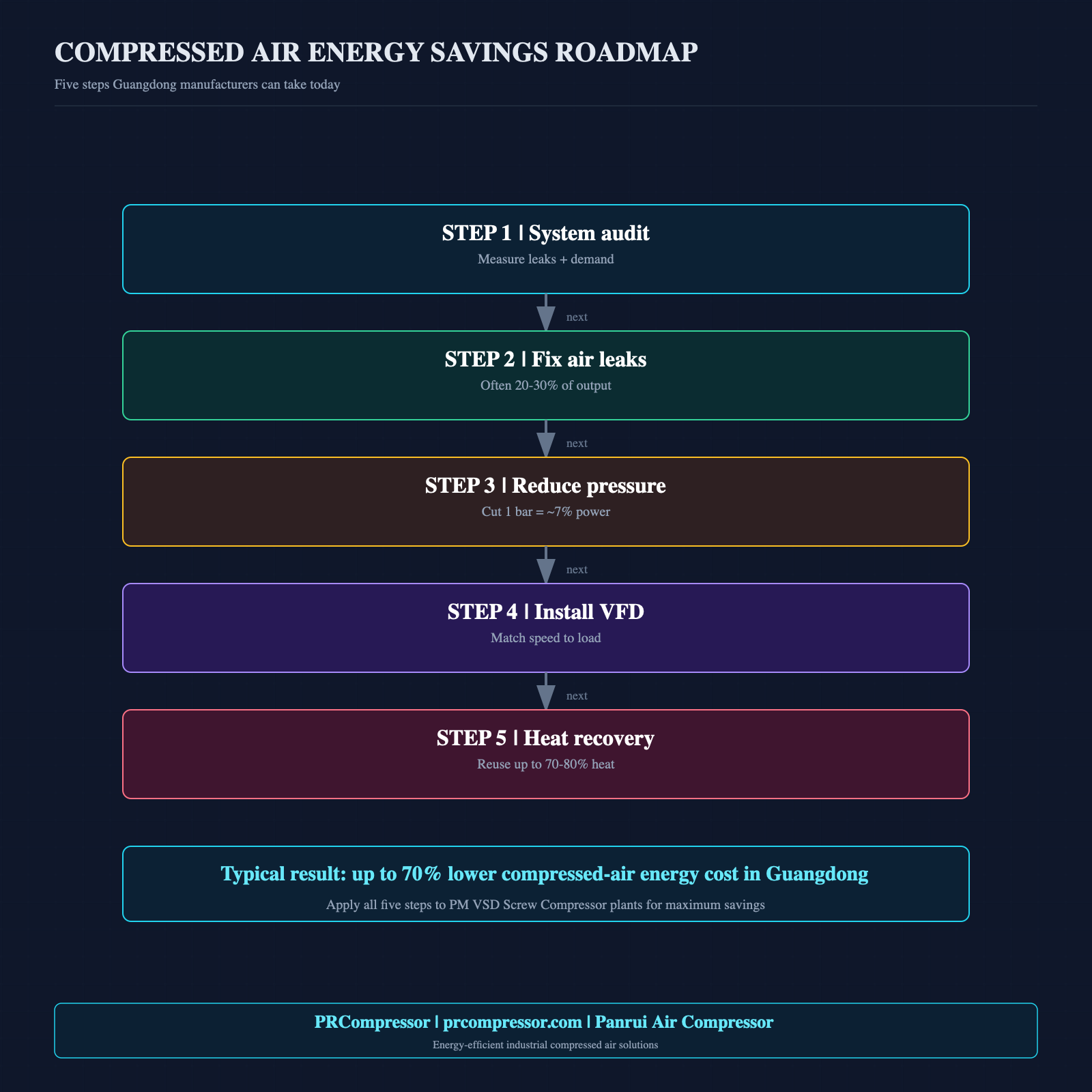
Visual: Energy Savings Roadmap
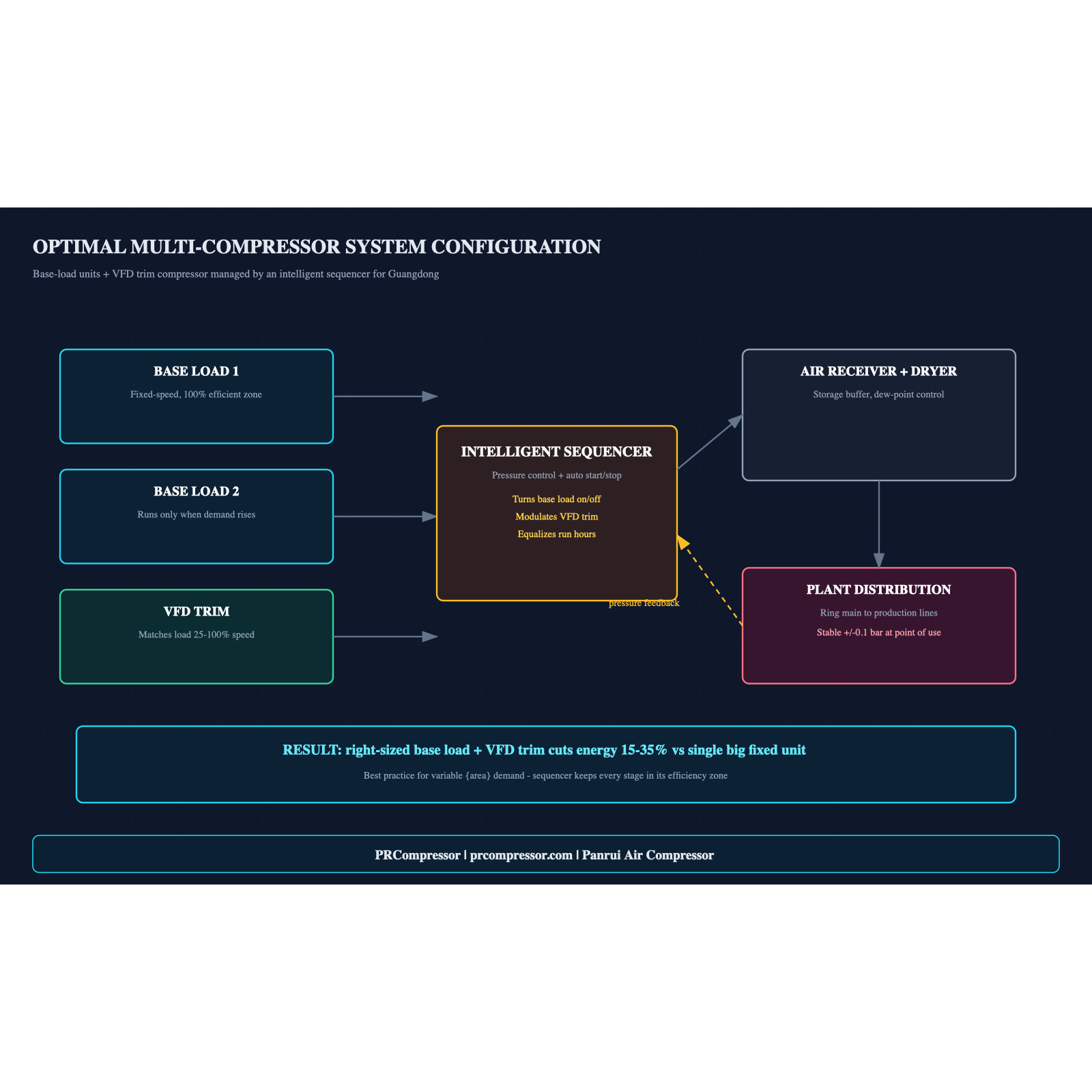
Visual: Optimal System Configuration
Technology Selection Matrix: Choosing the Right PM VSD Screw Compressor Configuration
This technology selection matrix helps Guangdong manufacturers match PM VSD Screw Compressor configurations to their specific operating profiles.
Demand Profile Dimension: Constant demand — fixed-speed or VFD base load. Variable demand — VFD compressor sized for variable portion. Highly variable demand — multi-compressor system with VFD trim.
Pressure Requirements Dimension: Standard pressure (7-10 bar) — most compressor types suitable. High pressure (10-15 bar) — two-stage compression recommended. Low pressure (below 7 bar) — standard units with derating.
Air Quality Requirements Dimension: General industrial (ISO Class 4-5) — oil-injected with standard filtration. Sensitive applications (ISO Class 1-3) — consider oil-free or enhanced filtration. Critical applications — oil-free compressors required.
Operating Hours Dimension: Low utilization (under 2,000 hours/year) — lower-cost fixed-speed. Medium utilization (2,000-4,000) — VFD recommended for variable demand. High utilization (4,000-8,000) — premium efficiency essential. Continuous operation (8,000+) — maximum efficiency, consider heat recovery.
Rightsizing: Determining the Optimal Capacity for PM VSD Screw Compressor in Guangdong
Determining the optimal capacity for PM VSD Screw Compressor is one of the most critical decisions in the compressor selection process. An undersized compressor cannot meet production demand, while an oversized compressor operates inefficiently.
The first step in rightsizing is accurate demand measurement. Install a flow meter and log demand data for at least one full production week. The data should capture both average demand and peak demand events. For facilities with relatively constant demand, select a compressor with output matching measured average demand plus 20-30% margin.
For facilities with variable demand, a single VFD compressor sized to handle 70-100% of peak demand, or a multi-compressor system with a VFD trim unit, typically provides the best combination of efficiency and capacity. Storage capacity should also be factored in — typically 20-40 liters per m³/min of compressor capacity.
In facilities with significant short-duration peak demand events, additional storage capacity can allow the compressor system to be sized for average demand rather than peak demand, yielding substantial capital and energy savings.
Financial Analysis: Leasing vs Purchasing PM VSD Screw Compressor in Guangdong
For Guangdong manufacturers, the decision between leasing and purchasing PM VSD Screw Compressor involves financial, operational, and strategic considerations beyond simple cost comparison. Each approach offers distinct advantages.
Leasing PM VSD Screw Compressor preserves working capital, provides predictable fixed monthly payments, may offer tax advantages through deductibility of lease payments, and allows for easier equipment upgrades at lease expiration. Lease terms typically range from 3 to 7 years with residual values of 10-30%.
Purchasing PM VSD Screw Compressor provides the lowest total cost over the equipment’s life, offers full ownership and control, allows for depreciation benefits, and eliminates ongoing payment obligations after purchase. For Guangdong manufacturers with access to capital and a long-term perspective, purchasing typically provides the best financial outcome.
The financial comparison should consider: total cost of leasing over the planned use period; total cost of purchasing; tax implications; the manufacturer’s cost of capital; and the expected useful life relative to the lease term. For most Guangdong manufacturers, purchasing provides better 10-year economics while leasing better serves manufacturers with capital constraints.
The Science of Air Compression: How PM VSD Screw Compressor Achieve Efficiency
At its core, air compression is a thermodynamic process that follows the fundamental laws of gas behavior. When air is compressed, its temperature rises significantly — a 100 kPa (1 bar) increase in pressure can raise the air temperature by approximately 80-100°C under adiabatic conditions. Managing this heat is one of the key challenges in compressor design, as excessive temperatures can degrade lubricating oil, damage components, and reduce overall system efficiency.
Modern PM VSD Screw Compressor address this challenge through sophisticated thermal management systems that optimize the compression process across a wide range of operating conditions. Oil-injected screw compressors use the injection of specially formulated compressor oil directly into the compression chamber to seal rotor clearances, lubricate the rotors and bearings, and absorb the heat of compression. The oil is then circulated through an oil cooler before being reinjected, maintaining optimal operating temperatures even under continuous full-load operation.
The specific power consumption of a compressor — measured in kW per m³/min of delivered air — is the most important indicator of its energy efficiency. Premium PM VSD Screw Compressor in the Guangdong market typically achieve specific power values ranging from 5.5 to 6.5 kW/(m³/min) at full load, with the most efficient models falling below 5.5 kW/(m³/min). By comparison, older or lower-quality units may require 7.0 kW/(m³/min) or more, representing a 20-30% efficiency penalty that translates directly to higher electricity costs over the equipment’s operating life.
Understanding these technical fundamentals is essential for making informed procurement decisions. When evaluating PM VSD Screw Compressor options in Guangdong, look beyond the headline specifications to examine the specific power curves at different load points, the efficiency of the drive system, and the effectiveness of the cooling and oil management systems. These factors collectively determine the real-world performance and operating cost of the equipment.
Compressed Air Storage: The Buffer That Protects Your Production
Adequate compressed air storage is one of the most cost-effective investments any Guangdong manufacturing facility can make in their compressed air system. Storage serves multiple critical functions: it stabilizes system pressure during periods of peak demand, reduces the frequency of compressor cycling, provides emergency capacity during a compressor failure, and allows the system to handle transient demand spikes without requiring additional compressor capacity.
The general recommendation for compressed air storage capacity is 20-40 liters per m³/min of compressor capacity for systems with relatively stable demand, increasing to 50-80 liters per m³/min for systems with highly variable demand or critical pressure-sensitive processes. For Guangdong facilities operating PM VSD Screw Compressor systems with significant demand variation, additional storage capacity is one of the most effective ways to improve system stability and efficiency.
The location of storage within the system also matters. While a single large receiver tank near the compressor room is the most common configuration, distributed storage located near large intermittent demand points can be more effective. This approach reduces the pressure drop in the piping between the storage and the point of use, allowing the compressor to operate at a lower discharge pressure while maintaining adequate pressure at the point of use. The energy savings from a 1 bar reduction in discharge pressure typically amounts to 6-8% of compressor energy consumption.
For Guangdong manufacturers considering a PM VSD Screw Compressor purchase, including adequate storage capacity in the system design is a low-cost, high-return investment that enhances the performance and efficiency of any compressor configuration. The incremental cost of properly sized storage is typically recovered within 6-12 months through reduced compressor cycling and the ability to operate at lower average discharge pressure.
Oil-Free vs Oil-Injected PM VSD Screw Compressor: Making the Right Choice for Guangdong
One of the most important decisions when selecting PM VSD Screw Compressor is whether oil-free or oil-injected technology is appropriate for your application. Each approach has distinct advantages and limitations that make it suitable for different industrial applications. Understanding these differences is essential for making an informed procurement decision that balances performance requirements with budget constraints.
Oil-injected screw compressors — the most common type in Guangdong industrial facilities — use specially formulated compressor oil injected into the compression chamber for three purposes: sealing the clearance between rotors to minimize internal leakage, lubricating the rotors and bearings, and absorbing the heat of compression. This design is simple, reliable, and cost-effective, with lower initial purchase cost and wider service network availability. Modern oil-injected compressors with high-efficiency oil separation systems achieve residual oil content below 3 ppm, which is acceptable for most general industrial applications.
Oil-free screw compressors, by contrast, achieve compression without any oil in the compression chamber through precision-engineered rotor clearances, specialized rotor coatings, and separate lubrication systems. These units deliver 100% oil-free air, making them essential for critical applications such as pharmaceutical manufacturing, food and beverage processing, electronics fabrication, and paint spraying. The trade-offs include higher initial cost and generally lower energy efficiency due to larger rotor clearances required.
For most Guangdong manufacturing applications, high-quality oil-injected PM VSD Screw Compressor with appropriate filtration provides adequate air quality at a significantly lower total cost of ownership. However, for facilities in the pharmaceutical, food processing, electronics, or precision coating industries, the investment in oil-free technology is justified by the quality assurance requirements and the cost of potential contamination incidents.
Call to Action: Start Your PM VSD Screw Compressor Evaluation Today
The information in this guide provides a comprehensive foundation for evaluating PM VSD Screw Compressor options in Guangdong. Now the most important step is to take action — every month of delay is a month of unnecessarily high energy costs and missed opportunity.
The first step is simple: contact PRCompressor (Panrui) for a free, no-obligation consultation. Our experienced team will help you assess your current system, identify improvement opportunities, and develop a recommendation tailored to your needs.
Don’t let another day of inefficient compressed air operation erode your profitability. Contact us today.
Phone: 13713647073 | Email: info@panrui.com | Web: prcompressor.com
Keywords: guangdong compressor, screw air compressor, industrial air compressor, guangdong manufacturer, pm vsd screw compressor, energy saving compressor, compressor buyer’s guide, industrial compressed air, compressor energy efficiency, compressor supplier
Contact PRCompressor (Panrui) for pm vsd screw compressor in Guangdong: Phone 13713647073 | prcompressor.com