


Direct drive and belt drive are two common power transmission methods in screw compressors. Both can produce compressed air, but they differ in efficiency, maintenance, and long-term reliability under industrial loads.
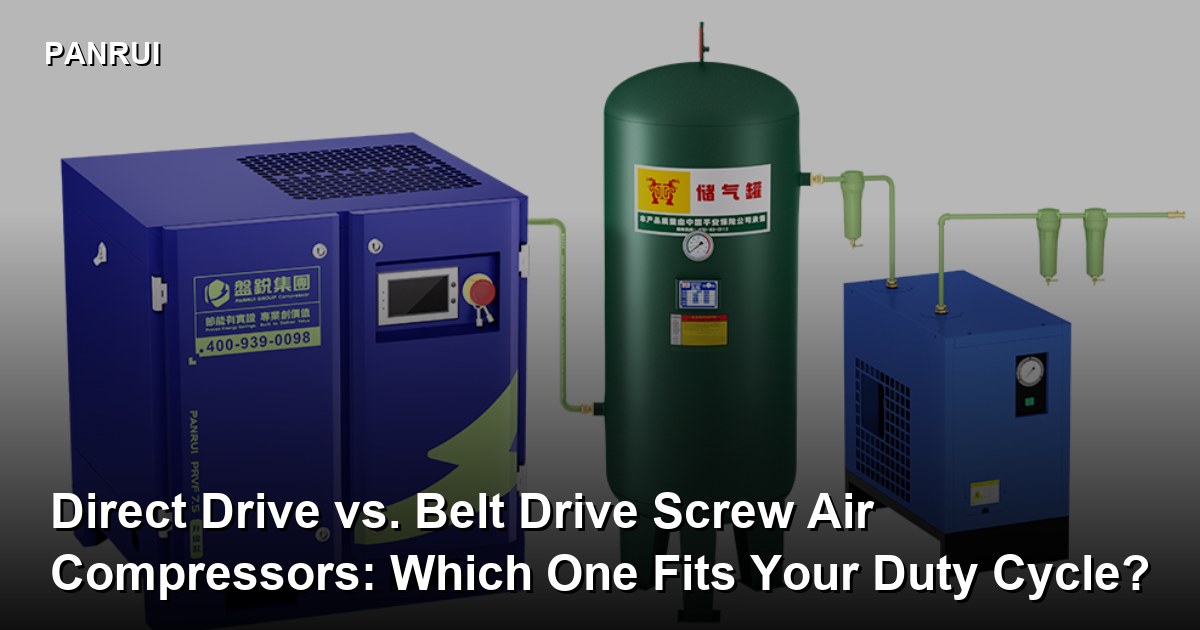
How the Two Designs Work
- Belt drive: a belt transfers power from the motor to the airend and can be adjusted to change speed.
- Direct drive: the motor and airend are connected on a common shaft or through a close-coupled transmission.
- Some direct-drive machines use permanent magnet motors for a compact, efficient design.
Efficiency and Maintenance Differences
- Belt systems lose a small amount of energy through belt slip and flexing.
- Direct-drive systems can reduce transmission losses by roughly 2% to 3%.
- Belts require periodic tension checks and eventual replacement.
- Direct-drive machines have fewer wearing transmission parts.
For continuous industrial use above 15 kW, a direct drive screw compressor is generally preferred because the efficiency advantage accumulates over thousands of operating hours.
Matching the Drive to the Duty Cycle
- Light, intermittent use may tolerate a belt-drive machine at a lower initial cost.
- Heavy or continuous production benefits from direct drive and reduced maintenance.
- Variable-demand applications perform well with a direct-drive VSD package.
- Compare total cost over five to ten years, not just the purchase price.
An industrial rotary screw air compressor with direct drive supports stable output and fewer maintenance interruptions, making it the safer choice when downtime is expensive.