


Energy Saving Air Compressor in Shenzhen: 2026 Manufacturer Selection Guide
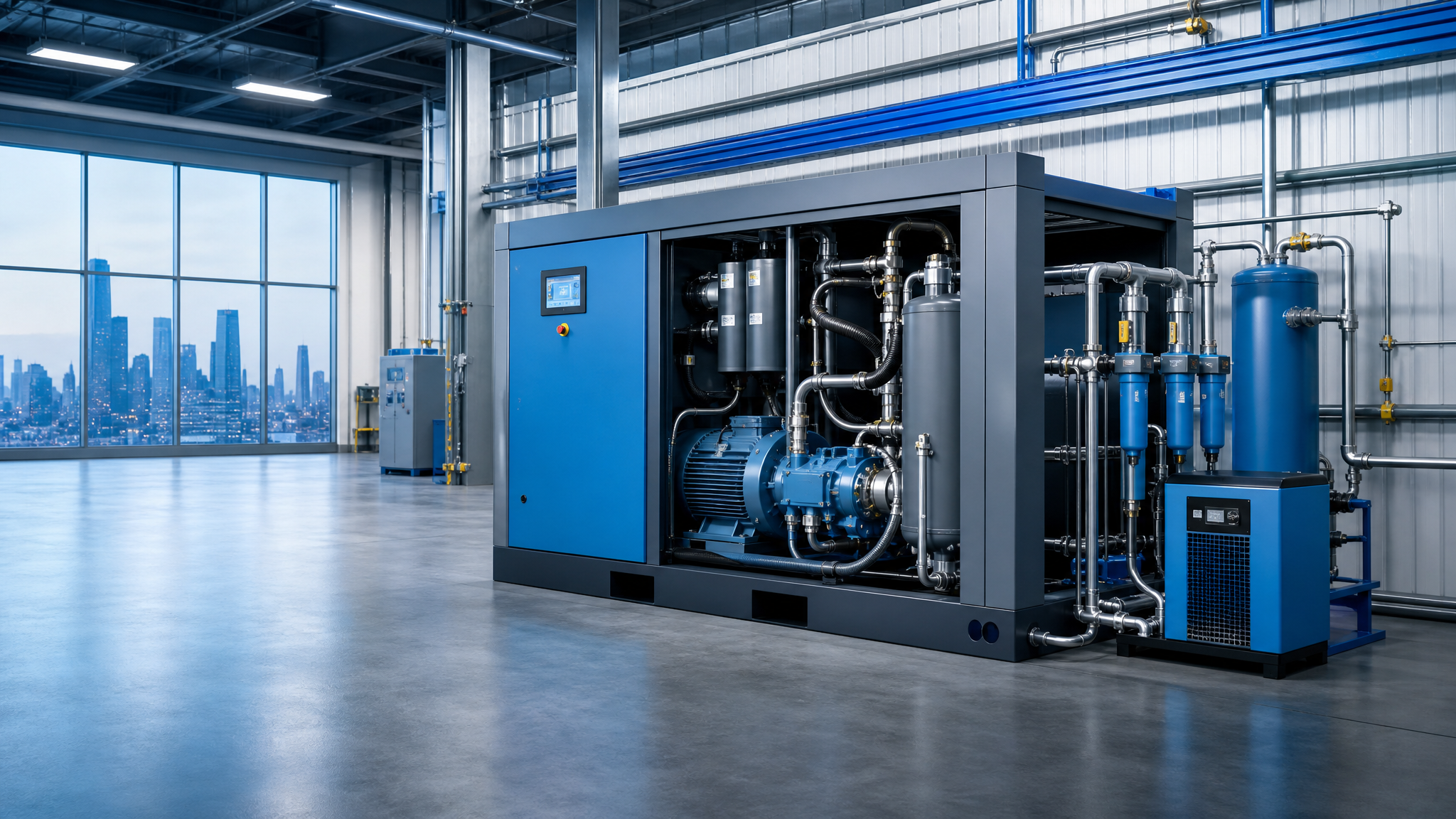
The industrial compressed air landscape in Shenzhen is experiencing unprecedented change in 2026. With energy costs rising by approximately 8-15% annually across most Chinese industrial regions, manufacturing facilities are under intensifying pressure to optimize their air compression systems. This detailed analysis explores how Shenzhen businesses can navigate the complex market for Energy Saving Air Compressor and make procurement decisions that will serve them well for the next decade.
Industry data from recent surveys indicates that over 60% of industrial facilities in Shenzhen are operating compressed air systems that are either outdated or improperly sized for their current production needs. This inefficiency represents both a significant cost burden and a substantial opportunity for improvement. The manufacturers who act decisively to upgrade their compressed air infrastructure stand to gain a meaningful competitive advantage through lower operating costs and improved production reliability.
Rightsizing: Determining the Optimal Capacity for Energy Saving Air Compressor in Shenzhen
Determining the optimal capacity for Energy Saving Air Compressor is one of the most critical decisions in the compressor selection process. An undersized compressor cannot meet production demand, while an oversized compressor operates inefficiently.
The first step in rightsizing is accurate demand measurement. Install a flow meter and log demand data for at least one full production week. The data should capture both average demand and peak demand events. For facilities with relatively constant demand, select a compressor with output matching measured average demand plus 20-30% margin.
For facilities with variable demand, a single VFD compressor sized to handle 70-100% of peak demand, or a multi-compressor system with a VFD trim unit, typically provides the best combination of efficiency and capacity. Storage capacity should also be factored in — typically 20-40 liters per m³/min of compressor capacity.
In facilities with significant short-duration peak demand events, additional storage capacity can allow the compressor system to be sized for average demand rather than peak demand, yielding substantial capital and energy savings.
Regulatory Environment: Compliance Requirements for Shenzhen Manufacturers
Manufacturing facilities in Shenzhen operate within an evolving regulatory framework that increasingly impacts compressed air system design and equipment selection. Key regulations affecting Energy Saving Air Compressor procurement include national energy efficiency standards, local environmental protection requirements, and industry-specific quality standards.
China’s national energy efficiency standards for air compressors — GB 19153-2019 and GB 18613-2020 — establish minimum efficiency requirements for equipment sold and operated in the country. Class 1 represents the highest efficiency level, and premium Energy Saving Air Compressor meeting Class 1 or Class 2 standards qualify for reduced tariffs on the energy surcharge component of electricity pricing, providing an additional financial incentive for choosing high-efficiency equipment.
Environmental regulations also impact compressor selection. Noise regulations in industrial zones require compressors to meet specific sound level limits, typically below 75-80 dB(A). Oil containment requirements mandate proper collection and disposal of compressor condensate. Facilities with significant compressed air capacity may also need to register their energy consumption with local authorities.
For Shenzhen manufacturers, working with a supplier who is knowledgeable about the regulatory environment and can guide compliance is an important consideration. The most reputable suppliers incorporate compliance as a standard element of their sales and service process.
Energy Costs in Shenzhen: Why Efficiency Matters More Than Ever
Electricity costs for industrial users in Shenzhen have risen steadily over the past five years, with current rates typically ranging from ¥0.75 to ¥1.25 per kWh depending on voltage level, time of use, and total consumption. For manufacturing facilities where compressed air accounts for 10-30% of total electricity consumption, the impact of compressor efficiency on operating costs is substantial and growing.
To illustrate the financial impact: a Shenzhen factory operating a 110kW Energy Saving Air Compressor 6,000 hours per year at an average electricity cost of ¥0.90/kWh will spend approximately ¥594,000 annually on compressed air energy alone. Improving the compressor’s specific power by just 0.5 kW/(m³/min) saves approximately ¥49,500 per year. Over a 10-year operating life, this efficiency improvement alone saves nearly ¥500,000.
Time-of-use electricity pricing, which is common in Shenzhen, adds another dimension to the efficiency calculation. Many industrial users pay significantly higher rates during peak daytime hours. Intelligent compressor control systems that can shift some compression to off-peak periods can capture additional savings beyond what the compressor’s mechanical efficiency alone provides.
For Shenzhen manufacturers, the message is clear: investing in premium-efficiency Energy Saving Air Compressor — even at a higher initial cost — is one of the highest-return investments available in the industrial equipment budget, with typical internal rates of return exceeding 30-50% over the equipment’s operating life.
Reliability Data: Energy Saving Air Compressor Failure Patterns and Prevention
Analysis of compressor failure data shows that approximately 45% of unplanned downtime events are electrical system related, 30% are mechanical issues, 15% are cooling system issues, and 10% are miscellaneous causes. The most effective prevention strategy is a comprehensive preventive maintenance program.
Studies consistently show that each dollar invested in preventive maintenance saves $3-5 in reactive maintenance costs and prevents 5-10 hours of unplanned downtime annually. For facilities where an hour of downtime costs ¥10,000 or more, the case for comprehensive preventive maintenance is overwhelming.
Heat Recovery Systems: Unlocking Hidden Value in Energy Saving Air Compressor
One of the best-kept secrets in industrial compressed air is that approximately 90% of the electrical energy consumed by a screw compressor is converted into heat. In a typical Energy Saving Air Compressor installation, this heat is simply dissipated to the atmosphere through the cooling system — representing a substantial missed opportunity for energy recovery. Modern heat recovery systems can capture 70-80% of this waste heat and repurpose it for facility heating, process hot water, preheating boiler feedwater, or other thermal applications.
For Shenzhen manufacturing facilities operating compressors year-round, the potential savings from heat recovery are substantial. A 75kW compressor operating 6,000 hours per year generates approximately 400,000 kWh of thermal energy annually — equivalent to the heating needs of 30-40 typical homes. Capturing even 70% of this energy can reduce facility heating costs by ¥100,000-200,000 per year, depending on local energy prices and the efficiency of the heat recovery system.
Heat recovery systems are available in several configurations to suit different facility requirements. The simplest approach uses the compressor’s existing oil cooling circuit to transfer heat to a water loop, which can then be used for space heating via fan coils or radiant heating panels. More sophisticated systems integrate with the facility’s central heating or process hot water system, providing year-round thermal energy.
When evaluating Energy Saving Air Compressor for your Shenzhen facility, consider whether heat recovery capability should be a selection criterion. While not all compressor installations are suitable for heat recovery, for facilities with significant year-round heating requirements, the additional investment in heat recovery infrastructure can deliver returns that rival or exceed the energy savings from the compressor’s efficiency features alone.
Multi-Compressor System Design: Rightsizing for Variable Demand
For larger Shenzhen manufacturing facilities with varying compressed air demand, a single compressor — even a highly efficient VFD model — may not be the optimal solution. Multi-compressor systems, properly designed with a mix of base load and trim compressors, can achieve significantly better part-load efficiency than any single compressor operating alone. The key is to select and configure the compressors so that each unit operates in its most efficient range as the total system demand varies.
The standard configuration for efficient multi-compressor systems pairs one or more VFD compressors serving as trim units with fixed-speed base load compressors. The VFD unit modulates to match the difference between base load output and total system demand, while the base load units operate at their most efficient full-load condition. Modern sequencers optimize the startup and shutdown of base load units based on system pressure and demand trends, minimizing the number of starts and ensuring each unit operates in its optimal efficiency range.
For Shenzhen facilities with demand profiles that vary significantly between production shifts or seasons, this approach can deliver system-level efficiencies that approach 90% or more of individual compressor full-load efficiency — far better than the 60-70% system efficiency typical of uncontrolled multi-compressor installations. The additional investment in a sequencer and the incremental cost of multiple smaller compressors versus one large unit is typically recovered within 12-18 months through energy savings.
When planning a multi-compressor system, consider the following design principles: limit the number of compressor sizes to 2-3 for simplicity; ensure total installed capacity covers peak demand plus 20-30% redundancy; select compressors with complementary efficiency characteristics; and include adequate receiver capacity to stabilize pressure during transient demand changes.
Long-Term Storage and Preservation of Energy Saving Air Compressor in Shenzhen
There may be occasions when Energy Saving Air Compressor equipment needs to be stored for extended periods. Proper preservation is essential to prevent corrosion, bearing damage, and seal deterioration.
For short-term storage (1-3 months), seal all openings, fill with oil to normal level, rotate the airend monthly, maintain storage area between 5-40°C with humidity below 70%.
For long-term storage (3+ months), fill with rust-inhibiting preservation oil, coat exposed metal surfaces with corrosion-preventive compound, place desiccant bags inside the enclosure, and rotate the airend monthly.
Before returning stored equipment to service, inspect thoroughly for corrosion or damage, replace all filters and oil separator, fill with fresh oil, check electrical connections, and run unloaded for 30 minutes before connecting to the distribution system.
Service Contract Options for Energy Saving Air Compressor in Shenzhen
A well-structured service contract provides peace of mind and predictable maintenance costs for Energy Saving Air Compressor ownership. For Shenzhen manufacturers who prefer to focus on core production, a comprehensive service agreement ensures the compressor receives proper maintenance.
Basic service contracts cover scheduled preventive maintenance visits at specified intervals. The contract includes labor costs and may or may not include replacement parts. Basic contracts provide cost predictability for routine maintenance but limited protection against unexpected repairs.
Comprehensive service contracts include all preventive maintenance parts and labor plus coverage for unscheduled repairs. Full-service contracts are the most comprehensive, covering all parts, labor, and major component replacements for the contract duration.
When evaluating service contracts for Energy Saving Air Compressor in Shenzhen, consider the contract term, scope of covered parts, response time commitment, remote monitoring availability, technician qualifications, and provisions for handling performance issues.
Maintenance Cost Analysis for Energy Saving Air Compressor in Shenzhen
Maintenance costs represent a significant component of the total cost of ownership for Energy Saving Air Compressor, typically accounting for 8-12% of lifetime costs. Understanding the maintenance requirements and costs of different compressor types and brands is essential for accurate TCO analysis.
Routine maintenance for oil-injected Energy Saving Air Compressor includes oil and oil filter changes at 2,000-4,000 hour intervals; air filter replacement at similar intervals; oil separator replacement at 4,000-8,000 hour intervals; and annual inspection of safety devices and control system. The annual maintenance cost for a typical mid-range installation in the 37-75 kW range is approximately ¥8,000-15,000 for routine parts and labor.
Major maintenance events, including bearing replacement and airend overhaul, occur at 20,000-40,000 hour intervals with costs ranging from ¥15,000 to ¥80,000 or more depending on unit size. The timing and cost of major maintenance varies significantly between brands and models.
For Shenzhen manufacturers, selecting Energy Saving Air Compressor with accessible service points, readily available spare parts, and a competent local service network is essential for controlling maintenance costs. Asking suppliers for detailed maintenance schedules, parts pricing, and service labor rates during the evaluation process will provide the data needed for accurate comparison.
Financial Analysis: Leasing vs Purchasing Energy Saving Air Compressor in Shenzhen
For Shenzhen manufacturers, the decision between leasing and purchasing Energy Saving Air Compressor involves financial, operational, and strategic considerations beyond simple cost comparison. Each approach offers distinct advantages.
Leasing Energy Saving Air Compressor preserves working capital, provides predictable fixed monthly payments, may offer tax advantages through deductibility of lease payments, and allows for easier equipment upgrades at lease expiration. Lease terms typically range from 3 to 7 years with residual values of 10-30%.
Purchasing Energy Saving Air Compressor provides the lowest total cost over the equipment’s life, offers full ownership and control, allows for depreciation benefits, and eliminates ongoing payment obligations after purchase. For Shenzhen manufacturers with access to capital and a long-term perspective, purchasing typically provides the best financial outcome.
The financial comparison should consider: total cost of leasing over the planned use period; total cost of purchasing; tax implications; the manufacturer’s cost of capital; and the expected useful life relative to the lease term. For most Shenzhen manufacturers, purchasing provides better 10-year economics while leasing better serves manufacturers with capital constraints.
Energy Saving Air Compressor for Construction and Mining in Shenzhen
Construction and mining operations in Shenzhen require robust, portable, and reliable compressed air solutions for rock drilling, pneumatic tools, concrete spraying, and dust control. Unlike factory installations, these systems must operate in harsh environments with challenging conditions.
For construction and mining applications, the selection of Energy Saving Air Compressor prioritizes durability, ease of maintenance, and the ability to operate in adverse conditions over efficiency optimization. While energy efficiency is still important, the primary considerations are typically reliability, serviceability, and spare parts availability in remote locations.
Portability is another key consideration. Trailer-mounted compressors, modular units, and systems designed for easy relocation are common. The ability to quickly move compressed air capacity to different locations is essential for operational flexibility.
For Shenzhen construction and mining companies, the selection of Energy Saving Air Compressor should also consider the availability of service and support in the specific geographic areas where operations will be conducted.
Energy Saving Air Compressor for Plastic and Rubber Processing in Shenzhen
Plastic and rubber processing facilities in Shenzhen use compressed air for injection molding machines, blow molding equipment, extrusion lines, and pneumatic conveying systems. These applications have distinct compressed air requirements.
Injection molding uses compressed air for mold actuation, part ejection, and auxiliary equipment operation. The demand profile is characterized by short-duration, high-flow peaks during mold opening and closing cycles, with lower continuous demand for auxiliary equipment. This demand pattern makes properly sized receiver capacity important.
Pneumatic conveying systems for plastic pellets and powders require consistent air pressure and flow to maintain stable material transport. Any interruption or significant variation can cause material blockages. For Shenzhen plastic processing facilities, the compressed air system’s reliability directly impacts production continuity.
For Shenzhen plastic and rubber processing manufacturers, the selection of Energy Saving Air Compressor should consider both the general plant air requirements and the specific requirements of the plastic processing applications.
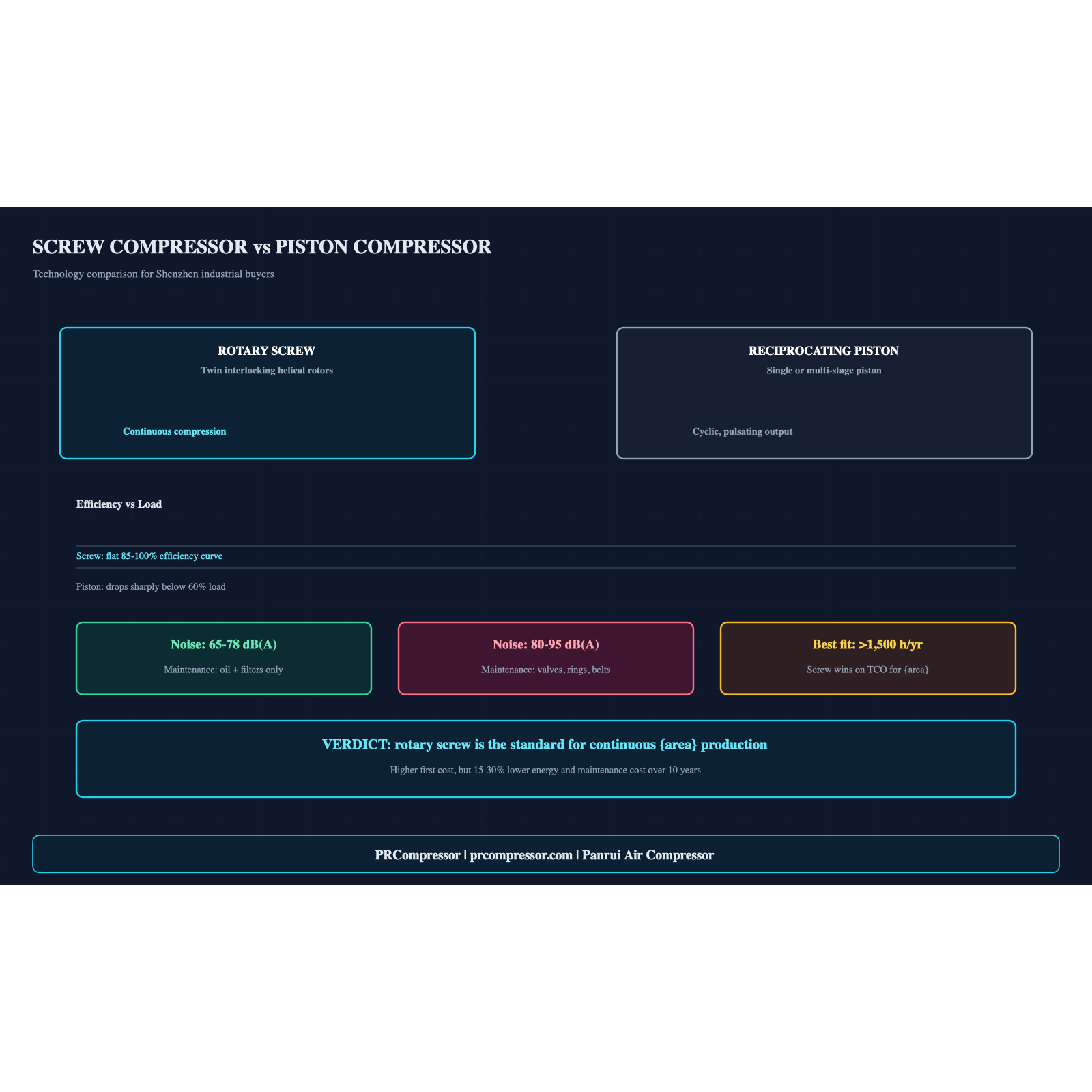
Visual Guide: How Energy Saving Air Compressor Compares
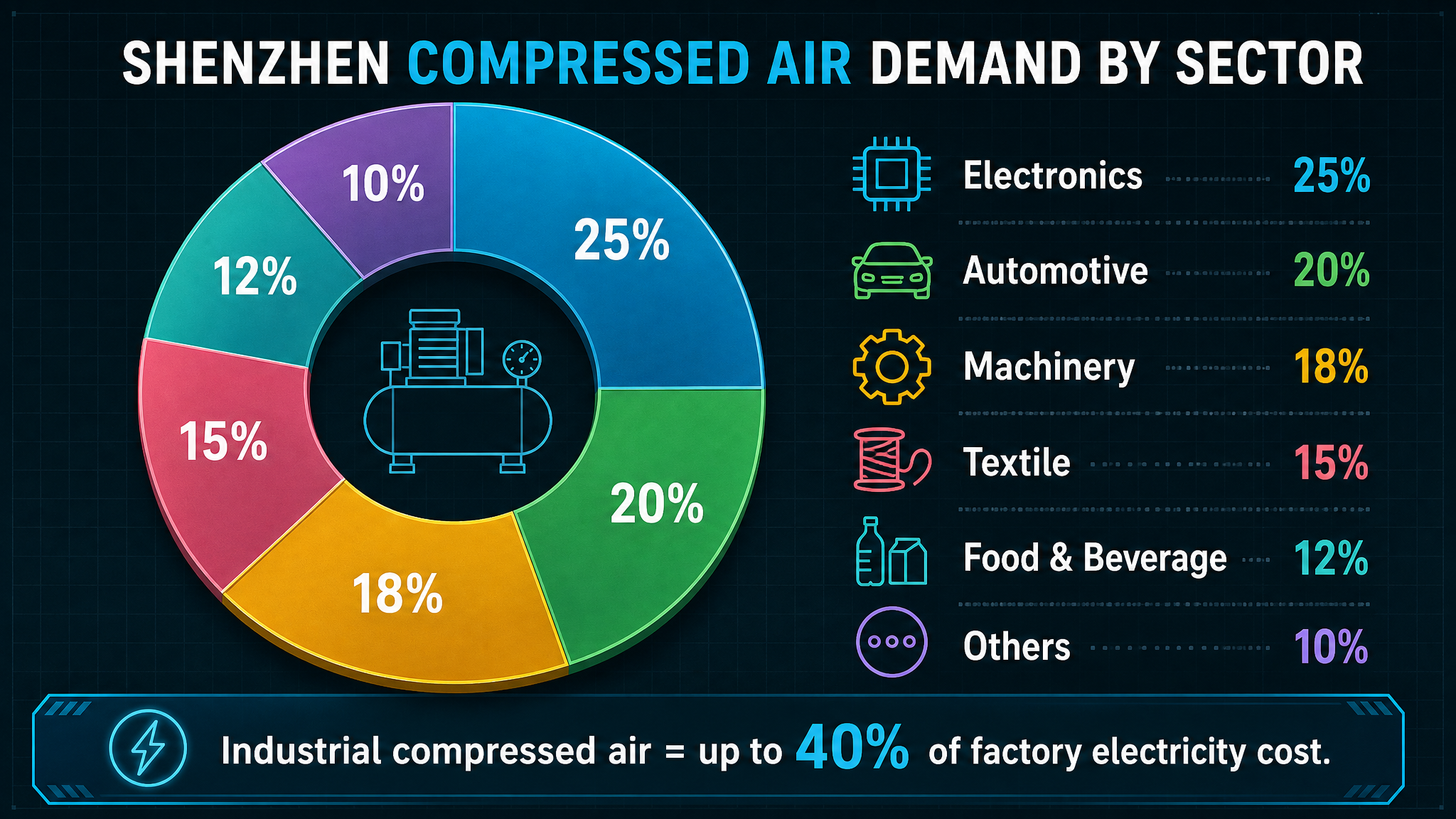
Industry Applications at a Glance
Looking Ahead: The Future of Energy Saving Air Compressor Technology in Shenzhen
As we look toward the future, several emerging trends will shape the Energy Saving Air Compressor market in Shenzhen over the coming years. Digitalization and smart connectivity will enable compressor systems that self-optimize based on operating conditions. Motor technology continues to advance toward IE5 and IE6 efficiency classes.
Integration with renewable energy sources will become increasingly important as manufacturing facilities adopt on-site solar and wind generation. VFD compressors with sophisticated control systems are naturally suited for this role, as their output can be modulated in response to available renewable power.
For Shenzhen manufacturers investing in Energy Saving Air Compressor today, the key to future-proofing your investment is choosing equipment with robust technology, open standards, and a supplier with a clear technology roadmap.
PRCompressor (Panrui) continues to invest in these technologies to serve the evolving needs of Shenzhen manufacturing. Contact us at 13713647073 or visit prcompressor.com.
Keywords: compressor energy efficiency, screw air compressor, shenzhen compressor, shenzhen manufacturer, energy saving air compressor, industrial air compressor, compressor supplier, compressor buyer’s guide, industrial compressed air, energy saving compressor
Contact PRCompressor (Panrui) for energy saving air compressor in Shenzhen: Phone 13713647073 | prcompressor.com