


Foshan Oil-Free Screw Compressor Market Analysis: 2026 Edition
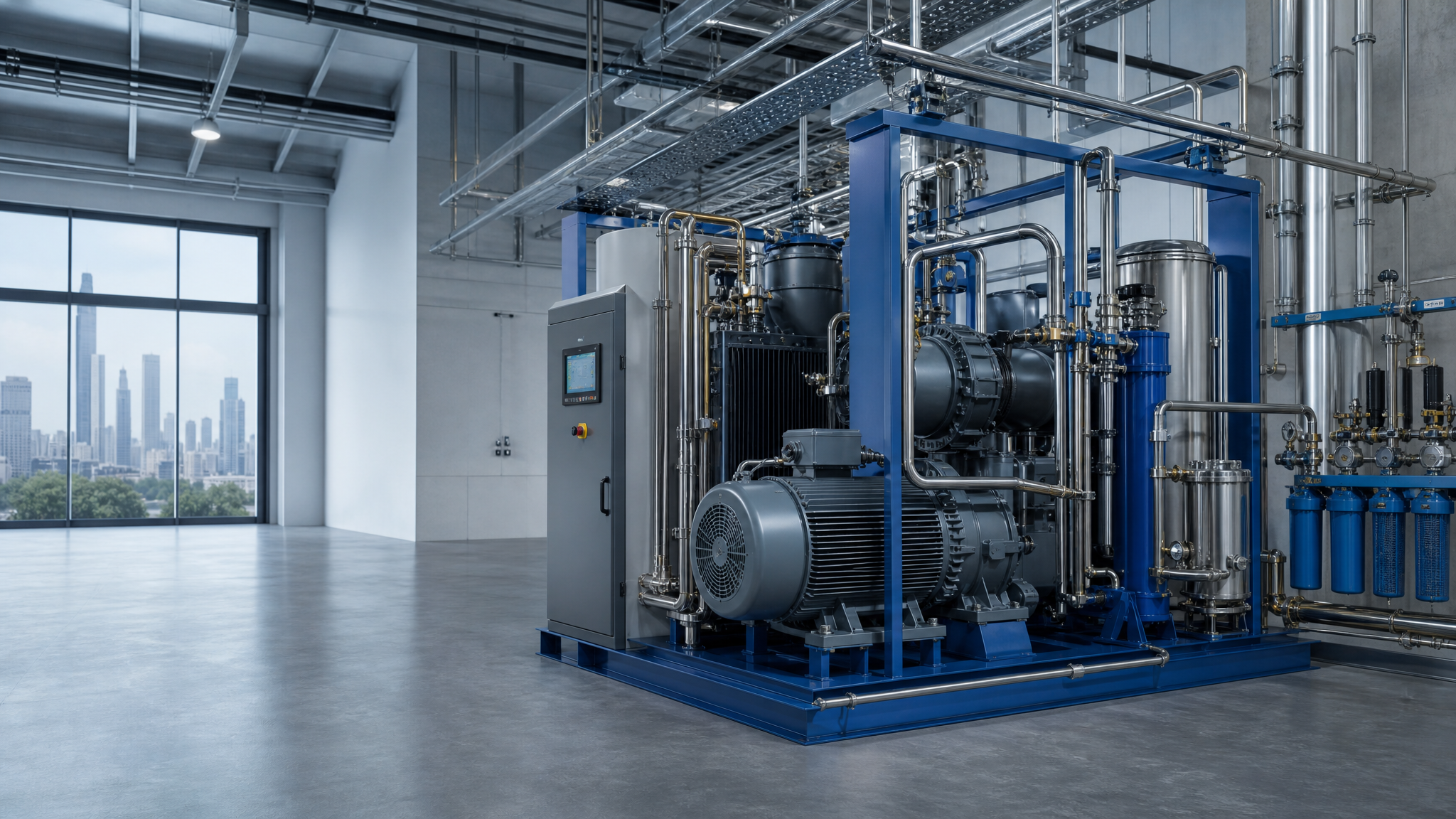
Selecting Oil-Free Screw Compressor for your Foshan facility is a multi-dimensional decision that requires balancing technical requirements, budget constraints, operational priorities, and long-term strategic goals. Without a structured decision-making framework, it is easy to be swayed by persuasive sales presentations, attractive pricing, or impressive specification sheets that may not reflect real-world performance. This guide provides a systematic approach to compressor evaluation that accounts for all relevant factors.
Our framework encompasses seven key evaluation dimensions: technical specifications, energy efficiency, reliability and durability, total cost of ownership, after-sales support, manufacturer reputation, and alignment with your facility’s specific operational requirements. We explain how to assess each dimension and combine the results into an overall evaluation that supports confident decision-making.
Total Cost of Ownership Analysis for Oil-Free Screw Compressor in Foshan
For Foshan manufacturers, understanding the total cost of ownership (TCO) of Oil-Free Screw Compressor is essential for making informed procurement decisions. TCO analysis accounts for all costs associated with owning and operating a compressor over its service life, including initial purchase price, installation costs, energy consumption, maintenance, spare parts, and downtime costs.
The typical TCO breakdown for an industrial screw compressor operating in Foshan is as follows: energy costs account for 70-80% of total lifetime cost; the initial purchase price accounts for 10-15%; maintenance and spare parts account for 8-12%; and installation, downtime, and other costs account for the remaining 2-5%. This distribution means that a 10% improvement in energy efficiency has roughly the same financial impact as a 50% reduction in purchase price.
To illustrate with a specific example for the Foshan market: a 75kW Oil-Free Screw Compressor operating 6,000 hours per year with electricity at ¥0.90/kWh will consume approximately ¥405,000 worth of electricity annually. Over a 10-year operating life, the total energy cost exceeds ¥4 million. Comparing two compressor options with a 0.5 kW/(m³/min) difference in specific power, the more efficient unit will save approximately ¥200,000 in energy costs over its life.
When evaluating TCO for Oil-Free Screw Compressor options in Foshan, the following calculation framework is recommended: estimate annual operating hours; determine your effective electricity cost; obtain specific power data at typical load points from each supplier; calculate annual energy consumption and cost for each option; add estimated maintenance costs; and compare the 5-year and 10-year total costs to identify the most economical option over the long term.
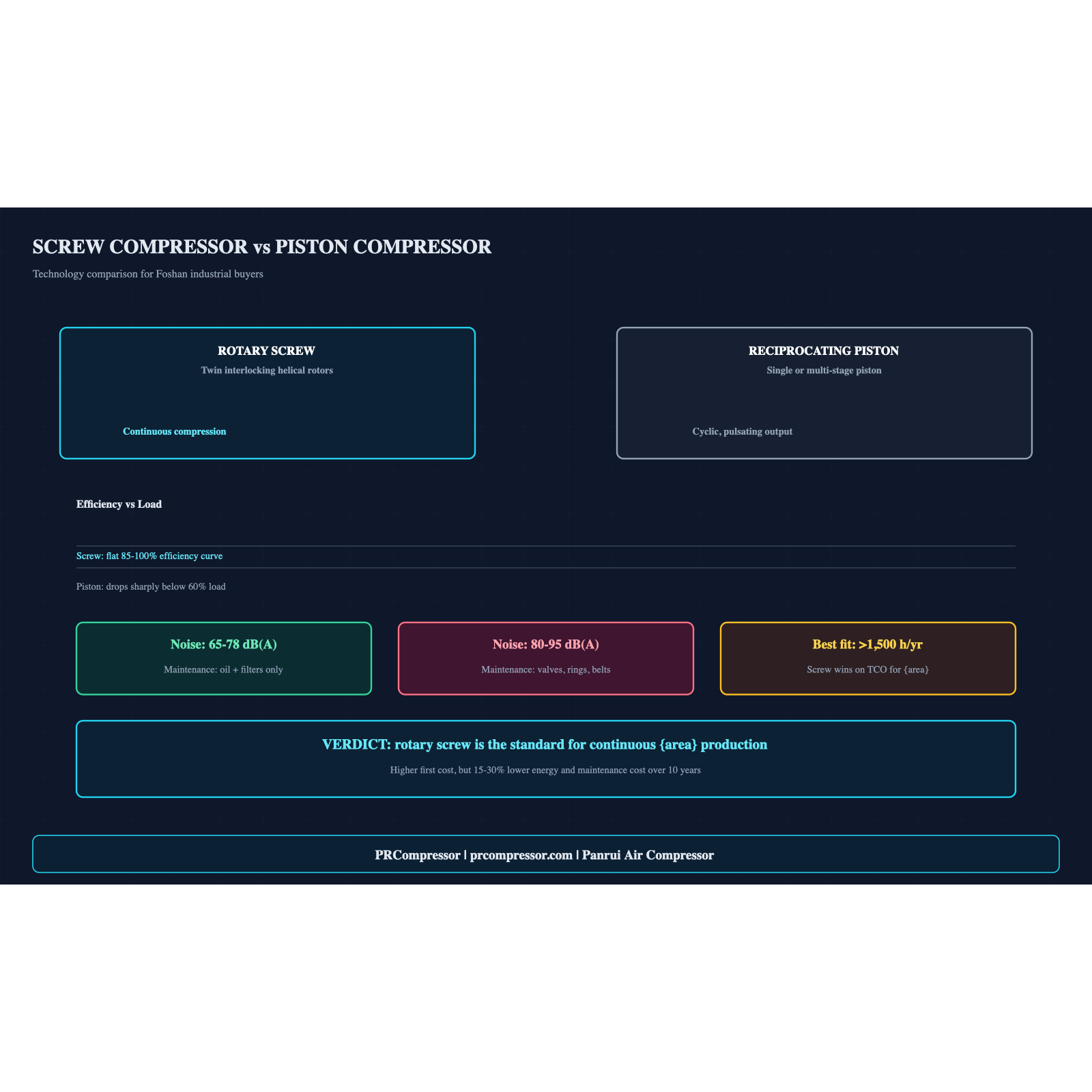
Visual: Optimal System Configuration
Reliability Data: Oil-Free Screw Compressor Failure Patterns and Prevention
Analysis of compressor failure data shows that approximately 45% of unplanned downtime events are electrical system related, 30% are mechanical issues, 15% are cooling system issues, and 10% are miscellaneous causes. The most effective prevention strategy is a comprehensive preventive maintenance program.
Studies consistently show that each dollar invested in preventive maintenance saves $3-5 in reactive maintenance costs and prevents 5-10 hours of unplanned downtime annually. For facilities where an hour of downtime costs ¥10,000 or more, the case for comprehensive preventive maintenance is overwhelming.
Multi-Compressor System Design: Rightsizing for Variable Demand
For larger Foshan manufacturing facilities with varying compressed air demand, a single compressor — even a highly efficient VFD model — may not be the optimal solution. Multi-compressor systems, properly designed with a mix of base load and trim compressors, can achieve significantly better part-load efficiency than any single compressor operating alone. The key is to select and configure the compressors so that each unit operates in its most efficient range as the total system demand varies.
The standard configuration for efficient multi-compressor systems pairs one or more VFD compressors serving as trim units with fixed-speed base load compressors. The VFD unit modulates to match the difference between base load output and total system demand, while the base load units operate at their most efficient full-load condition. Modern sequencers optimize the startup and shutdown of base load units based on system pressure and demand trends, minimizing the number of starts and ensuring each unit operates in its optimal efficiency range.
For Foshan facilities with demand profiles that vary significantly between production shifts or seasons, this approach can deliver system-level efficiencies that approach 90% or more of individual compressor full-load efficiency — far better than the 60-70% system efficiency typical of uncontrolled multi-compressor installations. The additional investment in a sequencer and the incremental cost of multiple smaller compressors versus one large unit is typically recovered within 12-18 months through energy savings.
When planning a multi-compressor system, consider the following design principles: limit the number of compressor sizes to 2-3 for simplicity; ensure total installed capacity covers peak demand plus 20-30% redundancy; select compressors with complementary efficiency characteristics; and include adequate receiver capacity to stabilize pressure during transient demand changes.
Oil-Free vs Oil-Injected Oil-Free Screw Compressor: Making the Right Choice for Foshan
One of the most important decisions when selecting Oil-Free Screw Compressor is whether oil-free or oil-injected technology is appropriate for your application. Each approach has distinct advantages and limitations that make it suitable for different industrial applications. Understanding these differences is essential for making an informed procurement decision that balances performance requirements with budget constraints.
Oil-injected screw compressors — the most common type in Foshan industrial facilities — use specially formulated compressor oil injected into the compression chamber for three purposes: sealing the clearance between rotors to minimize internal leakage, lubricating the rotors and bearings, and absorbing the heat of compression. This design is simple, reliable, and cost-effective, with lower initial purchase cost and wider service network availability. Modern oil-injected compressors with high-efficiency oil separation systems achieve residual oil content below 3 ppm, which is acceptable for most general industrial applications.
Oil-free screw compressors, by contrast, achieve compression without any oil in the compression chamber through precision-engineered rotor clearances, specialized rotor coatings, and separate lubrication systems. These units deliver 100% oil-free air, making them essential for critical applications such as pharmaceutical manufacturing, food and beverage processing, electronics fabrication, and paint spraying. The trade-offs include higher initial cost and generally lower energy efficiency due to larger rotor clearances required.
For most Foshan manufacturing applications, high-quality oil-injected Oil-Free Screw Compressor with appropriate filtration provides adequate air quality at a significantly lower total cost of ownership. However, for facilities in the pharmaceutical, food processing, electronics, or precision coating industries, the investment in oil-free technology is justified by the quality assurance requirements and the cost of potential contamination incidents.
Compressed Air System Design: Beyond the Compressor Itself
The compressor is only one component of a complete compressed air system, and optimizing the system as a whole is essential for achieving the best possible performance and efficiency. For Foshan manufacturers investing in Oil-Free Screw Compressor, attention to system design — including intake air quality, piping configuration, air treatment, and condensate management — can significantly impact both the efficiency of the compressor itself and the quality of the compressed air delivered to production equipment.
The quality of intake air is a frequently overlooked factor in compressor performance. Every 10°C reduction in intake air temperature reduces the energy required for compression by approximately 3%. For Foshan facilities in hot climates, locating the compressor intake on the north side of the building or drawing air from a cooler area can yield meaningful energy savings. Similarly, keeping intake air filters clean is essential — a dirty intake filter can increase pressure drop across the filter housing, effectively reducing the compressor’s capacity and increasing its specific power consumption.
Proper piping design is equally important. Undersized piping creates excessive pressure drop, forcing the compressor to operate at a higher discharge pressure to compensate. The rule of thumb is to design piping for a maximum pressure drop of 3-5% of the system pressure — for an 8 bar system, this means keeping total piping pressure drop below 0.4 bar. Loop-configuration piping rather than dead-end branches improves pressure stability and allows maintenance on sections without disrupting the entire system.
Air treatment is the final critical element of system design. The appropriate combination of aftercooler, dryer, and filters depends on the air quality requirements of your specific applications. For most Foshan general manufacturing applications, a refrigerant dryer and particulate filter provide adequate air quality at moderate cost. For facilities requiring higher air quality, additional treatment including desiccant dryers and coalescing filters may be necessary.
Technology Selection Matrix: Choosing the Right Oil-Free Screw Compressor Configuration
This technology selection matrix helps Foshan manufacturers match Oil-Free Screw Compressor configurations to their specific operating profiles.
Demand Profile Dimension: Constant demand — fixed-speed or VFD base load. Variable demand — VFD compressor sized for variable portion. Highly variable demand — multi-compressor system with VFD trim.
Pressure Requirements Dimension: Standard pressure (7-10 bar) — most compressor types suitable. High pressure (10-15 bar) — two-stage compression recommended. Low pressure (below 7 bar) — standard units with derating.
Air Quality Requirements Dimension: General industrial (ISO Class 4-5) — oil-injected with standard filtration. Sensitive applications (ISO Class 1-3) — consider oil-free or enhanced filtration. Critical applications — oil-free compressors required.
Operating Hours Dimension: Low utilization (under 2,000 hours/year) — lower-cost fixed-speed. Medium utilization (2,000-4,000) — VFD recommended for variable demand. High utilization (4,000-8,000) — premium efficiency essential. Continuous operation (8,000+) — maximum efficiency, consider heat recovery.
Power Range and Application Matching
5.5-22 kW (Small Shop): Ideal for workshops, repair facilities, light manufacturing. Serves 1-5 consumers, typically 2,000-4,000 hours/year. Fixed-speed usually adequate.
30-75 kW (Medium Manufacturing): The most common range for general manufacturing. Serves 5-20 consumers. Most facilities benefit from VFD technology with 12-24 month payback.
90-200 kW (Large Industrial): For large facilities, process industries, and central systems. Multi-compressor configurations with mixed VFD and fixed-speed are common.
250-500 kW (Heavy Industry): For very large facilities and mining operations. A 1% efficiency improvement can save ¥50,000-150,000 annually.
Oil-Free Screw Compressor for Construction and Mining in Foshan
Construction and mining operations in Foshan require robust, portable, and reliable compressed air solutions for rock drilling, pneumatic tools, concrete spraying, and dust control. Unlike factory installations, these systems must operate in harsh environments with challenging conditions.
For construction and mining applications, the selection of Oil-Free Screw Compressor prioritizes durability, ease of maintenance, and the ability to operate in adverse conditions over efficiency optimization. While energy efficiency is still important, the primary considerations are typically reliability, serviceability, and spare parts availability in remote locations.
Portability is another key consideration. Trailer-mounted compressors, modular units, and systems designed for easy relocation are common. The ability to quickly move compressed air capacity to different locations is essential for operational flexibility.
For Foshan construction and mining companies, the selection of Oil-Free Screw Compressor should also consider the availability of service and support in the specific geographic areas where operations will be conducted.
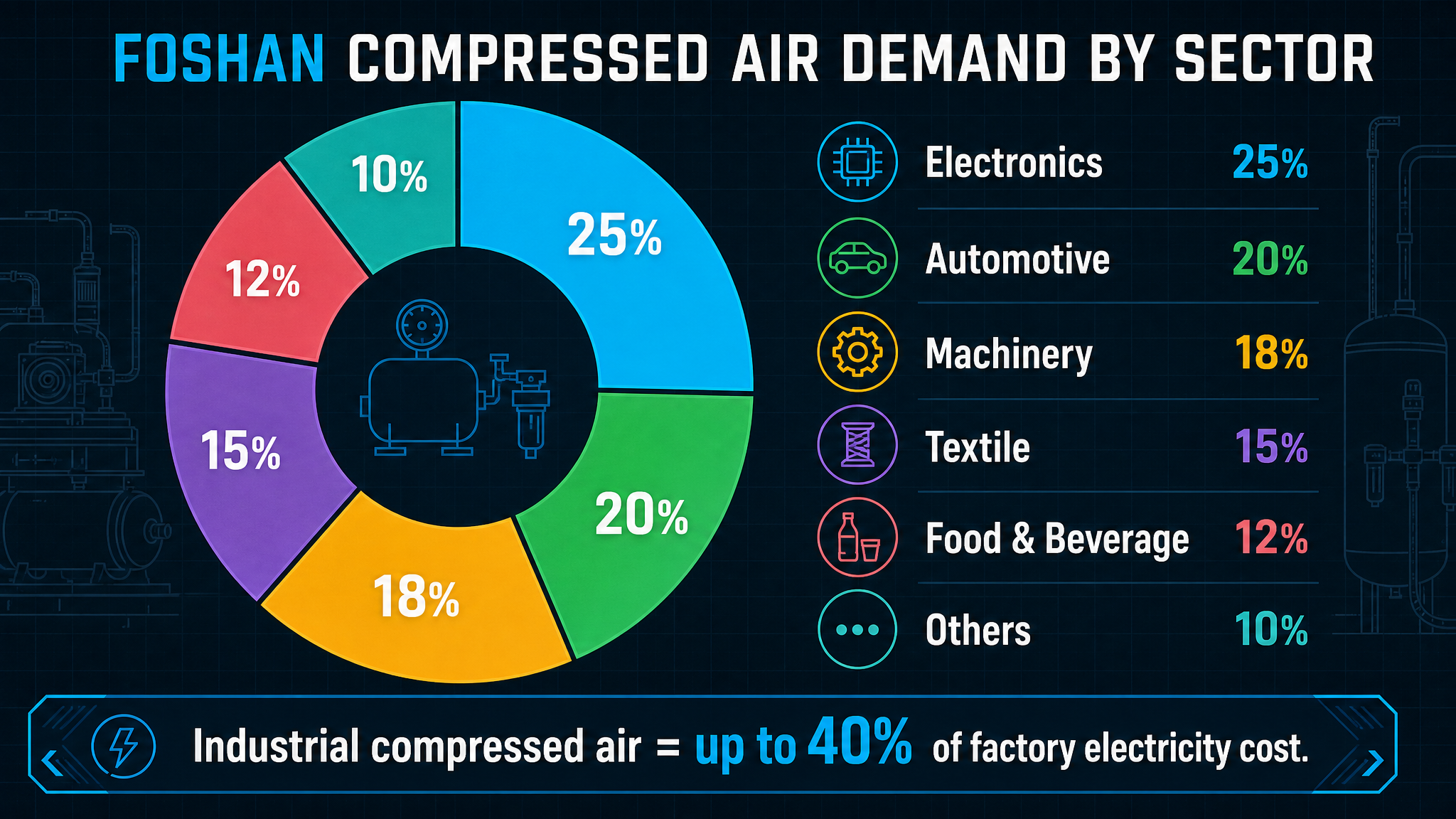
Industry Applications at a Glance
Buyer’s FAQ: Making Sense of Oil-Free Screw Compressor Specifications
What does specific power mean and why does it matter?
Specific power is the most important efficiency metric, measuring kW required per m³/min of delivered air. Premium compressors achieve 5.2-6.0 kW/(m³/min), while less efficient units may require 6.5-7.5 kW/(m³/min). Each 0.5 kW/(m³/min) improvement saves approximately ¥50,000-80,000 annually for a mid-size unit.
Why is my new Oil-Free Screw Compressor using more energy than expected?
Common causes include: compressor oversized for actual demand, system pressure set too high, air treatment with high pressure drop, or air leaks in the distribution system. A systematic audit will typically identify the cause.
What is the warranty coverage for Oil-Free Screw Compressor?
Standard warranty is typically 2 years. The airend is often covered by a separate longer warranty, typically 3-5 years. Some premium brands offer extended options up to 10 years for major components.
Checklist: Your Complete Oil-Free Screw Compressor Buying Guide for Foshan
This comprehensive checklist summarizes the key considerations for your Oil-Free Screw Compressor purchase. Use it throughout your procurement process.
Technical Requirements: ☐ Measured compressed air demand; ☐ Required discharge pressure; ☐ Required air quality level; ☐ Operating profile; ☐ Available utilities; ☐ Space for installation.
Equipment Selection: ☐ Compressor type (oil-injected or oil-free); ☐ Drive configuration (fixed speed or VFD); ☐ Compression stages; ☐ Motor efficiency class; ☐ Cooling system; ☐ Control system features.
Supplier Evaluation: ☐ Comparable proposals from 3+ suppliers; ☐ Verified efficiency data; ☐ Warranty terms; ☐ Service network coverage; ☐ References contacted; ☐ Service contract options.
Financial: ☐ TCO analysis completed; ☐ Financing options evaluated; ☐ Government incentives identified; ☐ Installation cost estimated; ☐ Performance guarantees documented.
For assistance, contact PRCompressor at 13713647073 or prcompressor.com.
Keywords: foshan manufacturer, compressor supplier, compressor buyer’s guide, compressor energy efficiency, industrial compressed air, screw air compressor, energy saving compressor, oil-free screw compressor, industrial air compressor, foshan compressor
Contact PRCompressor (Panrui) for oil-free screw compressor in Foshan: Phone 13713647073 | prcompressor.com