


How to Choose PM VSD Screw Compressor in China | 2026 Expert Guide
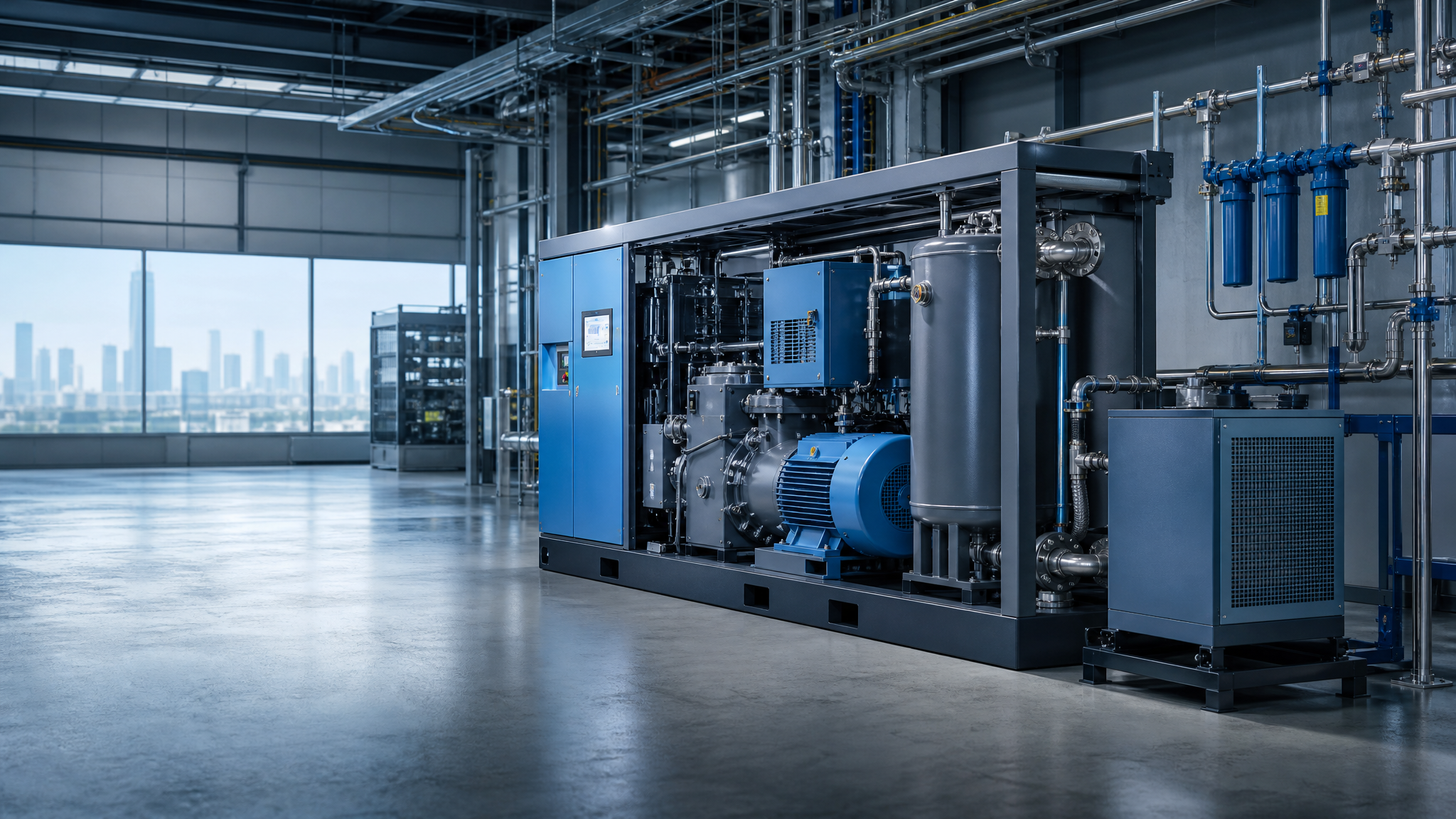
What should you look for when purchasing PM VSD Screw Compressor in China? It is a question that facility managers and procurement professionals grapple with regularly, and for good reason. A compressor purchase represents a significant capital investment that directly impacts production efficiency, energy costs, and maintenance budgets for years to come. Making the wrong choice can cost a factory hundreds of thousands of yuan in unnecessary electricity bills and lost productivity over the equipment’s lifespan.
This guide provides a structured framework for evaluating PM VSD Screw Compressor options in the China market. We cover specification analysis, manufacturer evaluation, cost modeling, and implementation planning — everything you need to make a confident, well-informed purchasing decision that aligns with your facility’s specific requirements and operational goals.
Compressed Air System Design: Beyond the Compressor Itself
The compressor is only one component of a complete compressed air system, and optimizing the system as a whole is essential for achieving the best possible performance and efficiency. For China manufacturers investing in PM VSD Screw Compressor, attention to system design — including intake air quality, piping configuration, air treatment, and condensate management — can significantly impact both the efficiency of the compressor itself and the quality of the compressed air delivered to production equipment.
The quality of intake air is a frequently overlooked factor in compressor performance. Every 10°C reduction in intake air temperature reduces the energy required for compression by approximately 3%. For China facilities in hot climates, locating the compressor intake on the north side of the building or drawing air from a cooler area can yield meaningful energy savings. Similarly, keeping intake air filters clean is essential — a dirty intake filter can increase pressure drop across the filter housing, effectively reducing the compressor’s capacity and increasing its specific power consumption.
Proper piping design is equally important. Undersized piping creates excessive pressure drop, forcing the compressor to operate at a higher discharge pressure to compensate. The rule of thumb is to design piping for a maximum pressure drop of 3-5% of the system pressure — for an 8 bar system, this means keeping total piping pressure drop below 0.4 bar. Loop-configuration piping rather than dead-end branches improves pressure stability and allows maintenance on sections without disrupting the entire system.
Air treatment is the final critical element of system design. The appropriate combination of aftercooler, dryer, and filters depends on the air quality requirements of your specific applications. For most China general manufacturing applications, a refrigerant dryer and particulate filter provide adequate air quality at moderate cost. For facilities requiring higher air quality, additional treatment including desiccant dryers and coalescing filters may be necessary.
Two-Stage Compression: Maximizing Efficiency for China Industries
Two-stage compression technology represents the pinnacle of screw compressor efficiency, offering measurable advantages over single-stage designs for applications requiring consistent high-pressure output. In a two-stage compressor, air is partially compressed in the first stage to 3-4 bar, cooled in an intercooler to remove a significant portion of the heat of compression, and then further compressed in the second stage to the final discharge pressure.
The thermodynamic advantage of this approach is substantial. By cooling the air between compression stages, the system removes heat energy that would otherwise need to be overcome in a single-stage compression cycle, reducing the total work required by 15-25% depending on the discharge pressure and operating conditions. This efficiency advantage is particularly valuable for China manufacturers operating at pressures above 8 bar, where two-stage compression delivers the greatest benefit.
PRCompressor’s PRCF/PRSF two-stage permanent magnet VFD series, available throughout the China market, exemplifies the best of this technology. These units combine two-stage airends with PMSM motors and precision VFD control to achieve verified specific power values below 5.2 kW/(m³/min) — among the best available in the industrial compressor market. For a medium-sized China factory operating a 110kW compressor 6,000 hours per year, this efficiency advantage translates to annual electricity savings of ¥150,000-250,000 compared to conventional single-stage fixed-speed equipment.
Beyond energy savings, two-stage compressors offer several other advantages for industrial users. The lower compression ratio per stage reduces mechanical stress on the rotors and bearings, potentially extending the service life of the airend. The inter-stage cooling also reduces the discharge temperature, which improves oil life and reduces the load on downstream air treatment equipment. For China manufacturers with continuous or high-duty-cycle operations, these benefits add significant value over the equipment’s operating life.
Predictive Maintenance: The Future of PM VSD Screw Compressor Reliability
Predictive maintenance represents a fundamental shift from traditional time-based or reactive maintenance approaches. Instead of performing maintenance at fixed intervals or waiting for failures to occur, predictive maintenance uses continuous monitoring and advanced analytics to predict when maintenance will be needed, allowing interventions to be scheduled at the most opportune time — before failure occurs but not unnecessarily early. For China manufacturers operating critical PM VSD Screw Compressor systems, this approach can significantly reduce both maintenance costs and production downtime.
Key predictive maintenance techniques for screw compressors include oil analysis, vibration analysis, thermography, and performance trend analysis. Modern PM VSD Screw Compressor with IoT-enabled controllers support predictive maintenance through built-in monitoring capabilities and cloud-based analytics platforms. These systems automatically track operating parameters, compare them to baseline values, and generate alerts when parameters deviate from expected ranges.
For China facilities where compressed air reliability is critical to production, the investment in predictive maintenance capability — whether through built-in controller features, aftermarket monitoring systems, or third-party service contracts — is typically recovered through reduced downtime, extended equipment life, and optimized maintenance scheduling within the first year of implementation.
PM VSD Screw Compressor for Plastic and Rubber Processing in China
Plastic and rubber processing facilities in China use compressed air for injection molding machines, blow molding equipment, extrusion lines, and pneumatic conveying systems. These applications have distinct compressed air requirements.
Injection molding uses compressed air for mold actuation, part ejection, and auxiliary equipment operation. The demand profile is characterized by short-duration, high-flow peaks during mold opening and closing cycles, with lower continuous demand for auxiliary equipment. This demand pattern makes properly sized receiver capacity important.
Pneumatic conveying systems for plastic pellets and powders require consistent air pressure and flow to maintain stable material transport. Any interruption or significant variation can cause material blockages. For China plastic processing facilities, the compressed air system’s reliability directly impacts production continuity.
For China plastic and rubber processing manufacturers, the selection of PM VSD Screw Compressor should consider both the general plant air requirements and the specific requirements of the plastic processing applications.
PM VSD Screw Compressor for Electronics Manufacturing in China
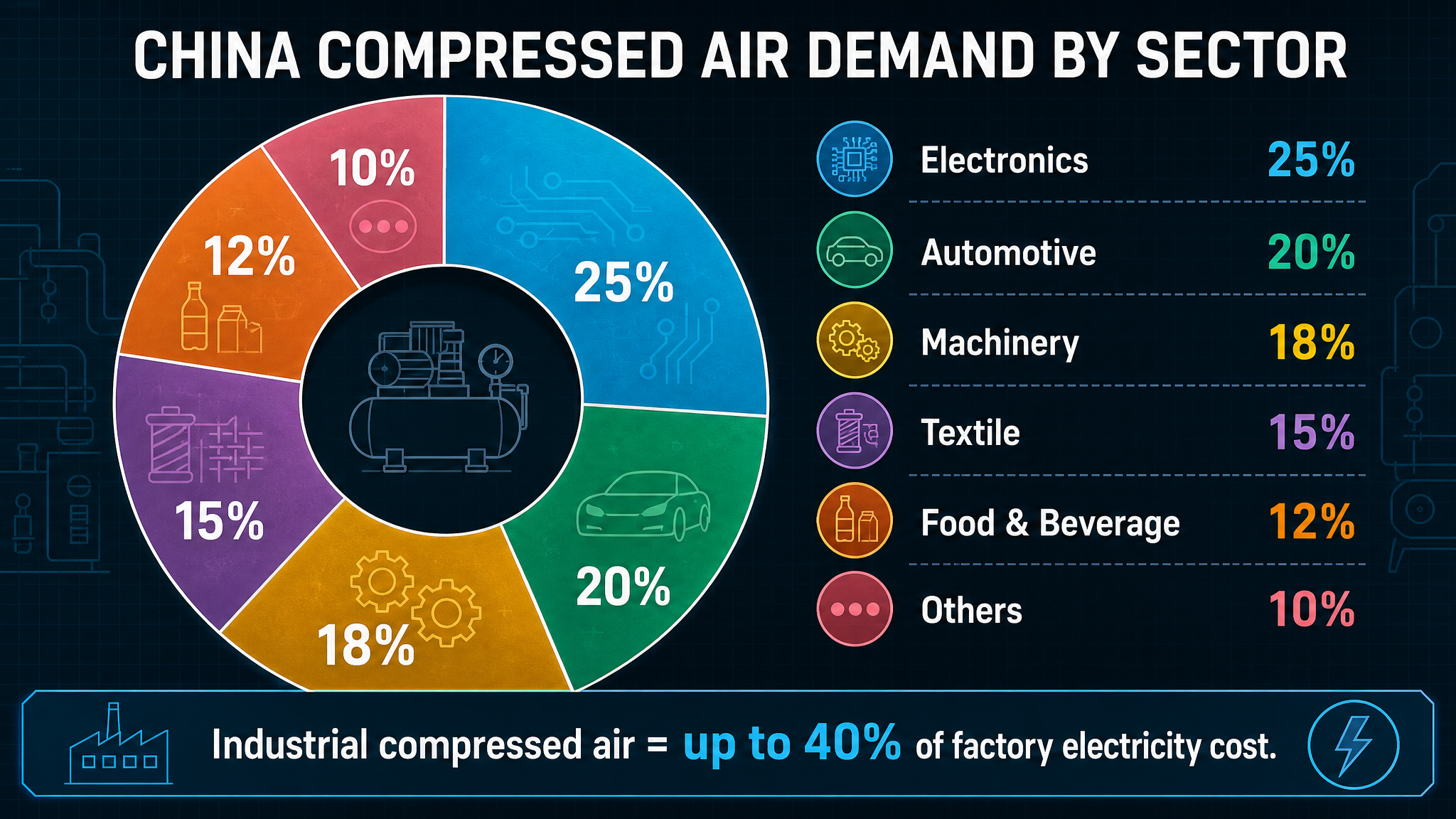
Electronics manufacturing is one of China’s most important industries, and it has some of the most demanding compressed air requirements. The production of printed circuit boards (PCBs), semiconductor components, displays, and electronic assemblies requires compressed air that is clean, dry, and stable — any contamination or pressure fluctuation can cause defects in sensitive electronic products.
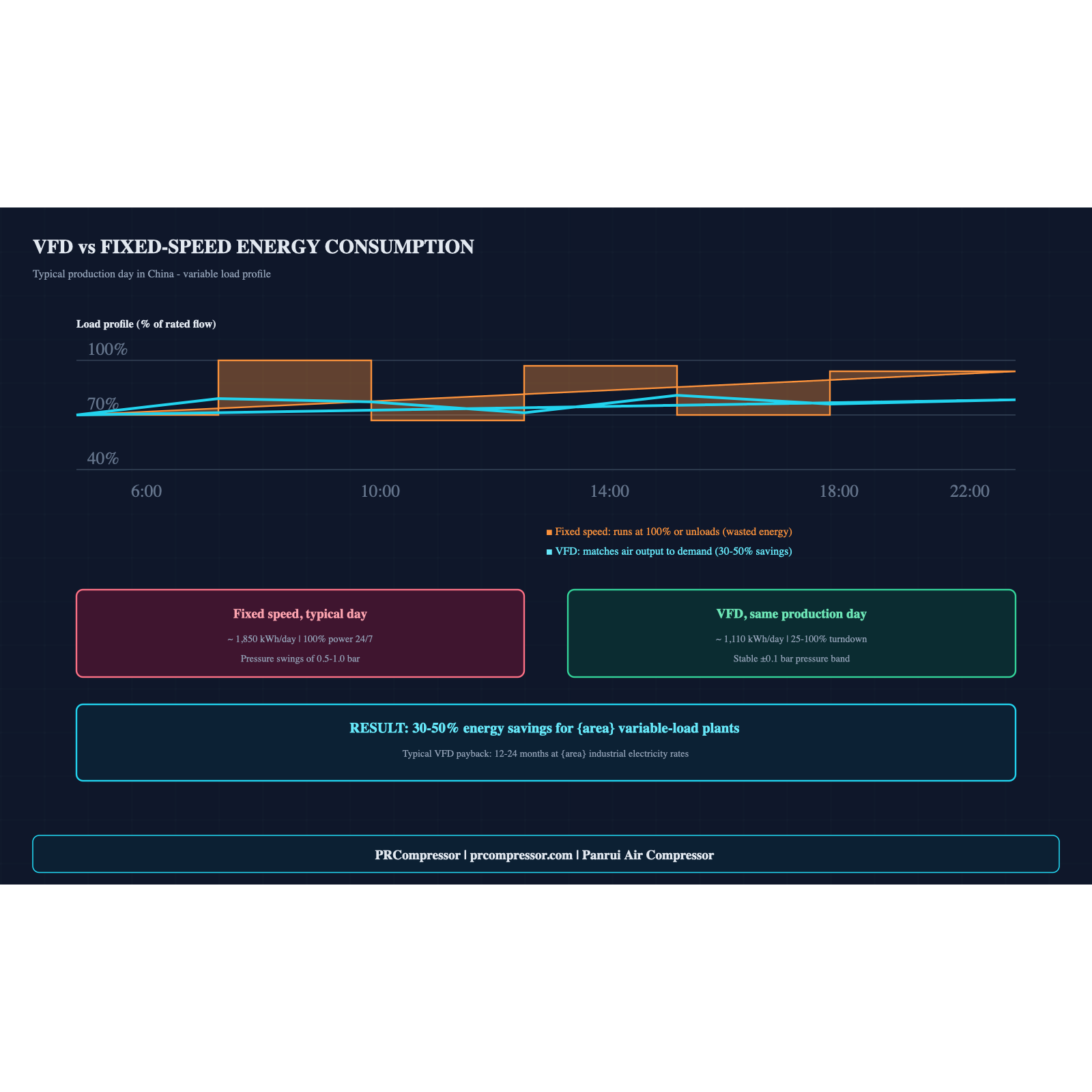
For China electronics manufacturers, PM VSD Screw Compressor with oil-free technology or high-efficiency filtration is typically required for production areas. The ISO 8573-1 Class 1 or Class 2 air quality standard is common in this industry. VFD technology is also highly beneficial due to the variable demand profile — different production lines may operate on different schedules, creating significant demand variation throughout the day.
Pressure stability is another critical requirement in electronics manufacturing. Many electronic assembly processes are sensitive to pressure variations, and maintaining pressure within tight tolerances (±0.1 bar) is essential for consistent quality. PM VSD Screw Compressor with precision VFD control and properly sized storage capacity can deliver this level of pressure stability.
For China electronics manufacturers evaluating PM VSD Screw Compressor suppliers, experience in the electronics industry should be a selection criterion. Suppliers who understand the specific requirements of electronics production are better positioned to recommend appropriate solutions.
Emergency Response Plan for PM VSD Screw Compressor Failures in China
Even with the best preventive maintenance program, failures can occur. Having a well-rehearsed emergency response plan can mean the difference between a brief interruption and a prolonged shutdown.
Plan Element 1: Immediate Response Procedures — Document who to notify, what information to collect, and how to restore minimum compressed air supply including backup compressor startup procedures and prioritization of critical consumers.
Plan Element 2: Equipment Information — Maintain accessible documentation for all compressors including manufacturer and model information, key specifications, warranty status, service contract information, and critical spare parts locations.
Plan Element 3: Service Provider Contact — Establish relationships with at least two qualified service providers. Document their emergency contact numbers, typical response times, and capabilities.
Plan Element 4: Backup Capacity Planning — Develop a plan for maintaining compressed air supply during extended outages, including rental compressor arrangements, mutual aid agreements, or maintaining a spare compressor on-site.
Oil Analysis: The Diagnostic Tool Every PM VSD Screw Compressor Owner Needs
Oil analysis is one of the most valuable diagnostic tools available to PM VSD Screw Compressor owners in China. Regular oil analysis provides early warning of developing mechanical issues, assesses oil condition, and verifies that maintenance intervals are appropriate for your specific operating conditions.
The standard oil analysis package includes: viscosity measurement; acid number; water content; particle count and size distribution; elemental analysis identifying specific wear metals; and oxidation/nitration levels.
Establishing a baseline analysis when the compressor is new provides the reference for all future analyses. Subsequent samples should be taken at regular intervals — typically every 500-1,000 operating hours — and results compared to the baseline to identify trends.
For China manufacturers operating multiple compressors, oil analysis enables optimized oil change intervals. By analyzing oil condition at the manufacturer’s recommended change interval, you can determine if the oil still has useful life remaining, potentially reducing maintenance costs.
Total Cost of Ownership Analysis for PM VSD Screw Compressor in China
For China manufacturers, understanding the total cost of ownership (TCO) of PM VSD Screw Compressor is essential for making informed procurement decisions. TCO analysis accounts for all costs associated with owning and operating a compressor over its service life, including initial purchase price, installation costs, energy consumption, maintenance, spare parts, and downtime costs.
The typical TCO breakdown for an industrial screw compressor operating in China is as follows: energy costs account for 70-80% of total lifetime cost; the initial purchase price accounts for 10-15%; maintenance and spare parts account for 8-12%; and installation, downtime, and other costs account for the remaining 2-5%. This distribution means that a 10% improvement in energy efficiency has roughly the same financial impact as a 50% reduction in purchase price.
To illustrate with a specific example for the China market: a 75kW PM VSD Screw Compressor operating 6,000 hours per year with electricity at ¥0.90/kWh will consume approximately ¥405,000 worth of electricity annually. Over a 10-year operating life, the total energy cost exceeds ¥4 million. Comparing two compressor options with a 0.5 kW/(m³/min) difference in specific power, the more efficient unit will save approximately ¥200,000 in energy costs over its life.
When evaluating TCO for PM VSD Screw Compressor options in China, the following calculation framework is recommended: estimate annual operating hours; determine your effective electricity cost; obtain specific power data at typical load points from each supplier; calculate annual energy consumption and cost for each option; add estimated maintenance costs; and compare the 5-year and 10-year total costs to identify the most economical option over the long term.
Visual Guide: Compressor Selection Process
[Flowchart: A step-by-step visual guide to selecting the right PM VSD Screw Compressor in China, starting from demand measurement and air quality requirements through technology evaluation, supplier comparison, and final decision.]
Supplier Qualification: Questions to Ask Before Buying PM VSD Screw Compressor in China
Asking the right questions during supplier evaluation is essential for making an informed purchasing decision. Here are the key questions organized by topic.
Product Performance: Can you provide verified specific power data at full load and part load? How do you verify your efficiency claims? What is your policy if the installed equipment fails to meet specified performance? What is the expected service life under our operating conditions?
Service and Support: How many service technicians do you have in the China region? What is your typical response time for emergency calls? Do you maintain local spare parts inventory? Can you provide a sample maintenance contract? What training do you provide?
Company Background: How long have you been supplying the China market? Can you provide references from three customers in similar industries? What certifications do you hold? What is your approach to product development?
Commercial Terms: What is your standard warranty coverage? Can extended warranty be purchased? What are your payment terms? Do you offer performance guarantees? What is the expected delivery lead time?
Visual: VFD vs Fixed Speed Energy Consumption
Regulatory Environment: Compliance Requirements for China Manufacturers
Manufacturing facilities in China operate within an evolving regulatory framework that increasingly impacts compressed air system design and equipment selection. Key regulations affecting PM VSD Screw Compressor procurement include national energy efficiency standards, local environmental protection requirements, and industry-specific quality standards.
China’s national energy efficiency standards for air compressors — GB 19153-2019 and GB 18613-2020 — establish minimum efficiency requirements for equipment sold and operated in the country. Class 1 represents the highest efficiency level, and premium PM VSD Screw Compressor meeting Class 1 or Class 2 standards qualify for reduced tariffs on the energy surcharge component of electricity pricing, providing an additional financial incentive for choosing high-efficiency equipment.
Environmental regulations also impact compressor selection. Noise regulations in industrial zones require compressors to meet specific sound level limits, typically below 75-80 dB(A). Oil containment requirements mandate proper collection and disposal of compressor condensate. Facilities with significant compressed air capacity may also need to register their energy consumption with local authorities.
For China manufacturers, working with a supplier who is knowledgeable about the regulatory environment and can guide compliance is an important consideration. The most reputable suppliers incorporate compliance as a standard element of their sales and service process.
Final Recommendations for China PM VSD Screw Compressor Buyers
After examining the full landscape of PM VSD Screw Compressor options in China, several clear recommendations emerge:
Know Your Numbers — Invest in understanding your compressed air demand, air quality requirements, and operating profile before talking to suppliers. A professional audit is a worthwhile investment.
Compare on Lifecycle Cost — Evaluate proposals based on 5-year TCO, considering purchase price, energy costs, maintenance, and expected service life. Energy costs will dominate the total.
Evaluate Service Capability Thoroughly — The best compressor is worthless if it cannot be serviced promptly. Verify service network coverage in China and check references.
Plan for the Complete System — The compressor is the centerpiece, but the complete system includes piping, storage, air treatment, controls, and monitoring. Invest in system design commensurate with your equipment investment.
For personalized assistance, contact PRCompressor at 13713647073 or visit prcompressor.com.
Keywords: energy saving compressor, industrial compressed air, china compressor, china manufacturer, pm vsd screw compressor, compressor supplier, compressor energy efficiency, screw air compressor, industrial air compressor, compressor buyer’s guide
Contact PRCompressor (Panrui) for pm vsd screw compressor in China: Phone 13713647073 | prcompressor.com