


A compressor room that runs only a few degrees above specification can shorten the air end’s life and waste thousands of dollars in extra power every year. Poor air compressor room ventilation is the cause most plants overlook until a high-temperature alarm stops production. Fix the airflow before the shutdown, and the same machine runs cooler, quieter, and cheaper.
Why Poor Air Compressor Room Ventilation Costs Real Money
Hot intake air is less dense, so the compressor has to work harder to deliver the same free air volume. The result shows up in three places: higher electricity use, shorter oil and air-end life, and more unplanned downtime. Buyers who focus only on compressor price miss this operating cost entirely.
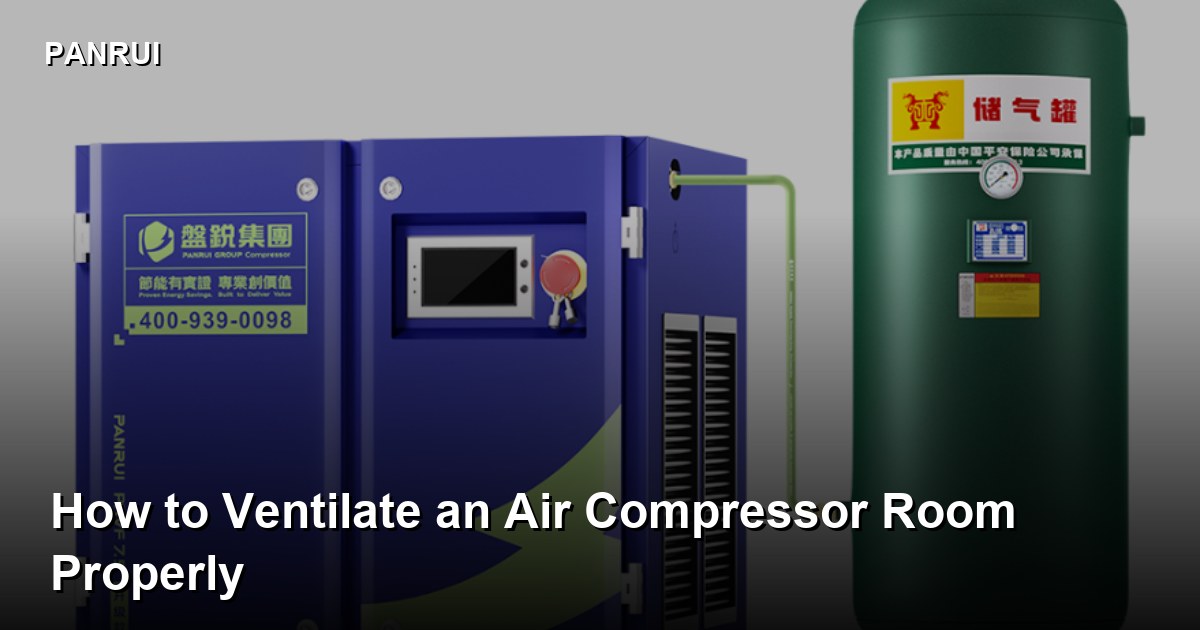
Panrui addresses part of this problem inside the machine. Its screw compressors use a 20–30% larger cooling system and an optimized intake and heat-dissipation duct design, and the package is validated for 52°C ambient operation instead of the 40°C design point common in the industry. That margin still depends on one external factor: the room must carry the rejected heat away.
- Hot air recirculates when the exhaust is too close to the intake.
- Dust-loaded intake air clogs coolers and raises discharge temperature.
- Undersized louvers force the fan to pull against the room, cutting airflow.
How Much Heat Must the Room Move?
A rotary screw compressor turns most of the motor’s input energy into heat that must be discharged. The cooling fan handles the machine’s internal airflow, but the room still needs fresh air to replace the hot discharge air. If the room temperature climbs above the machine’s design limit, the controller will derate the unit or trip it on high temperature.
A simple field rule works for most installations: the ventilation opening must be larger than the compressor’s discharge duct, and the intake should stay below the exhaust so cooler replacement air enters at floor level while hot air leaves near the ceiling. Keep the two paths separated so the machine does not breathe its own rejected heat.
7-Step Air Compressor Room Ventilation Checklist
- Measure the room temperature at the compressor intake, not at the doorway.
- Place the fresh-air intake low on one wall and the hot-air exhaust high on the opposite wall.
- Size the free opening area to the compressor’s required cooling airflow, plus 15–20% for fouling.
- Duct the exhaust directly outdoors instead of leaving it open into the plant.
- Interlock an exhaust fan with the compressor so the fan runs whenever the unit is loaded.
- Keep the intake away from dust sources, welding smoke, and other machine exhausts.
- Clean filters, louvers, and cooler fins on a fixed monthly schedule.
What the Machine Handles vs. What the Room Must Provide
The difference matters. A machine built for 52°C ambient conditions gives you more tolerance before a trip, but it does not remove the need for ventilation. The room still determines whether the compressor runs near its efficient design point or constantly fights a heat load. Buyers evaluating a rotary screw air compressor should ask for the required cooling airflow and exhaust temperature at their local summer conditions.
The same discipline applies to energy savings. Lowering the intake air temperature improves air density and reduces compression work; in Panrui’s energy-saving breakdown, adjusting the intake opening to reduce inlet temperature contributes about 0.5% savings on its own. Combined with a properly placed exhaust, the effect is higher reliability and a lower bill.
Common Ventilation Objections, Answered
“The compressor already has a fan, so I don’t need room ventilation.”The internal fan moves air through the cooler. The room must then remove that heat; otherwise the fan simply recirculates warmer air and discharge temperature rises. “My room gets hot only in summer.”
That is exactly when power demand and compressed-air load usually peak. Design ventilation for the hottest month, then verify it again after adding a second machine or more packaging equipment. “We run a variable speed compressor, so heat is less of a problem.”
Variable speed cuts power at partial load, but the heat rejection still follows the actual input power. A variable speed screw air compressor still needs the same room airflow at full load.
Make Ventilation Part of Your Compressor Specification
Treat air compressor room ventilation as a design input, not an afterthought. Specify the required cooling airflow, position the intake and exhaust for one-way air movement, and keep the openings clean. A well-ventilated room protects the air end, holds the energy saving you were promised, and keeps production running through the hottest shifts. For help matching the right screw compressor to your installation, contact our engineering team.