


Permanent Magnet Screw Compressor in China: 2026 Manufacturer Selection Guide
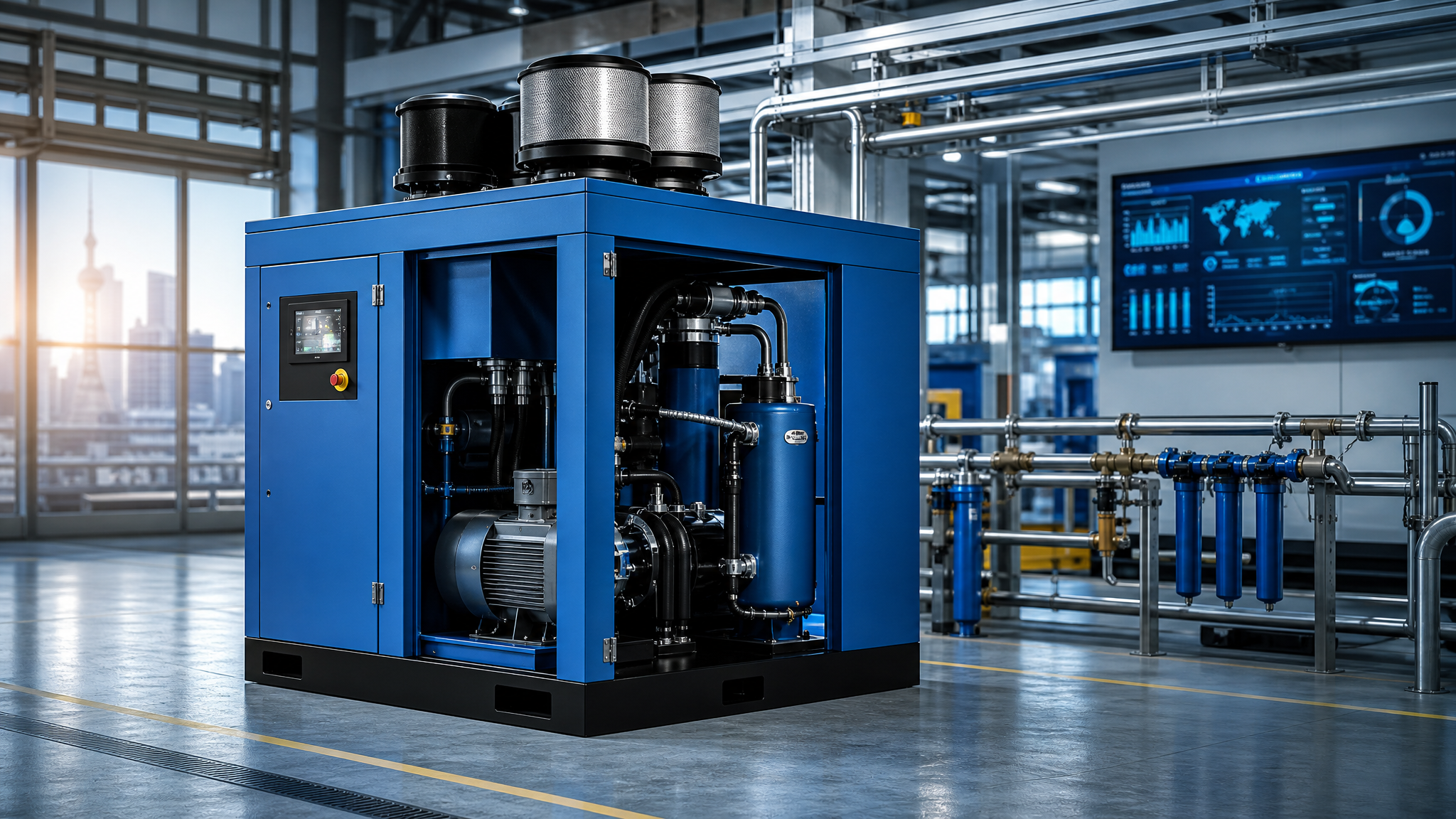
The industrial compressed air landscape in China is experiencing unprecedented change in 2026. With energy costs rising by approximately 8-15% annually across most Chinese industrial regions, manufacturing facilities are under intensifying pressure to optimize their air compression systems. This detailed analysis explores how China businesses can navigate the complex market for Permanent Magnet Screw Compressor and make procurement decisions that will serve them well for the next decade.
Industry data from recent surveys indicates that over 60% of industrial facilities in China are operating compressed air systems that are either outdated or improperly sized for their current production needs. This inefficiency represents both a significant cost burden and a substantial opportunity for improvement. The manufacturers who act decisively to upgrade their compressed air infrastructure stand to gain a meaningful competitive advantage through lower operating costs and improved production reliability.
Payback Period Analysis for Permanent Magnet Screw Compressor Investments in China
Payback period is the most commonly used metric for evaluating compressor upgrade projects in China manufacturing facilities. Replacing an older fixed-speed compressor with a modern premium VFD model typically achieves payback in 12-24 months. Upgrading from standard-efficiency to premium-efficiency typically achieves payback in 18-36 months.
System-level improvement projects often achieve the shortest payback periods. Fixing compressed air leaks can reduce total system energy consumption by 20-30% at costs recovered within 3-6 months. Reducing system pressure by 1 bar saves 6-8% of compressor energy at essentially no cost. These quick-payback projects should be implemented alongside major equipment investments.
For China manufacturers developing a compressed air system investment plan, a phased approach that prioritizes quick-payback system improvements while also planning for longer-payback equipment upgrades typically provides the best overall financial outcome.
Energy Cost Savings: Quantifying the Impact of Efficient Permanent Magnet Screw Compressor
For China manufacturers, energy cost savings represent the largest and most predictable benefit of investing in efficient Permanent Magnet Screw Compressor. The magnitude of these savings depends on the efficiency difference between current and new equipment, the operating profile, local electricity rates, and the specific technology choices made.
The most important metric for comparing compressor energy efficiency is specific power. A typical older fixed-speed compressor might have a specific power of 7.0-7.5 kW/(m³/min). A modern premium-efficiency VFD compressor with PMSM motor technology might achieve 5.2-5.8 kW/(m³/min) — representing a 20-30% improvement. For a facility operating a 75kW compressor 6,000 hours per year, this translates to annual energy savings of 100,000-150,000 kWh worth ¥80,000-150,000.
The savings from VFD technology are additional to the savings from improved mechanical efficiency. For facilities with variable air demand, VFD technology typically reduces energy consumption by an additional 30-50%. The combined effect can reduce total compressed air energy costs by 40-60% compared to older fixed-speed equipment.
For China facilities considering a compressor upgrade, the following steps will produce a reliable energy savings estimate: measure current compressed air energy consumption; determine your facility’s demand profile; obtain specific power data from suppliers of candidate equipment; calculate potential energy savings; and apply your effective electricity rate to convert energy savings to cost savings.
Permanent Magnet Technology: The Efficiency Revolution in Permanent Magnet Screw Compressor
The integration of permanent magnet synchronous motor (PMSM) technology represents one of the most significant advances in compressed air efficiency over the past decade. Unlike traditional induction motors that consume electrical current to create a magnetic field in the rotor, permanent magnet motors use high-strength neodymium magnets mounted on the rotor to provide the magnetic field continuously. This eliminates the electrical losses associated with rotor field creation, resulting in efficiency improvements of 5-10% across the motor’s operating range.
When combined with variable frequency drive (VFD) technology, PMSM motors create a powertrain that is exceptionally efficient across a wide speed range. The PRCompressor PMV series, widely available in the China market, exemplifies this approach with IE4 and IE5 efficiency class motors coupled to precision VFD controllers that optimize motor speed and torque for any operating condition. Field data from installations across China manufacturing facilities shows that this combination typically delivers 30-45% energy savings compared to fixed-speed induction motor compressors.
The advantages of PMSM-VFD technology extend beyond energy savings. These systems provide exceptionally stable discharge pressure, typically maintaining within ±0.1 bar of the setpoint regardless of demand fluctuations. This pressure stability is critical for sensitive manufacturing processes common in China industries such as electronics assembly, precision machining, and pharmaceutical production. Additionally, the soft-start capability of VFD systems eliminates the high inrush current associated with direct-on-line motor starting, reducing electrical infrastructure requirements and extending the life of electrical components.
For China manufacturers evaluating Permanent Magnet Screw Compressor, the PMSM-VFD combination represents the current state of the art in compressed air efficiency. The higher initial investment — typically 30-50% more than a comparable fixed-speed unit — is usually recovered within 12-24 months through electricity savings alone, after which the efficiency advantage contributes directly to improved profitability.
Compressed Air Quality Standards for China Industries
The quality of compressed air required varies significantly across different industrial applications, and selecting the appropriate air quality level for your operations has important implications for both equipment selection and operating costs. The international standard ISO 8573-1 defines nine purity classes for compressed air based on solid particle content, water content, and oil content, with Class 1 being the highest purity and Class 9 the lowest.
For general China manufacturing applications such as pneumatic tools, material handling, and machine actuation, ISO Class 4-5 air quality is typically sufficient. This level of air quality can be achieved with a standard oil-injected Permanent Magnet Screw Compressor followed by a refrigerant dryer and basic particulate filtration — a relatively modest investment in air treatment equipment.
Higher quality requirements drive significantly higher air treatment costs. ISO Class 1-2 air quality, required for applications such as pharmaceutical manufacturing, food and beverage processing, electronics fabrication, and critical instrumentation, demands oil-free compressors or comprehensive filtration, desiccant or membrane drying, and careful attention to the entire compressed air system. The total cost of a Class 1 compressed air system can be 2-3 times that of a Class 4 system, making it important to match air quality specifications precisely to actual production requirements.
When evaluating Permanent Magnet Screw Compressor options for your China facility, clearly define your air quality requirements before selecting equipment. Overspecifying air quality drives unnecessary capital and operating costs, while underspecifying risks product quality issues or equipment damage. If your air quality requirements vary across different production areas, consider a zoned approach with appropriate treatment at each zone level.
Permanent Magnet Screw Compressor for Electronics Manufacturing in China
Electronics manufacturing is one of China’s most important industries, and it has some of the most demanding compressed air requirements. The production of printed circuit boards (PCBs), semiconductor components, displays, and electronic assemblies requires compressed air that is clean, dry, and stable — any contamination or pressure fluctuation can cause defects in sensitive electronic products.
For China electronics manufacturers, Permanent Magnet Screw Compressor with oil-free technology or high-efficiency filtration is typically required for production areas. The ISO 8573-1 Class 1 or Class 2 air quality standard is common in this industry. VFD technology is also highly beneficial due to the variable demand profile — different production lines may operate on different schedules, creating significant demand variation throughout the day.
Pressure stability is another critical requirement in electronics manufacturing. Many electronic assembly processes are sensitive to pressure variations, and maintaining pressure within tight tolerances (±0.1 bar) is essential for consistent quality. Permanent Magnet Screw Compressor with precision VFD control and properly sized storage capacity can deliver this level of pressure stability.
For China electronics manufacturers evaluating Permanent Magnet Screw Compressor suppliers, experience in the electronics industry should be a selection criterion. Suppliers who understand the specific requirements of electronics production are better positioned to recommend appropriate solutions.
Step-by-Step Guide to Selecting Permanent Magnet Screw Compressor in China
Selecting the right Permanent Magnet Screw Compressor for your China facility does not need to be complicated, but it does require a systematic approach. This step-by-step guide provides a structured process that will help you evaluate your options and make a confident decision.
Step 1: Define Your Compressed Air Demand — Measure your actual air consumption over a representative period. If measurement is not possible, estimate demand by inventorying all air-consuming equipment and calculating total demand with appropriate diversity factors. Add 20-30% for future expansion and system losses.
Step 2: Determine Your Air Quality Requirements — Identify the highest air quality requirement among your applications. If any application requires oil-free air, that will drive the compressor selection toward oil-free technology. Also determine the required pressure dew point and particulate filtration level.
Step 3: Evaluate Technology Options — Based on your demand profile and air quality requirements, evaluate the available technology options. For variable demand with 4,000+ annual operating hours, VFD technology is strongly recommended. For constant high-pressure applications, two-stage compression should be considered.
Step 4: Compare Supplier Proposals — Request proposals from at least three qualified suppliers. Evaluate proposals based on lifecycle cost, not purchase price. Verify service capabilities and warranty terms. Request references and follow up on them.
Step 5: Make a Confident Decision — Combine the technical evaluation, financial analysis, and supplier assessment into a weighted decision framework, balancing quantitative factors with qualitative factors.
Environmental Data: Carbon Emissions and Sustainability
In the China power grid, the average carbon emission factor is approximately 0.8-0.9 kg CO₂ per kWh. For a 75kW compressor operating 6,000 hours per year, annual carbon emissions are approximately 325 metric tons of CO₂. A 30% reduction in energy consumption would reduce emissions by approximately 98 metric tons annually.
Beyond energy-related emissions, other environmental considerations include oil management, noise emissions, and end-of-life recyclability. These factors contribute to a comprehensive sustainability profile for China manufacturers committed to environmental responsibility.

Visual Guide: How Permanent Magnet Screw Compressor Compares
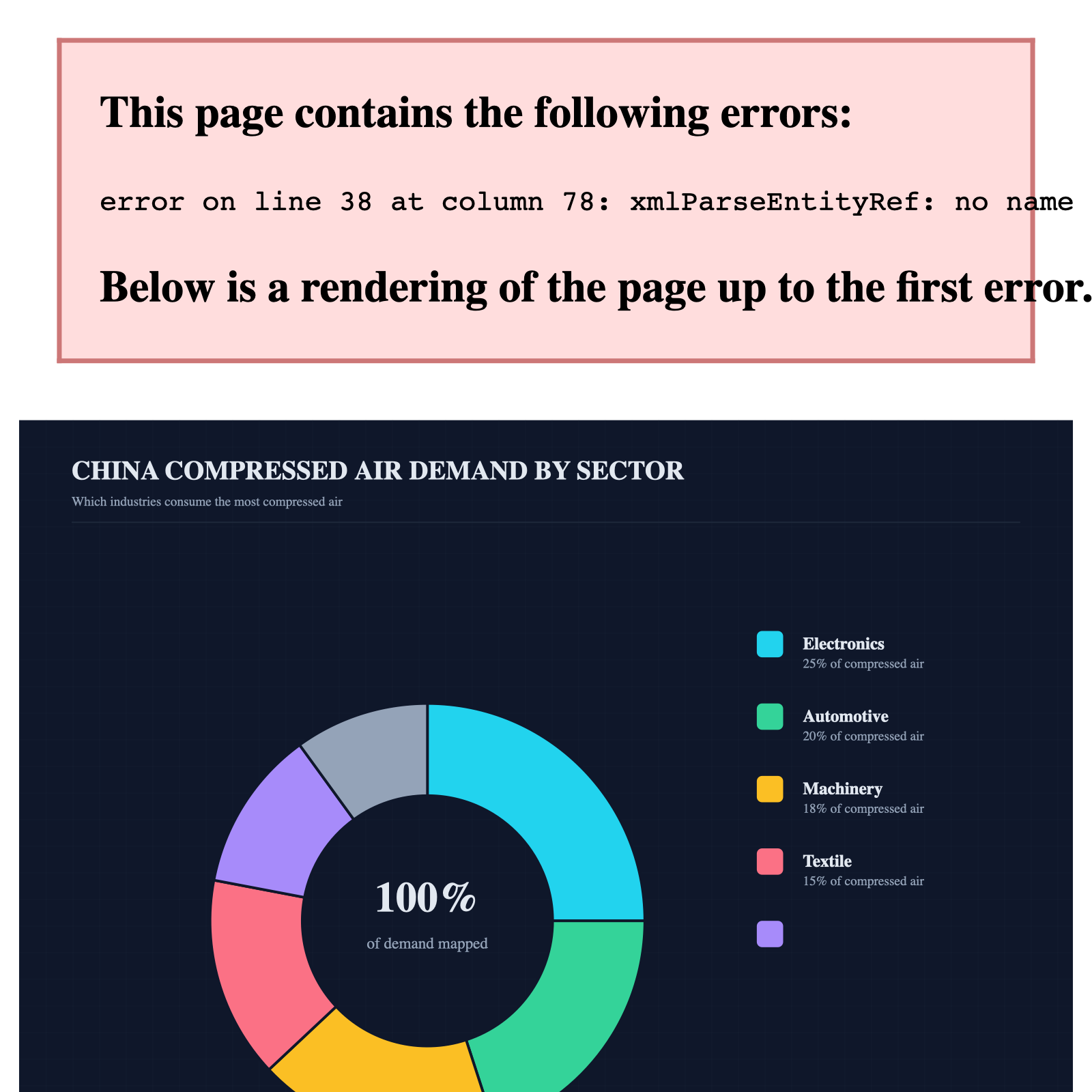
Industry Applications at a Glance
Power Range and Application Matching
5.5-22 kW (Small Shop): Ideal for workshops, repair facilities, light manufacturing. Serves 1-5 consumers, typically 2,000-4,000 hours/year. Fixed-speed usually adequate.
30-75 kW (Medium Manufacturing): The most common range for general manufacturing. Serves 5-20 consumers. Most facilities benefit from VFD technology with 12-24 month payback.
90-200 kW (Large Industrial): For large facilities, process industries, and central systems. Multi-compressor configurations with mixed VFD and fixed-speed are common.
250-500 kW (Heavy Industry): For very large facilities and mining operations. A 1% efficiency improvement can save ¥50,000-150,000 annually.
Long-Term Storage and Preservation of Permanent Magnet Screw Compressor in China
There may be occasions when Permanent Magnet Screw Compressor equipment needs to be stored for extended periods. Proper preservation is essential to prevent corrosion, bearing damage, and seal deterioration.
For short-term storage (1-3 months), seal all openings, fill with oil to normal level, rotate the airend monthly, maintain storage area between 5-40°C with humidity below 70%.
For long-term storage (3+ months), fill with rust-inhibiting preservation oil, coat exposed metal surfaces with corrosion-preventive compound, place desiccant bags inside the enclosure, and rotate the airend monthly.
Before returning stored equipment to service, inspect thoroughly for corrosion or damage, replace all filters and oil separator, fill with fresh oil, check electrical connections, and run unloaded for 30 minutes before connecting to the distribution system.
Oil Analysis: The Diagnostic Tool Every Permanent Magnet Screw Compressor Owner Needs
Oil analysis is one of the most valuable diagnostic tools available to Permanent Magnet Screw Compressor owners in China. Regular oil analysis provides early warning of developing mechanical issues, assesses oil condition, and verifies that maintenance intervals are appropriate for your specific operating conditions.
The standard oil analysis package includes: viscosity measurement; acid number; water content; particle count and size distribution; elemental analysis identifying specific wear metals; and oxidation/nitration levels.
Establishing a baseline analysis when the compressor is new provides the reference for all future analyses. Subsequent samples should be taken at regular intervals — typically every 500-1,000 operating hours — and results compared to the baseline to identify trends.
For China manufacturers operating multiple compressors, oil analysis enables optimized oil change intervals. By analyzing oil condition at the manufacturer’s recommended change interval, you can determine if the oil still has useful life remaining, potentially reducing maintenance costs.
Summary: Making the Right Permanent Magnet Screw Compressor Decision for Your China Facility
Selecting Permanent Magnet Screw Compressor for your China facility is a significant decision that affects production reliability, energy costs, and operational efficiency for years to come. This guide has examined the key factors that should inform that decision — from technology options and efficiency metrics to supplier evaluation and financial analysis.
A well-selected compressor will deliver reliable service and efficient operation throughout its life, while a poorly chosen machine will cost far more in energy and maintenance than the initial savings. The investment of time in a thorough evaluation process is repaid many times over through lower operating costs and fewer operational headaches.
We recommend engaging with multiple qualified suppliers, requesting detailed proposals with verified efficiency data, and taking the time to check references before making a final decision. The right compressor is the one that best balances performance, efficiency, reliability, and support.
For assistance evaluating your Permanent Magnet Screw Compressor options in China, contact PRCompressor (Panrui) for a free consultation at 13713647073 or visit prcompressor.com.
Keywords: china manufacturer, industrial compressed air, permanent magnet screw compressor, screw air compressor, industrial air compressor, compressor supplier, china compressor, compressor buyer’s guide, compressor energy efficiency, energy saving compressor
Contact PRCompressor (Panrui) for permanent magnet screw compressor in China: Phone 13713647073 | prcompressor.com