


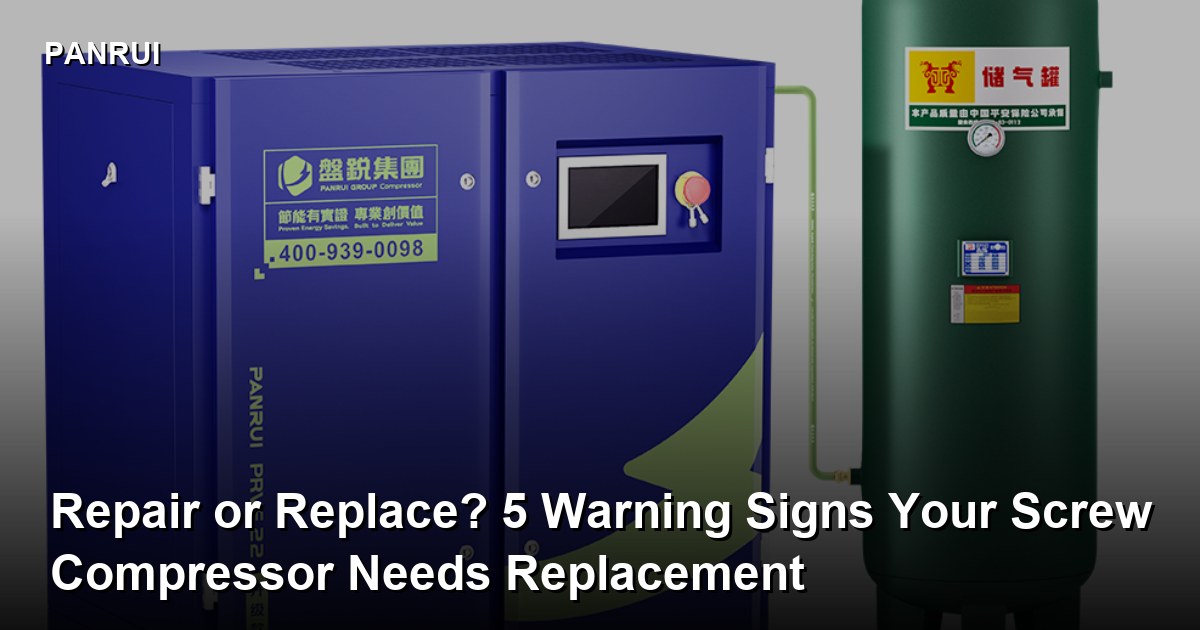
An aging screw compressor can reach a point where repeated repairs cost more than a new machine. The decision to repair or replace should be based on performance, repair cost, and energy consumption, not only on whether the machine can still be made to run.
1. Air Output Has Dropped Noticeably
If the airend clearances have increased, the compressor may still run but produce less air than its rating. A drop of 15% or more in delivered flow often signals that major mechanical work is approaching.
2. Repair Costs Are Approaching 40% of Replacement Cost
As a guideline, when the cost of the next repair plus expected future repairs approaches 40% of a new compressor price, replacement usually makes more financial sense.
3. Energy Consumption Is Increasing
Older machines may consume more electricity to deliver the same flow. A new high-efficiency compressor can often pay for itself through energy savings within one to two years in continuous-duty applications.
4. Downtime Is Affecting Production
When a compressor failure stops production, the real cost is not just the repair bill. Frequent interruptions can be far more expensive than investing in a reliable replacement.
5. Critical Components Are Obsolete or Hard to Source
Long lead times for older parts create risk. If spares are no longer readily available, a planned replacement is safer than waiting for an emergency failure.
If several warning signs apply, it is time to replace old screw air compressor equipment with a modern, efficient model. A VSD screw air compressor can provide additional savings in plants where demand changes during the shift.