


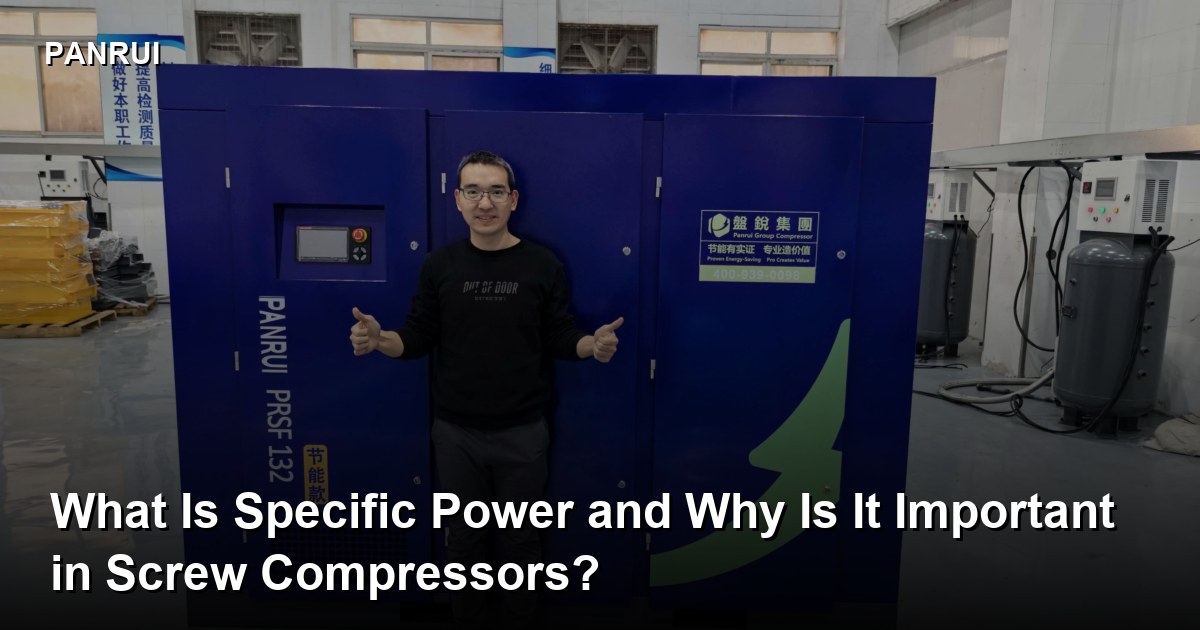
If you only compare motor kW, you can buy the wrong screw compressor. The number that matters for energy cost is screw compressor specific power: the input power required to produce one cubic meter of compressed air per minute.
The Formula
Specific power = total input power / air delivery. The unit is usually kW per m³/min. A lower number means the package produces the same air with less electricity.
This is the right comparison because two machines can have the same motor kW but deliver different air volume. The machine with the lower specific power costs less to run at the same air demand.
A Real Comparison
In a two-machine replacement case, the old system produced 9.9 m³/min and consumed 75.1 kW. That gave an old specific power of 7.47 kW per m³/min. A new single unit selected for the same demand delivered 12.8 m³/min with a specific power of 5.7 kW per m³/min.
The new machine consumed 56.4 kW to produce the same 9.9 m³/min. The hourly saving was 18.7 kW, or 449 kWh per day at continuous operation. At CNY 0.8 per kWh for 300 operating days, the annual saving reached CNY 107,760.
What Affects Specific Power
- Airend efficiency: a two-stage or high-efficiency airend can deliver more air for the same input power.
- Motor efficiency: an IE4 or IE5 motor loses less energy as heat.
- Pressure: compressing air above the required pressure increases power without increasing useful delivery.
- Drive type: a variable speed drive can improve part-load specific power when demand fluctuates.
Each of these factors can move the package number by several percent. When two machines look similar on price, the one with a lower specific power is usually the cheaper machine to own over a 5 to 10 year operating life.
How to Use It When Buying
Request the specific power at the working pressure and at full load. Compare machines at the same pressure and air delivery, then estimate annual energy cost. Finally, verify the figure against the machine’s data sheet and, where possible, a factory test report.
Be careful with quotations that show only motor kW. Ask for the delivered air volume at the required pressure, then calculate the specific power yourself. That single calculation will expose machines that look powerful on paper but cost more to run.
Common Buyer Mistake
Many buyers compare two compressors by asking for a 75 kW motor and then choosing the lower price. But if one 75 kW package delivers 11 m³/min and another delivers 13 m³/min at the same pressure, the second machine has a much lower specific power and will produce the same plant air with less electricity. Over a long operating life, that efficiency difference is worth more than the purchase-price difference.
Specific Power vs Motor kW
Motor kW tells you how much electricity the motor can draw, but it does not tell you how much air the package delivers. A high-efficiency airend, a well-matched motor, and a lower working pressure can all deliver more air from the same motor kW. Specific power combines input power and air delivery into one number, which is why it is the standard way to compare compressor packages.
When a quotation hides the air delivery or the working pressure, you cannot calculate specific power. In that case, ask for the factory data sheet showing flow and power at the same pressure before making a decision.
Start with the rotary screw air compressor guide and review the two-stage screw air compressor range for lower specific power options.
When the calculation is missing, the buyer is comparing guesses instead of real operating cost.