


The Ultimate Dongguan Two-Stage Screw Air Compressor Guide (2026)
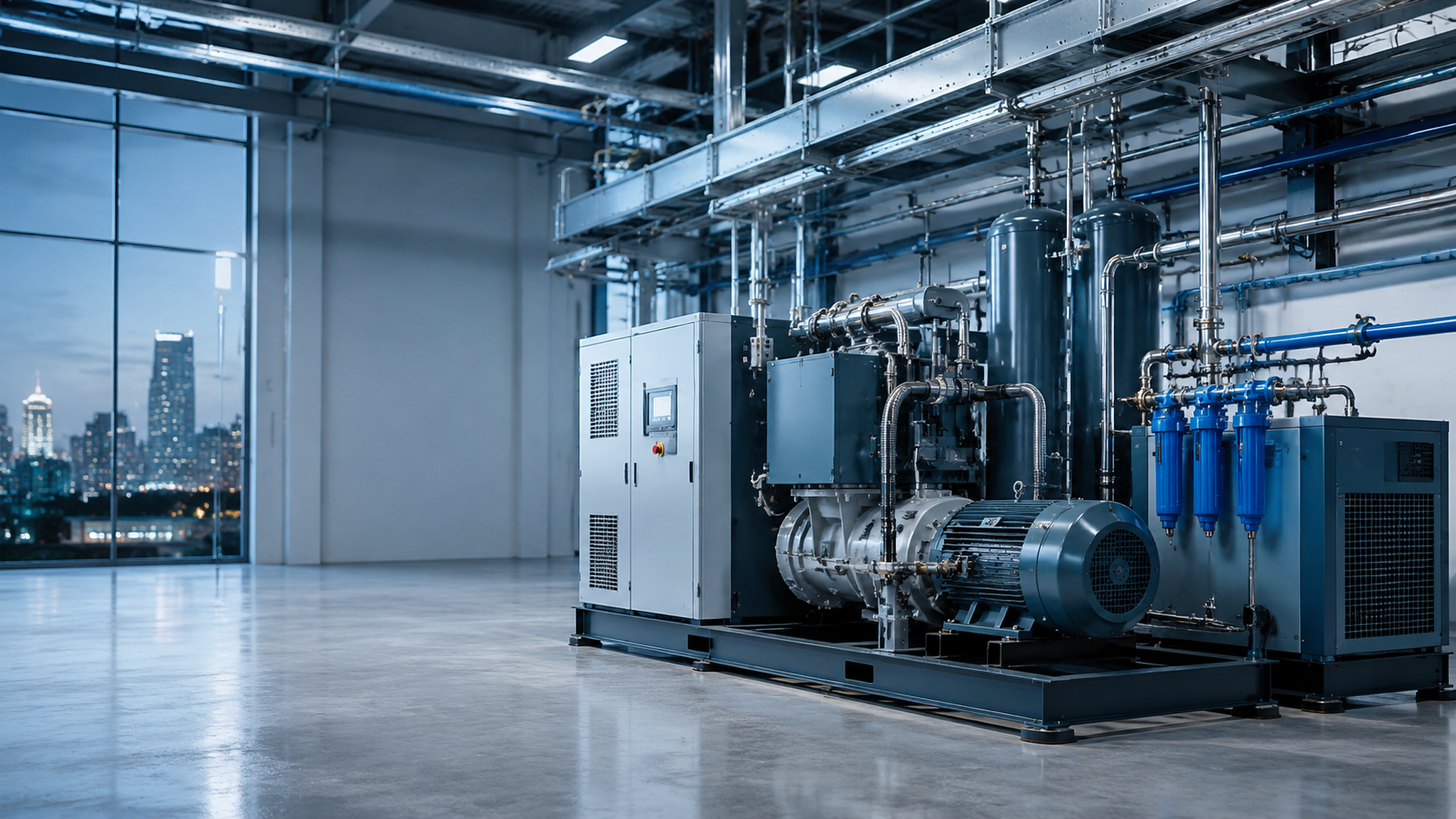
The screw air compressor market in Dongguan offers a diverse range of technologies, from fixed-speed oil-injected units to variable frequency drive (VFD) permanent magnet models and two-stage compression systems. Each technology has distinct advantages and optimal use cases, making it essential for buyers to understand the technical trade-offs involved in selecting Two-Stage Screw Air Compressor. The right choice depends on your specific operational profile, air demand pattern, and performance requirements.
In this detailed guide, we compare the major Two-Stage Screw Air Compressor technologies available in the Dongguan market, examining their operating principles, efficiency characteristics, maintenance requirements, and total cost of ownership. We also provide a structured evaluation framework and practical recommendations to help you select the optimal solution for your manufacturing operation.
Two-Stage Compression: Maximizing Efficiency for Dongguan Industries
Two-stage compression technology represents the pinnacle of screw compressor efficiency, offering measurable advantages over single-stage designs for applications requiring consistent high-pressure output. In a two-stage compressor, air is partially compressed in the first stage to 3-4 bar, cooled in an intercooler to remove a significant portion of the heat of compression, and then further compressed in the second stage to the final discharge pressure.
The thermodynamic advantage of this approach is substantial. By cooling the air between compression stages, the system removes heat energy that would otherwise need to be overcome in a single-stage compression cycle, reducing the total work required by 15-25% depending on the discharge pressure and operating conditions. This efficiency advantage is particularly valuable for Dongguan manufacturers operating at pressures above 8 bar, where two-stage compression delivers the greatest benefit.
PRCompressor’s PRCF/PRSF two-stage permanent magnet VFD series, available throughout the Dongguan market, exemplifies the best of this technology. These units combine two-stage airends with PMSM motors and precision VFD control to achieve verified specific power values below 5.2 kW/(m³/min) — among the best available in the industrial compressor market. For a medium-sized Dongguan factory operating a 110kW compressor 6,000 hours per year, this efficiency advantage translates to annual electricity savings of ¥150,000-250,000 compared to conventional single-stage fixed-speed equipment.
Beyond energy savings, two-stage compressors offer several other advantages for industrial users. The lower compression ratio per stage reduces mechanical stress on the rotors and bearings, potentially extending the service life of the airend. The inter-stage cooling also reduces the discharge temperature, which improves oil life and reduces the load on downstream air treatment equipment. For Dongguan manufacturers with continuous or high-duty-cycle operations, these benefits add significant value over the equipment’s operating life.
Predictive Maintenance: The Future of Two-Stage Screw Air Compressor Reliability
Predictive maintenance represents a fundamental shift from traditional time-based or reactive maintenance approaches. Instead of performing maintenance at fixed intervals or waiting for failures to occur, predictive maintenance uses continuous monitoring and advanced analytics to predict when maintenance will be needed, allowing interventions to be scheduled at the most opportune time — before failure occurs but not unnecessarily early. For Dongguan manufacturers operating critical Two-Stage Screw Air Compressor systems, this approach can significantly reduce both maintenance costs and production downtime.
Key predictive maintenance techniques for screw compressors include oil analysis, vibration analysis, thermography, and performance trend analysis. Modern Two-Stage Screw Air Compressor with IoT-enabled controllers support predictive maintenance through built-in monitoring capabilities and cloud-based analytics platforms. These systems automatically track operating parameters, compare them to baseline values, and generate alerts when parameters deviate from expected ranges.
For Dongguan facilities where compressed air reliability is critical to production, the investment in predictive maintenance capability — whether through built-in controller features, aftermarket monitoring systems, or third-party service contracts — is typically recovered through reduced downtime, extended equipment life, and optimized maintenance scheduling within the first year of implementation.
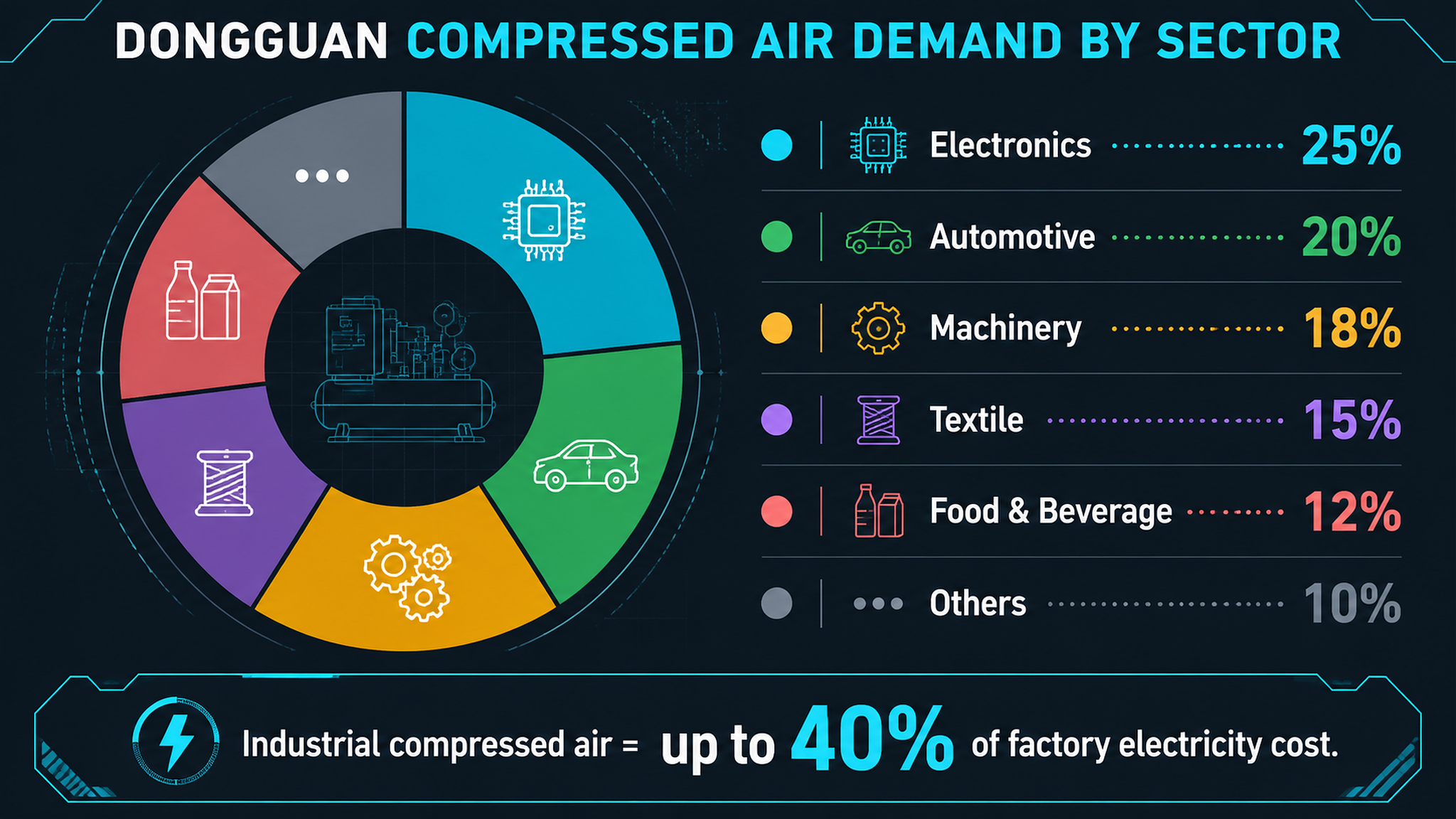
Industry Applications at a Glance
Troubleshooting FAQ: Common Two-Stage Screw Air Compressor Issues
Why does my Two-Stage Screw Air Compressor keep tripping the overload relay?
Most common cause is low supply voltage. Check voltage at compressor terminals during operation. Other causes include mechanical binding, incorrect relay setting, failing motor, or excessive ambient temperature.
What causes oil in the compressed air lines?
Most common is a saturated or damaged oil separator element. Other causes include restricted oil return line, overfilling with oil, high system back pressure, or using wrong oil type.
Why is my compressor running continuously without unloading?
Most likely cause is an air leak in the distribution system. Other possibilities include faulty pressure switch/transducer or restricted intake filter. Check for leaks first using ultrasonic detection or by checking pressure drop when the compressor is stopped.
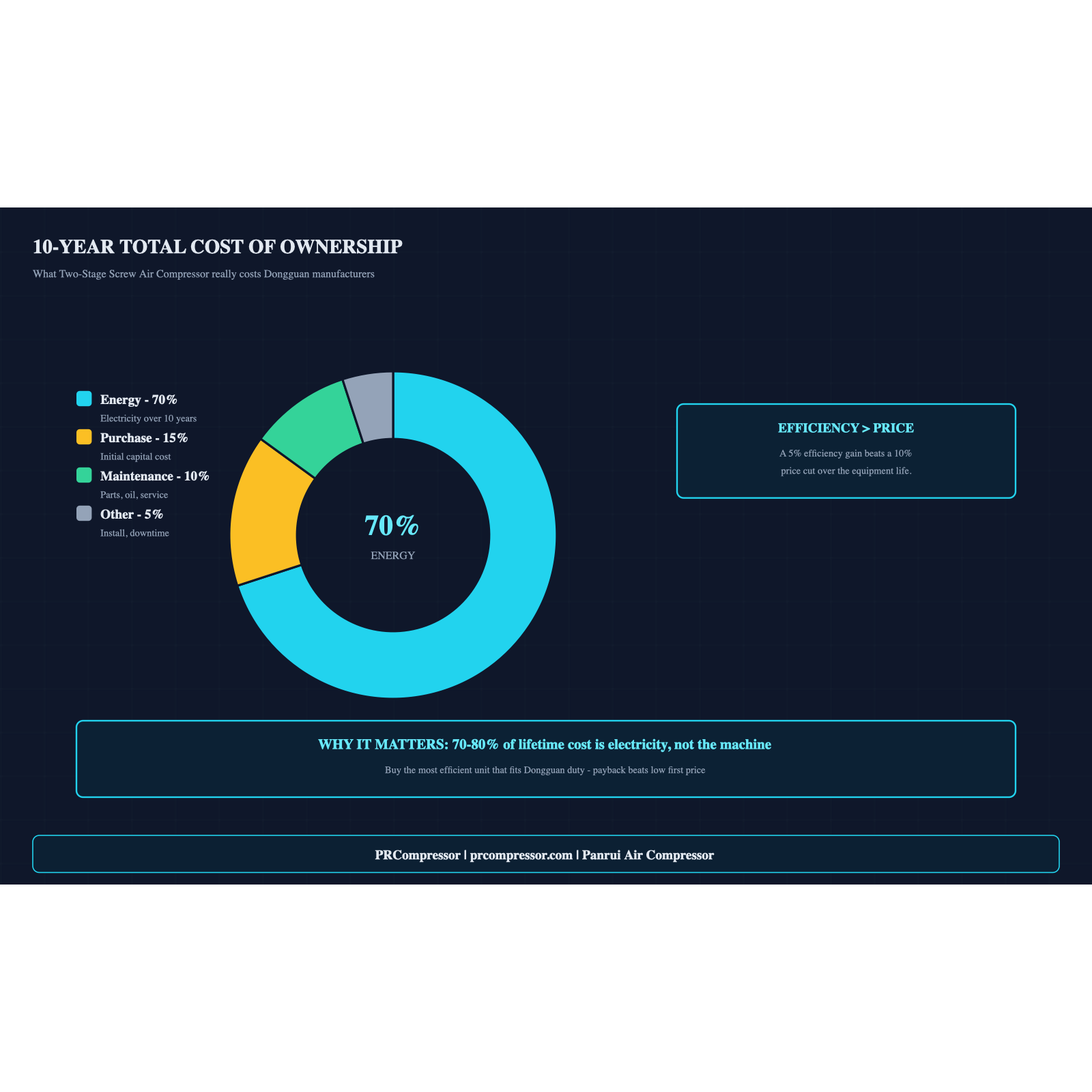
Visual: Total Cost of Ownership Breakdown
Two-Stage Screw Air Compressor for Pharmaceutical and Medical Device Manufacturing in Dongguan
Pharmaceutical and medical device manufacturing in Dongguan represents the most demanding compressed air applications in the industrial sector. Good Manufacturing Practice (GMP) regulations require that compressed air used in pharmaceutical production be of defined quality with documented verification.
For pharmaceutical applications, 100% oil-free Two-Stage Screw Air Compressor is the standard specification, backed by continuous monitoring and comprehensive documentation. The compressor system must include redundant capacity to ensure uninterrupted operation during maintenance, and all components that contact the compressed air must be constructed of materials suitable for cleanroom environments.
Validation and documentation are critical elements of pharmaceutical compressed air systems. Installation Qualification (IQ), Operational Qualification (OQ), and Performance Qualification (PQ) protocols must be executed and documented for all critical compressed air equipment.
For Dongguan pharmaceutical and medical device manufacturers, selecting Two-Stage Screw Air Compressor from suppliers with experience in the regulated pharmaceutical market is strongly recommended. These suppliers understand the documentation requirements and validation protocols that apply to pharmaceutical compressed air systems.
Two-Stage Screw Air Compressor for Packaging and Logistics in Dongguan
The packaging and logistics sector in Dongguan has grown significantly with the expansion of e-commerce and modern retail distribution. Compressed air powers a wide range of equipment including packaging machines, labeling systems, automated sorting equipment, and material handling systems.
Packaging machinery requires compressed air for pneumatic actuators, vacuum systems, and sensing equipment. These applications typically require moderate air quality at pressures of 6-8 bar. The demand is typically intermittent, with peaks during production runs and low demand during changeovers, making VFD technology particularly beneficial.
Automated storage and retrieval systems and sortation systems in logistics facilities also rely on compressed air. For large logistics hubs in Dongguan, multi-compressor systems with intelligent sequencing provide the best combination of efficiency and reliability.
For Dongguan packaging and logistics facilities, the selection of Two-Stage Screw Air Compressor should prioritize efficiency across a wide operating range, reliability to avoid shipping delays, and responsive service support.
Evaluation Framework: How to Compare Two-Stage Screw Air Compressor Suppliers in Dongguan
Comparing Two-Stage Screw Air Compressor suppliers in the Dongguan market requires a structured evaluation framework that accounts for multiple dimensions of supplier capability.
Dimension 1: Product Quality and Performance (25%) — Evaluate efficiency specifications, build quality, component sourcing, and design philosophy. Request detailed technical documentation and compare warranty terms.
Dimension 2: Total Cost of Ownership (25%) — Develop a detailed TCO comparison over a 10-year operating life including purchase price, installation, projected energy costs, estimated maintenance costs, and projected major overhaul costs.
Dimension 3: Service and Support Capability (20%) — Assess service infrastructure, technician qualifications, spare parts inventory, emergency response times, and preventive maintenance programs.
Dimension 4: Industry Experience and Reputation (15%) — Evaluate experience with similar installations, contact references, and research reputation through industry associations and trade publications.
Dimension 5: Commercial Terms and Flexibility (10%) — Compare payment schedules, warranty terms, training provisions, and performance guarantees.
Dimension 6: Strategic Alignment (5%) — Consider technology roadmap compatibility, sustainability alignment, and partnership potential.
Environmental Data: Carbon Emissions and Sustainability
In the Dongguan power grid, the average carbon emission factor is approximately 0.8-0.9 kg CO₂ per kWh. For a 75kW compressor operating 6,000 hours per year, annual carbon emissions are approximately 325 metric tons of CO₂. A 30% reduction in energy consumption would reduce emissions by approximately 98 metric tons annually.
Beyond energy-related emissions, other environmental considerations include oil management, noise emissions, and end-of-life recyclability. These factors contribute to a comprehensive sustainability profile for Dongguan manufacturers committed to environmental responsibility.
Total Cost of Ownership Analysis for Two-Stage Screw Air Compressor in Dongguan
For Dongguan manufacturers, understanding the total cost of ownership (TCO) of Two-Stage Screw Air Compressor is essential for making informed procurement decisions. TCO analysis accounts for all costs associated with owning and operating a compressor over its service life, including initial purchase price, installation costs, energy consumption, maintenance, spare parts, and downtime costs.
The typical TCO breakdown for an industrial screw compressor operating in Dongguan is as follows: energy costs account for 70-80% of total lifetime cost; the initial purchase price accounts for 10-15%; maintenance and spare parts account for 8-12%; and installation, downtime, and other costs account for the remaining 2-5%. This distribution means that a 10% improvement in energy efficiency has roughly the same financial impact as a 50% reduction in purchase price.
To illustrate with a specific example for the Dongguan market: a 75kW Two-Stage Screw Air Compressor operating 6,000 hours per year with electricity at ¥0.90/kWh will consume approximately ¥405,000 worth of electricity annually. Over a 10-year operating life, the total energy cost exceeds ¥4 million. Comparing two compressor options with a 0.5 kW/(m³/min) difference in specific power, the more efficient unit will save approximately ¥200,000 in energy costs over its life.
When evaluating TCO for Two-Stage Screw Air Compressor options in Dongguan, the following calculation framework is recommended: estimate annual operating hours; determine your effective electricity cost; obtain specific power data at typical load points from each supplier; calculate annual energy consumption and cost for each option; add estimated maintenance costs; and compare the 5-year and 10-year total costs to identify the most economical option over the long term.
Maintenance Cost Analysis for Two-Stage Screw Air Compressor in Dongguan
Maintenance costs represent a significant component of the total cost of ownership for Two-Stage Screw Air Compressor, typically accounting for 8-12% of lifetime costs. Understanding the maintenance requirements and costs of different compressor types and brands is essential for accurate TCO analysis.
Routine maintenance for oil-injected Two-Stage Screw Air Compressor includes oil and oil filter changes at 2,000-4,000 hour intervals; air filter replacement at similar intervals; oil separator replacement at 4,000-8,000 hour intervals; and annual inspection of safety devices and control system. The annual maintenance cost for a typical mid-range installation in the 37-75 kW range is approximately ¥8,000-15,000 for routine parts and labor.
Major maintenance events, including bearing replacement and airend overhaul, occur at 20,000-40,000 hour intervals with costs ranging from ¥15,000 to ¥80,000 or more depending on unit size. The timing and cost of major maintenance varies significantly between brands and models.
For Dongguan manufacturers, selecting Two-Stage Screw Air Compressor with accessible service points, readily available spare parts, and a competent local service network is essential for controlling maintenance costs. Asking suppliers for detailed maintenance schedules, parts pricing, and service labor rates during the evaluation process will provide the data needed for accurate comparison.
Checklist: Your Complete Two-Stage Screw Air Compressor Buying Guide for Dongguan
This comprehensive checklist summarizes the key considerations for your Two-Stage Screw Air Compressor purchase. Use it throughout your procurement process.
Technical Requirements: ☐ Measured compressed air demand; ☐ Required discharge pressure; ☐ Required air quality level; ☐ Operating profile; ☐ Available utilities; ☐ Space for installation.
Equipment Selection: ☐ Compressor type (oil-injected or oil-free); ☐ Drive configuration (fixed speed or VFD); ☐ Compression stages; ☐ Motor efficiency class; ☐ Cooling system; ☐ Control system features.
Supplier Evaluation: ☐ Comparable proposals from 3+ suppliers; ☐ Verified efficiency data; ☐ Warranty terms; ☐ Service network coverage; ☐ References contacted; ☐ Service contract options.
Financial: ☐ TCO analysis completed; ☐ Financing options evaluated; ☐ Government incentives identified; ☐ Installation cost estimated; ☐ Performance guarantees documented.
For assistance, contact PRCompressor at 13713647073 or prcompressor.com.
Keywords: two-stage screw air compressor, screw air compressor, dongguan manufacturer, dongguan compressor, compressor energy efficiency, industrial compressed air, industrial air compressor, compressor buyer’s guide, energy saving compressor, compressor supplier
Contact PRCompressor (Panrui) for two-stage screw air compressor in Dongguan: Phone 13713647073 | prcompressor.com