


The Ultimate Shenzhen Oil-Free Screw Compressor Guide (2026)
Selecting Oil-Free Screw Compressor for your Shenzhen facility is a multi-dimensional decision that requires balancing technical requirements, budget constraints, operational priorities, and long-term strategic goals. Without a structured decision-making framework, it is easy to be swayed by persuasive sales presentations, attractive pricing, or impressive specification sheets that may not reflect real-world performance. This guide provides a systematic approach to compressor evaluation that accounts for all relevant factors.
Our framework encompasses seven key evaluation dimensions: technical specifications, energy efficiency, reliability and durability, total cost of ownership, after-sales support, manufacturer reputation, and alignment with your facility’s specific operational requirements. We explain how to assess each dimension and combine the results into an overall evaluation that supports confident decision-making.
Financing Options for Oil-Free Screw Compressor Investments in Shenzhen
The capital investment required for Oil-Free Screw Compressor can be substantial, particularly when premium-efficiency equipment is being considered. Fortunately, Shenzhen manufacturers have access to several financing options that can make the investment more manageable and accelerate the realization of energy savings.
Traditional equipment financing — including bank loans and equipment leasing — is the most common approach. Equipment leasing offers advantages including preserving working capital and matching payments to the equipment’s useful life. Some compressor suppliers offer their own financing programs with competitive terms designed to facilitate equipment sales.
Energy performance contracting (EPC) is an increasingly popular alternative for efficiency-focused projects. Under an EPC arrangement, a third-party energy service company (ESCO) finances the equipment upgrade, and the manufacturer repays the investment from the energy savings generated by the new equipment. The ESCO guarantees the savings, making this approach attractive for facilities with limited capital budgets.
Government subsidies and incentives for energy-efficient equipment are also available in many regions of China, including Shenzhen. These programs typically provide direct subsidies or tax credits for investments in equipment that exceeds minimum efficiency standards. Working with a knowledgeable Oil-Free Screw Compressor supplier who understands the available incentives can significantly improve the financial case for premium-efficiency equipment.
The Shenzhen Industrial Compressed Air Market: 2026 Overview
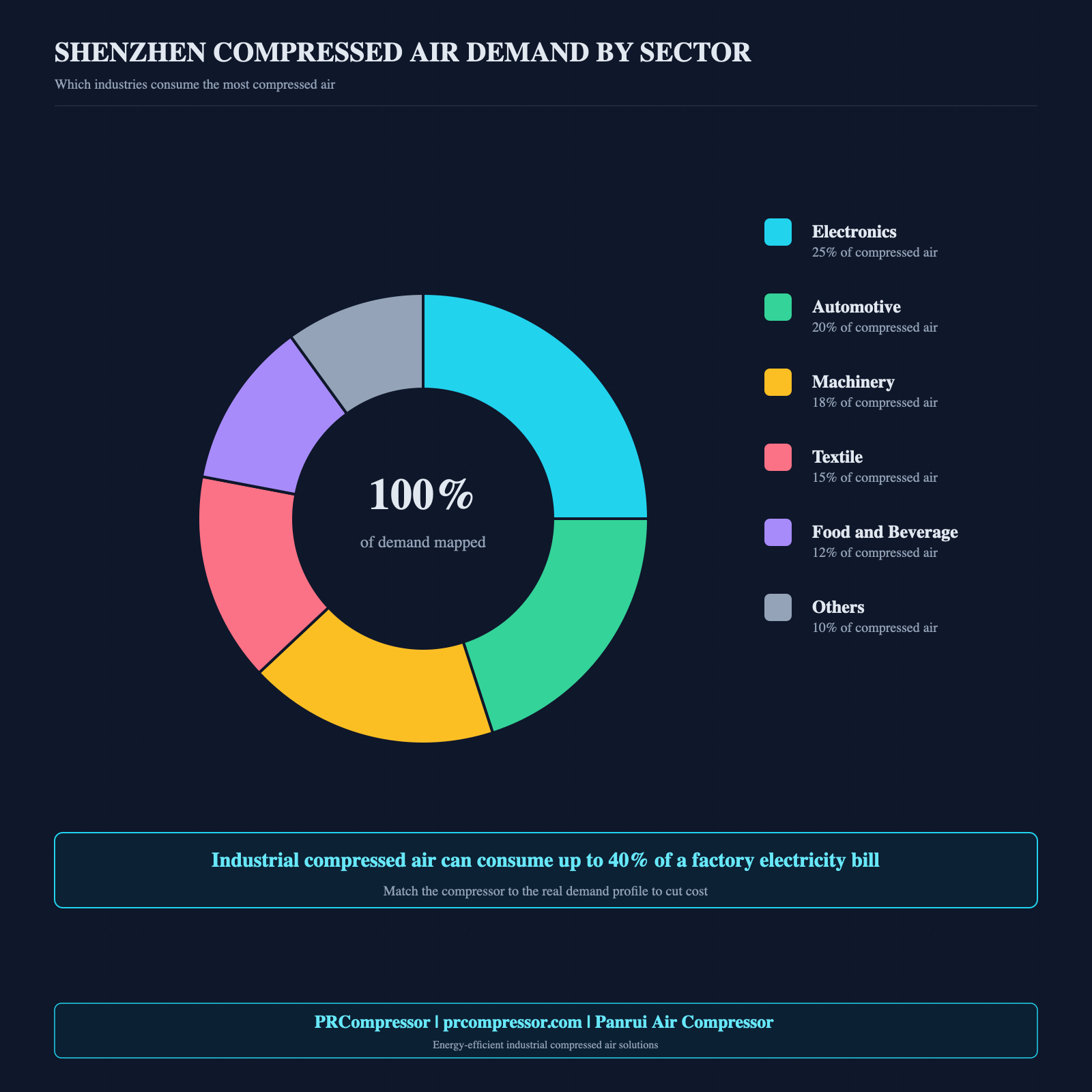
Shenzhen continues to strengthen its position as one of China’s premier manufacturing regions, with a diverse industrial base spanning electronics, automotive parts, machinery, textiles, and consumer goods. This industrial diversity creates substantial demand for Oil-Free Screw Compressor, as compressed air is essential across virtually all manufacturing sectors. Understanding the specific characteristics of the Shenzhen market is important for making informed procurement decisions.
Several trends are shaping the Shenzhen compressed air market in 2026. First, rising electricity costs are driving strong demand for energy-efficient compressor technologies. Second, the ongoing industrial upgrade and automation trend is increasing both the quantity and quality of compressed air required by Shenzhen manufacturers. Third, growing environmental awareness and regulatory pressure are encouraging facilities to adopt more efficient and sustainable compressed air solutions.
The competitive landscape in Shenzhen includes both international brands with local representation and domestic manufacturers with strong regional presence. International brands such as Atlas Copco, Ingersoll Rand, and Kaeser maintain a significant presence through authorized distributors and service centers. Domestic manufacturers, particularly those based in the Pearl River Delta region such as PRCompressor, offer competitive alternatives with advantages in pricing, lead times, and local service responsiveness.
For Shenzhen manufacturers evaluating Oil-Free Screw Compressor suppliers, the availability of local service and support should be a primary evaluation criterion. Compressed air systems are production-critical equipment, and the ability to obtain responsive service — including emergency repairs, routine maintenance, and spare parts — is essential for maintaining production reliability.
Oil-Free Screw Compressor for Electronics Manufacturing in Shenzhen
Electronics manufacturing is one of Shenzhen’s most important industries, and it has some of the most demanding compressed air requirements. The production of printed circuit boards (PCBs), semiconductor components, displays, and electronic assemblies requires compressed air that is clean, dry, and stable — any contamination or pressure fluctuation can cause defects in sensitive electronic products.
For Shenzhen electronics manufacturers, Oil-Free Screw Compressor with oil-free technology or high-efficiency filtration is typically required for production areas. The ISO 8573-1 Class 1 or Class 2 air quality standard is common in this industry. VFD technology is also highly beneficial due to the variable demand profile — different production lines may operate on different schedules, creating significant demand variation throughout the day.
Pressure stability is another critical requirement in electronics manufacturing. Many electronic assembly processes are sensitive to pressure variations, and maintaining pressure within tight tolerances (±0.1 bar) is essential for consistent quality. Oil-Free Screw Compressor with precision VFD control and properly sized storage capacity can deliver this level of pressure stability.
For Shenzhen electronics manufacturers evaluating Oil-Free Screw Compressor suppliers, experience in the electronics industry should be a selection criterion. Suppliers who understand the specific requirements of electronics production are better positioned to recommend appropriate solutions.
Oil-Free Screw Compressor for Pharmaceutical and Medical Device Manufacturing in Shenzhen
Pharmaceutical and medical device manufacturing in Shenzhen represents the most demanding compressed air applications in the industrial sector. Good Manufacturing Practice (GMP) regulations require that compressed air used in pharmaceutical production be of defined quality with documented verification.
For pharmaceutical applications, 100% oil-free Oil-Free Screw Compressor is the standard specification, backed by continuous monitoring and comprehensive documentation. The compressor system must include redundant capacity to ensure uninterrupted operation during maintenance, and all components that contact the compressed air must be constructed of materials suitable for cleanroom environments.
Validation and documentation are critical elements of pharmaceutical compressed air systems. Installation Qualification (IQ), Operational Qualification (OQ), and Performance Qualification (PQ) protocols must be executed and documented for all critical compressed air equipment.
For Shenzhen pharmaceutical and medical device manufacturers, selecting Oil-Free Screw Compressor from suppliers with experience in the regulated pharmaceutical market is strongly recommended. These suppliers understand the documentation requirements and validation protocols that apply to pharmaceutical compressed air systems.
Specification Checklist for Oil-Free Screw Compressor Buyers in Shenzhen
This specification checklist provides a comprehensive framework for evaluating and comparing Oil-Free Screw Compressor options in the Shenzhen market.
Performance Specifications: Rated power and rated pressure; free air delivery at rated conditions; specific power at full load and part load; turn-down ratio for VFD units; startup current; noise level.
Technical Features: Compressor type (oil-injected or oil-free); number of compression stages; drive type; motor type and efficiency class; cooling system; controller features and communication protocols.
Quality and Certifications: ISO 9001 certification; CE certification; GB 19153 energy efficiency grade; warranty period and coverage details; extended warranty options.
Service and Support: Service network coverage in Shenzhen; response time commitment; spare parts availability; maintenance program options; remote monitoring service availability; training availability.
Industry Applications at a Glance
Quick Answers: Popular Questions About Oil-Free Screw Compressor
How often should I replace air filters on my Oil-Free Screw Compressor?
In clean environments, filters typically last 2,000-4,000 hours. In dusty environments, they may need replacement every 500-1,000 hours. The best indicator is the filter differential pressure gauge — replace when it indicates maximum allowable pressure drop.
Can I use standard compressor oil in any Oil-Free Screw Compressor brand?
No. Different brands require different oil specifications. Critical specifications include viscosity grade, base oil type, and additive package. Some manufacturers formulate proprietary oils. Always consult the compressor manual before changing oil types or brands.
How does ambient temperature affect Oil-Free Screw Compressor performance?
Higher intake air temperature increases the energy required for compression by approximately 3% per 10°C. In summer conditions (35-40°C), compressor performance can be 5-10% lower than under standard rating conditions (20°C).
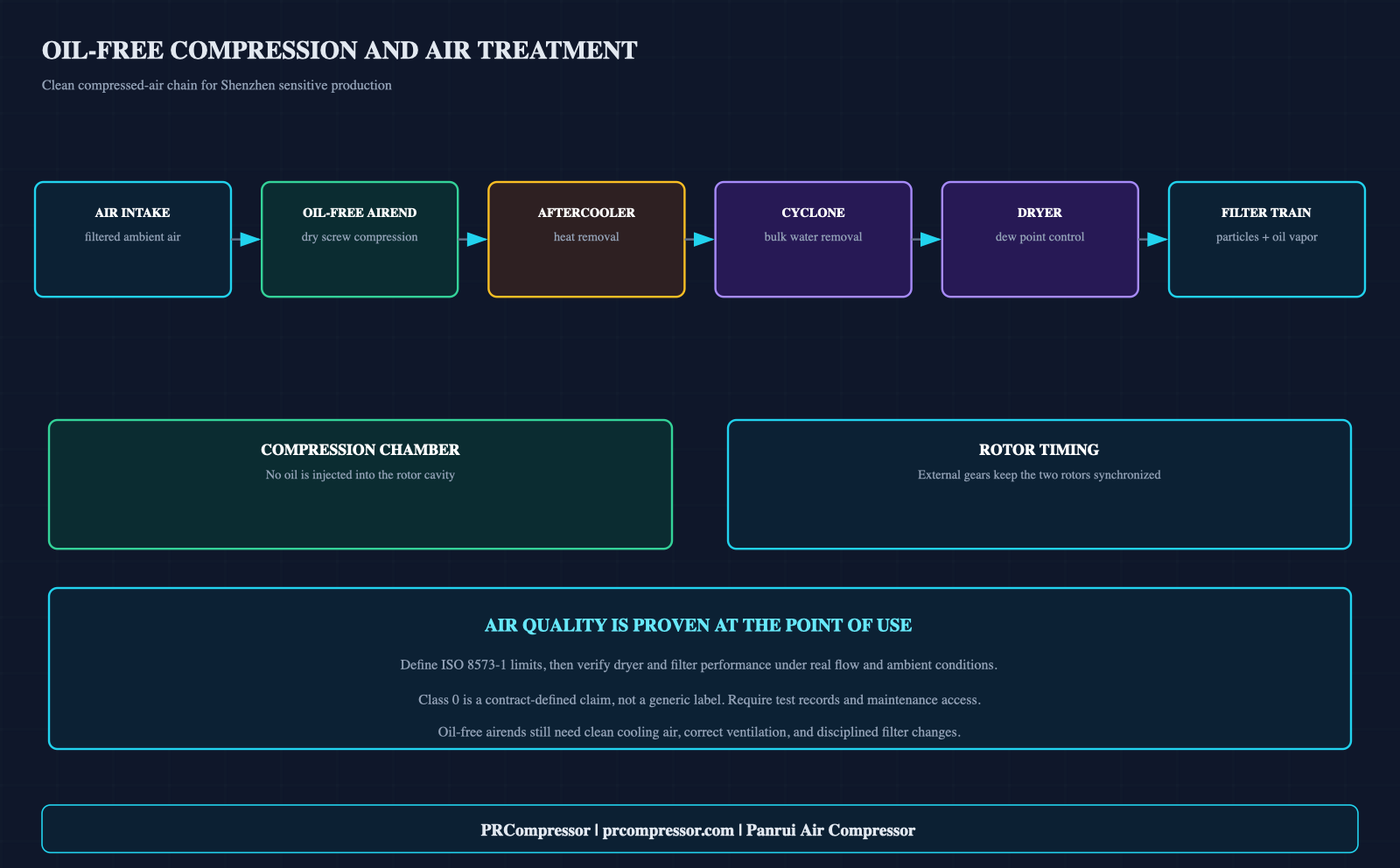
Visual: Optimal System Configuration
Payback Period Analysis for Oil-Free Screw Compressor Investments in Shenzhen
Payback period is the most commonly used metric for evaluating compressor upgrade projects in Shenzhen manufacturing facilities. Replacing an older fixed-speed compressor with a modern premium VFD model typically achieves payback in 12-24 months. Upgrading from standard-efficiency to premium-efficiency typically achieves payback in 18-36 months.
System-level improvement projects often achieve the shortest payback periods. Fixing compressed air leaks can reduce total system energy consumption by 20-30% at costs recovered within 3-6 months. Reducing system pressure by 1 bar saves 6-8% of compressor energy at essentially no cost. These quick-payback projects should be implemented alongside major equipment investments.
For Shenzhen manufacturers developing a compressed air system investment plan, a phased approach that prioritizes quick-payback system improvements while also planning for longer-payback equipment upgrades typically provides the best overall financial outcome.
Compressed Air System Design: Beyond the Compressor Itself
The compressor is only one component of a complete compressed air system, and optimizing the system as a whole is essential for achieving the best possible performance and efficiency. For Shenzhen manufacturers investing in Oil-Free Screw Compressor, attention to system design — including intake air quality, piping configuration, air treatment, and condensate management — can significantly impact both the efficiency of the compressor itself and the quality of the compressed air delivered to production equipment.
The quality of intake air is a frequently overlooked factor in compressor performance. Every 10°C reduction in intake air temperature reduces the energy required for compression by approximately 3%. For Shenzhen facilities in hot climates, locating the compressor intake on the north side of the building or drawing air from a cooler area can yield meaningful energy savings. Similarly, keeping intake air filters clean is essential — a dirty intake filter can increase pressure drop across the filter housing, effectively reducing the compressor’s capacity and increasing its specific power consumption.
Proper piping design is equally important. Undersized piping creates excessive pressure drop, forcing the compressor to operate at a higher discharge pressure to compensate. The rule of thumb is to design piping for a maximum pressure drop of 3-5% of the system pressure — for an 8 bar system, this means keeping total piping pressure drop below 0.4 bar. Loop-configuration piping rather than dead-end branches improves pressure stability and allows maintenance on sections without disrupting the entire system.
Air treatment is the final critical element of system design. The appropriate combination of aftercooler, dryer, and filters depends on the air quality requirements of your specific applications. For most Shenzhen general manufacturing applications, a refrigerant dryer and particulate filter provide adequate air quality at moderate cost. For facilities requiring higher air quality, additional treatment including desiccant dryers and coalescing filters may be necessary.
Compressed Air Quality Standards for Shenzhen Industries
The quality of compressed air required varies significantly across different industrial applications, and selecting the appropriate air quality level for your operations has important implications for both equipment selection and operating costs. The international standard ISO 8573-1 defines nine purity classes for compressed air based on solid particle content, water content, and oil content, with Class 1 being the highest purity and Class 9 the lowest.
For general Shenzhen manufacturing applications such as pneumatic tools, material handling, and machine actuation, ISO Class 4-5 air quality is typically sufficient. This level of air quality can be achieved with a standard oil-injected Oil-Free Screw Compressor followed by a refrigerant dryer and basic particulate filtration — a relatively modest investment in air treatment equipment.
Higher quality requirements drive significantly higher air treatment costs. ISO Class 1-2 air quality, required for applications such as pharmaceutical manufacturing, food and beverage processing, electronics fabrication, and critical instrumentation, demands oil-free compressors or comprehensive filtration, desiccant or membrane drying, and careful attention to the entire compressed air system. The total cost of a Class 1 compressed air system can be 2-3 times that of a Class 4 system, making it important to match air quality specifications precisely to actual production requirements.
When evaluating Oil-Free Screw Compressor options for your Shenzhen facility, clearly define your air quality requirements before selecting equipment. Overspecifying air quality drives unnecessary capital and operating costs, while underspecifying risks product quality issues or equipment damage. If your air quality requirements vary across different production areas, consider a zoned approach with appropriate treatment at each zone level.
Call to Action: Start Your Oil-Free Screw Compressor Evaluation Today
The information in this guide provides a comprehensive foundation for evaluating Oil-Free Screw Compressor options in Shenzhen. Now the most important step is to take action — every month of delay is a month of unnecessarily high energy costs and missed opportunity.
The first step is simple: contact PRCompressor (Panrui) for a free, no-obligation consultation. Our experienced team will help you assess your current system, identify improvement opportunities, and develop a recommendation tailored to your needs.
Don’t let another day of inefficient compressed air operation erode your profitability. Contact us today.
Phone: 13713647073 | Email: info@panrui.com | Web: prcompressor.com
Keywords: industrial compressed air, screw air compressor, compressor energy efficiency, compressor buyer’s guide, shenzhen manufacturer, industrial air compressor, compressor supplier, oil-free screw compressor, shenzhen compressor, energy saving compressor
Contact PRCompressor (Panrui) for oil-free screw compressor in Shenzhen: Phone 13713647073 | prcompressor.com