


Your cooling choice decides whether a screw air compressor survives its first hot season. In plants where ambient temperature climbs toward 45°C, an air-cooled unit loses cooling efficiency as the temperature difference between the machine and the surrounding air shrinks: discharge temperature rises, the controller trips on high temperature, and production stops at the worst possible moment. The water cooled vs air cooled screw compressor decision is not a preference — it is an operating-cost decision that shows up in your electricity bill, your maintenance budget, and your downtime log.
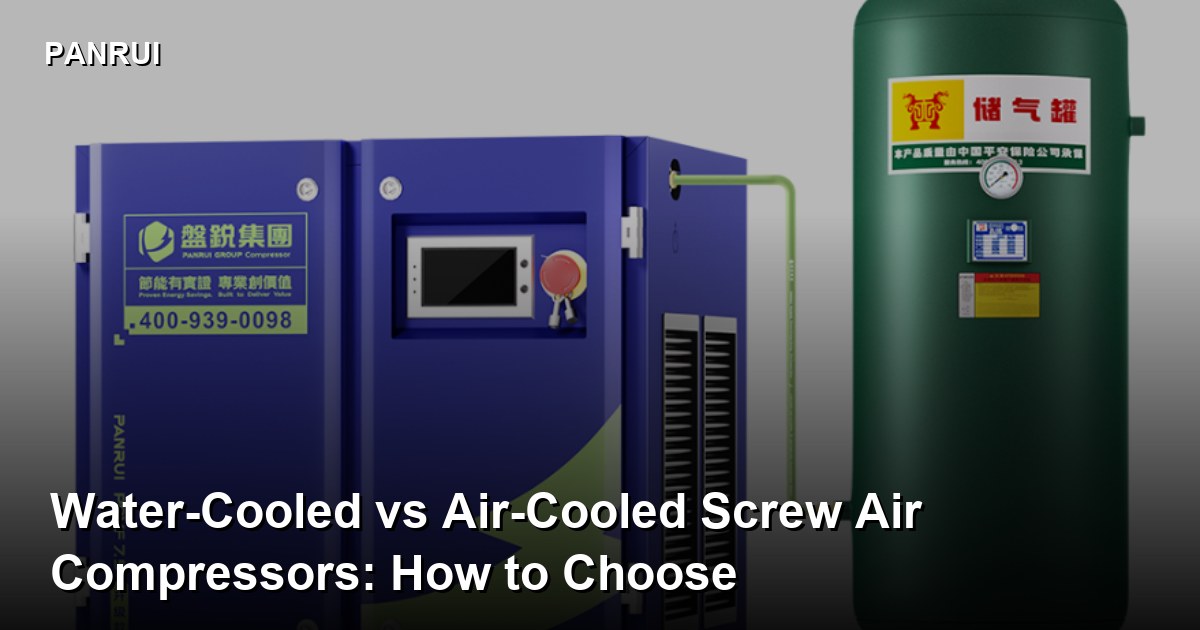
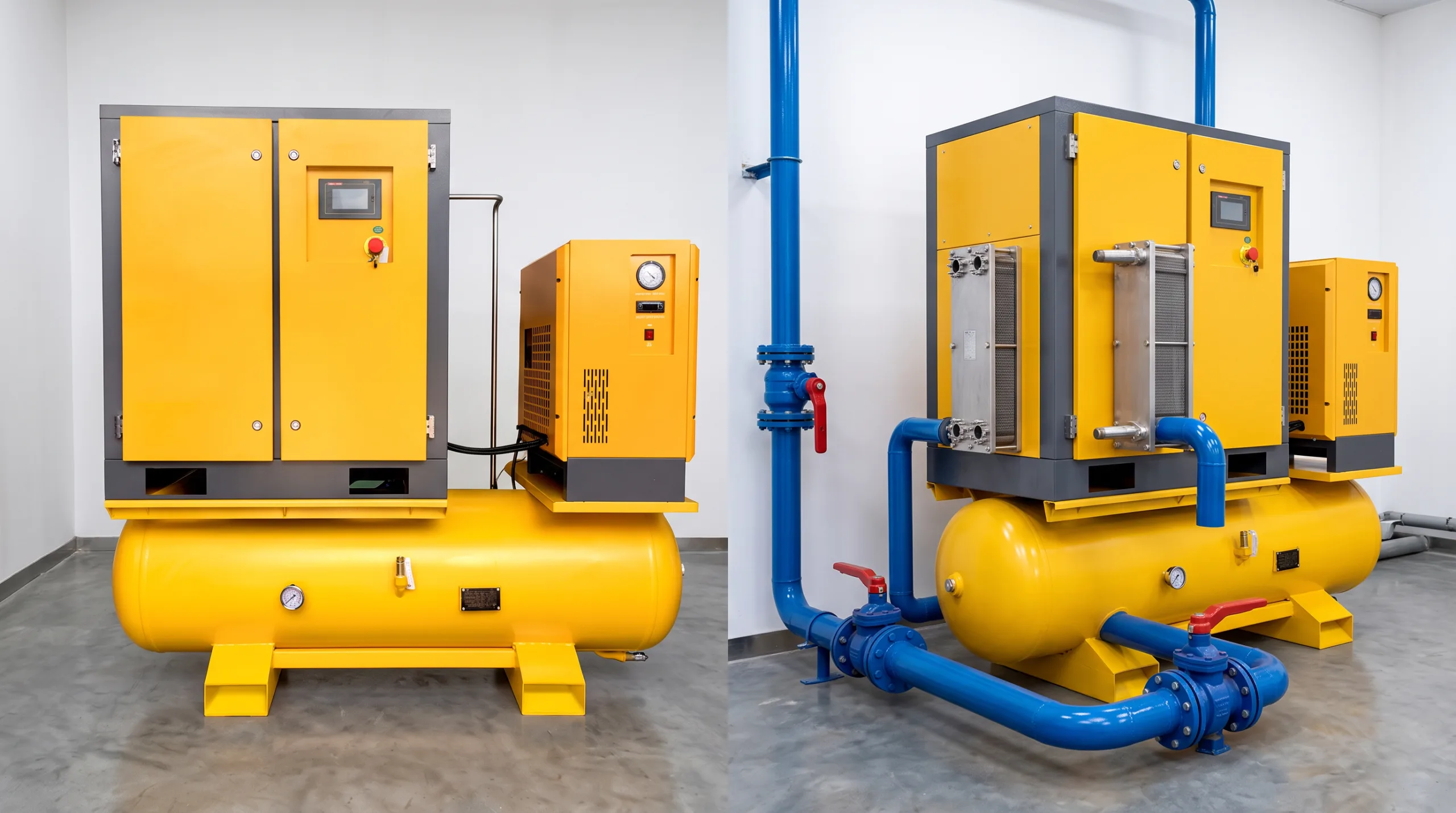
An air-cooled screw compressor pushes ambient air across the oil cooler with a fan. The system is simple, needs no water supply, and is the cheapest to install. But it has a hard ceiling: the machine can only cool down to a few degrees above intake air temperature. In a hot room, the compressor breathes its own rejected heat, dust loads the cooler fins, and both intake restriction and discharge temperature climb.
The failure pattern shows up in every maintenance log: clogged air or oil filters and a dirty cooler are among the most common reasons a screw compressor runs hot, and a blocked cooler alone can push the unit to its protection limit. Once the machine trips, production stops while the airend keeps wearing.
When a Water-Cooled Screw Compressor Is Worth the Plumbing
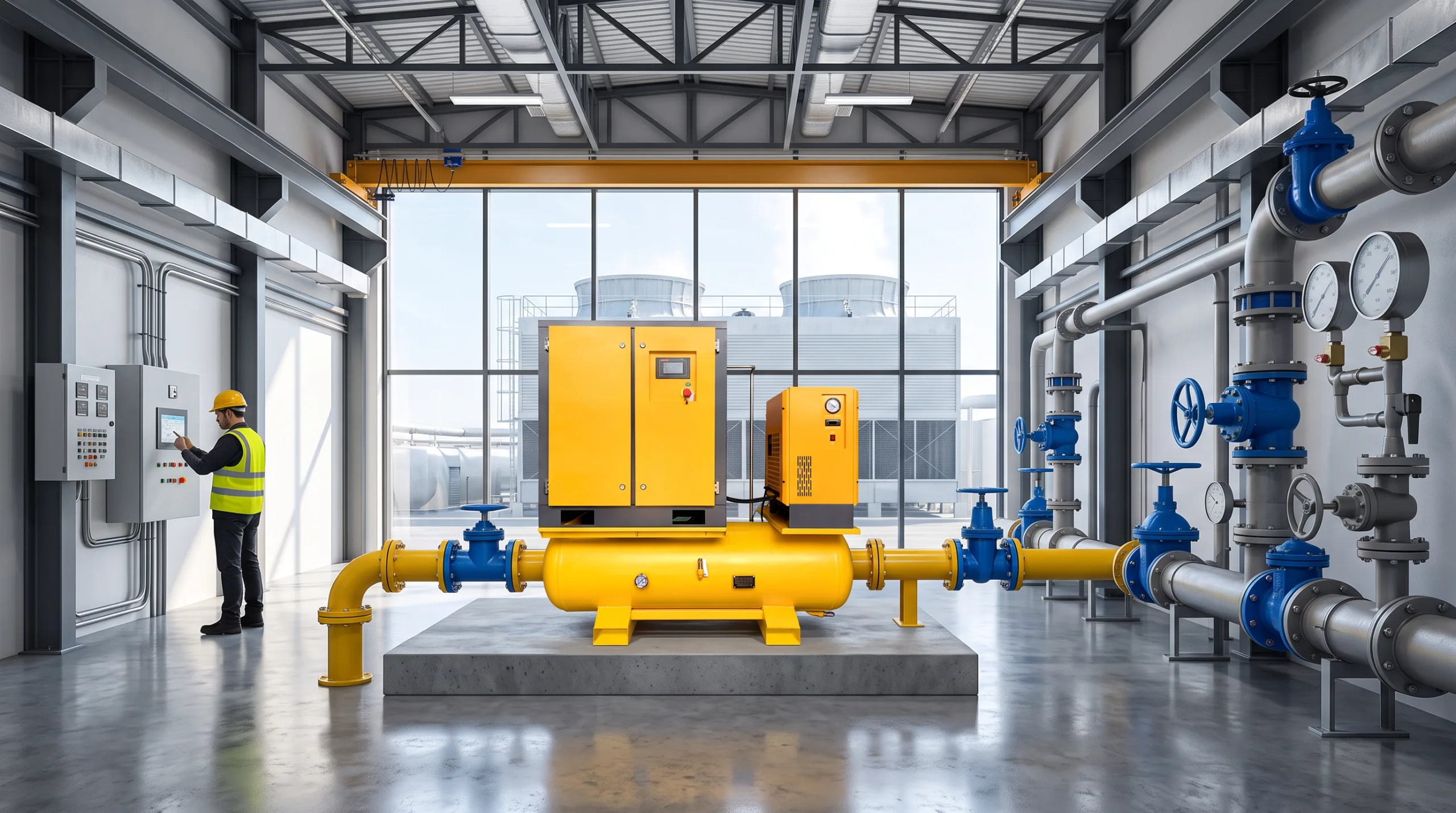
Water-cooled packages replace the ambient-air limit with a cooling water circuit — typically a cooling tower, pump, and piping. Cooling performance stays stable even at 45°C ambient, oil temperature holds steadier, and the airend sees less thermal stress. That is exactly why harsh-environment specifications for mines, cement plants, foundries, and tropical sites call for oversized water-cooled or air-cooled heat exchangers.
The trade-offs are real: water treatment, pump energy, pipe maintenance, freeze protection in cold climates, and the risk of scaling inside the cooler. A water-cooled machine without a maintained cooling circuit can fail as fast as an air-cooled unit in a hot room.
Water Cooled vs Air Cooled Screw Compressor: Cost Comparison
Electricity is roughly 75% of a compressor’s ten-year total cost, with maintenance near 10%, so the cheapest quote is rarely the cheapest machine. Compare four things before you buy:
- Ambient temperature: if the room sits near or above the machine’s design point for long periods, favor water-cooled. Most industry packages are designed around a 40°C ambient point, with heavy-duty units validated to 52°C.
- Water availability: no reliable, treated water supply means air-cooled is the practical choice.
- Dust level: heavy dust fouls air-cooler fins quickly; favor water-cooled, or an oversized air-cooled package with pre-filtration.
- Room ventilation: if the room cannot move the rejected heat away, every cooling system derates or trips.
If heat is the deciding factor, also compare part-load behavior. A variable-speed drive reduces heat generation when demand drops, which lowers the cooling burden on whichever system you choose.
FAQ: Water-Cooled vs Air-Cooled Screw Compressor
- Does a water-cooled unit use less electricity overall? Not automatically. Pump and cooling-tower energy offset part of the gain; the real win is stable cooling in high ambient temperatures.
- Can I convert an air-cooled unit to water-cooled? Retrofit is rarely economical. Choose the cooling type at purchase, based on site data.
- Do I still need room ventilation with water cooling? Yes, less airflow — but the motor and drive still reject heat, and the ventilation opening must be sized to the machine’s requirement.
The Bottom Line
Choose the cooling system by site data, not habit. If your room stays below the machine’s design ambient and the air is clean, an air-cooled unit is simple and cheaper to run. If heat, dust, or a 24/7 duty cycle push temperatures to the limit, water-cooled is the safer long-term bet. Match the choice to the total ten-year cost — electricity at roughly 75%, maintenance at 10% — and the water cooled vs air cooled screw compressor decision stops being guesswork.
Need help comparing water-cooled and air-cooled packages for your climate? Tell our engineers your ambient temperature, room size, dust level, and water availability. Start with the rotary screw air compressor range, explore variable-speed options, or contact us directly.