





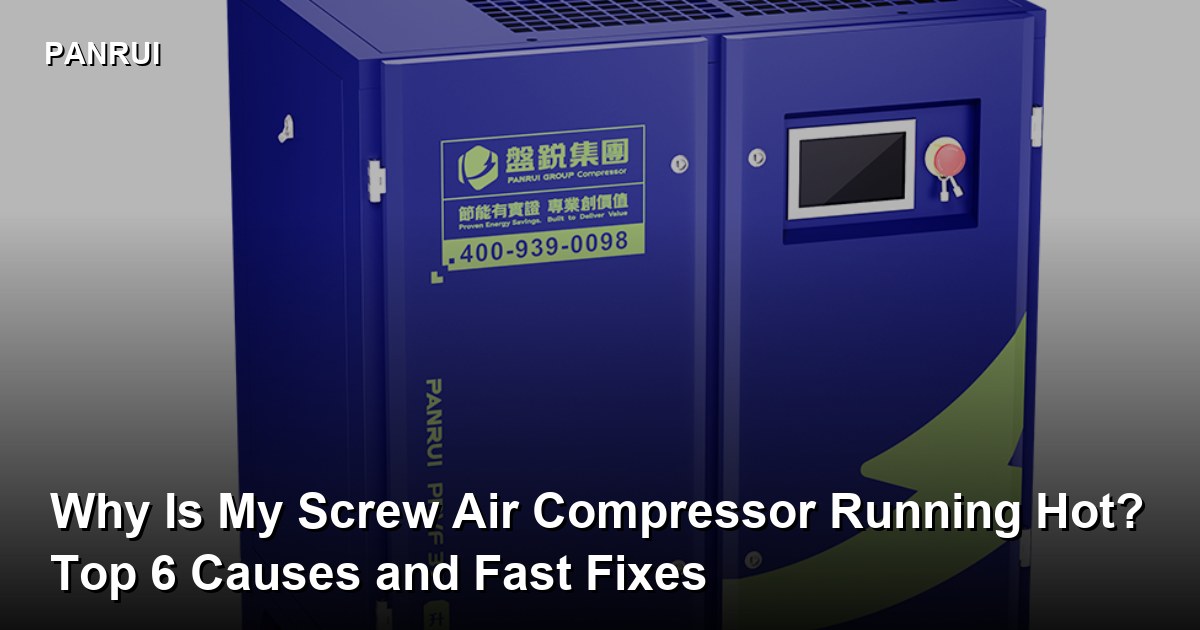
High discharge temperature is one of the most common reasons a screw compressor trips in service. When the temperature reaches the protection limit, the machine shuts down to prevent damage, but the root cause must still be found and corrected.
1. Low or Deteriorated Cooling Oil
Oil does more than lubricate; it also removes heat from the compression process. Low oil level or oil that has aged beyond its service interval can no longer transfer heat properly. Check the level and replace the oil according to the manufacturer’s schedule.
2. Faulty Thermostat Valve
The thermostat valve controls whether hot oil is sent through the cooler. If the valve sticks closed, oil bypasses the cooler and the machine overheats even when the cooler itself is clean.
3. Blocked or Dirty Cooler
Dust and oil film build up on the cooler fins and reduce heat exchange. Clean the cooler with the correct method and inspect it during every major service. Also verify that the cooling fan is running and that air can move freely around the package.
4. High Ambient Temperature
If the compressor room is too hot or ventilation is poor, the machine will struggle to reject heat. Improve room airflow, reduce heat sources, or move the compressor to a cooler location.
5. Clogged Air or Oil Filters
Restricted filters increase internal pressure and operating temperature. Replace filters at the recommended intervals, and more frequently in dusty environments.
6. Overloading or Improper Duty Cycle
Running the compressor above its rated duty cycle or with excessive leakage can keep the machine loaded longer than intended. Review air demand and system leaks.
Regular screw compressor maintenance tips from a reliable rotary screw air compressor supplier can help prevent high-temperature shutdowns before they affect production.