


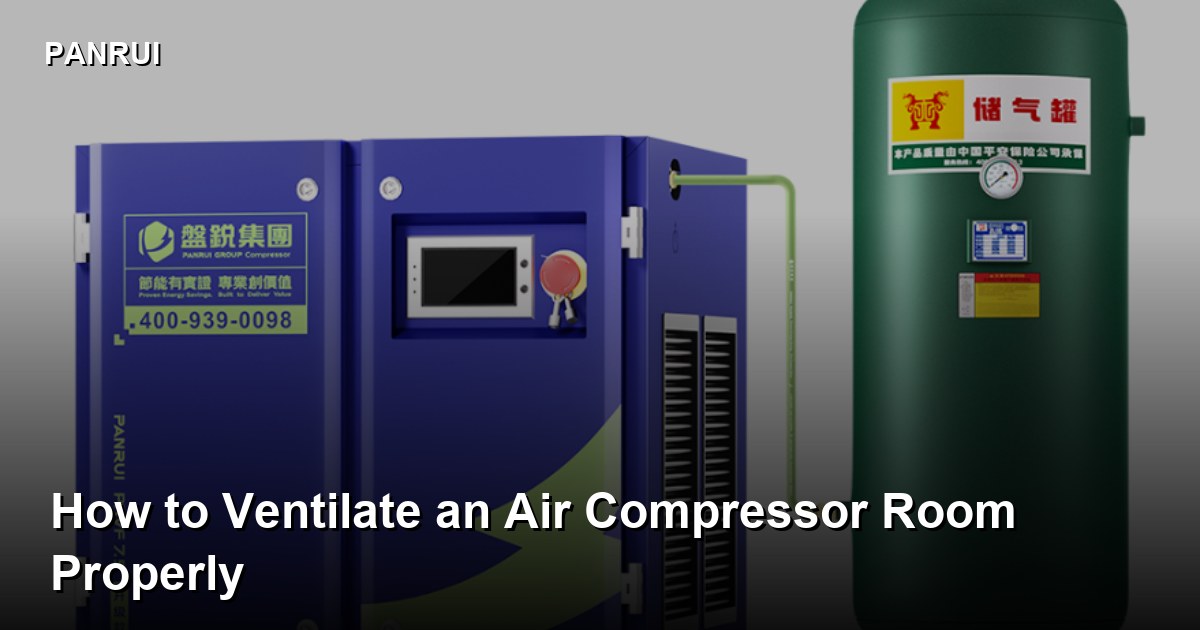
A compressor room that runs only a few degrees above specification can shorten the air end’s life and waste thousands of dollars in extra power every year. Poor air compressor room ventilation is the cause most plants overlook until a high-temperature…
How to Reduce Screw Air Compressor Noise in the Plant
An 85 dB compressor beside the production line is not background noise—it is a compliance, safety, and productivity problem. Screw air compressor noise reduction starts before acoustic foam, with machine design, installation, and duty-cycle choices. Why Screw Compressor Noise Becomes a…
How to Choose Between 7 Bar, 8 Bar, 10 Bar, and 13 Bar Screw Compressors
Buying an oversized-pressure air compressor means paying for pressure you never use. In many plants, every 1 kg/cm² of extra discharge pressure adds roughly 8% to compressor energy consumption, so a 10-bar unit doing an 8-bar job wastes power on every…

What Is ISO 8573-1 Air Quality and How to Read the Classes
A food plant scrapped a full production batch after oil aerosol in its compressed air tested at 1.8 mg/m³—just above the 1 mg/m³ ceiling for ISO 8573-1 compressed air quality Class 3 oil. The line was not the problem: the air…

Compressed Air Filter Micron Rating: How Many Microns Do You Need?
Compressed Air Filter Micron Rating: The Cost of Guessing A 5-micron filter where a 1-micron filter belongs lets dust, water, and oil aerosol reach valves, cylinders, and paint lines. The failure is rarely a loud alarm. It is shortened tool life,…

Desiccant vs Refrigerated Air Dryer: Which One Does Your Plant Need?
A plant that buys a refrigerated dryer as its only moisture defense can lose thousands of dollars when +3°C dew-point air still condenses in cold piping, rusts air tools, and ruins paint or powder-coating finishes. Choosing between a desiccant vs refrigerated…
Refrigerated Air Dryer Sizing: How to Match a Dryer to Your Screw Air Compressor
Why refrigerated air dryer sizing goes wrong Wet compressed air can wreck a production line in hours: rusted valves, cloudy laser lenses, and a $3,000 pneumatic actuator that jams mid-shift. The usual root cause is refrigerated air dryer sizing. An undersized…
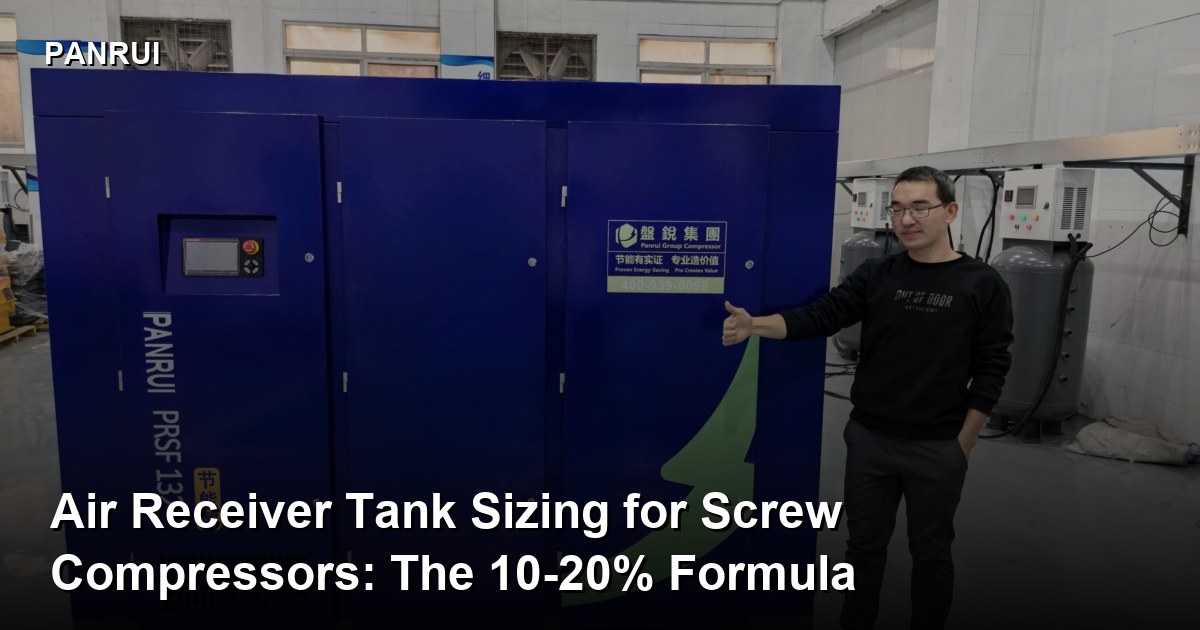
Air Receiver Tank Sizing for Screw Compressors: The 10-20% Formula
If a 250 kW screw compressor keeps short-cycling, the problem is usually not the airend. It is an undersized receiver. Every extra start adds motor heat and contactor wear, and a pressure band that is too wide can waste roughly 8%…
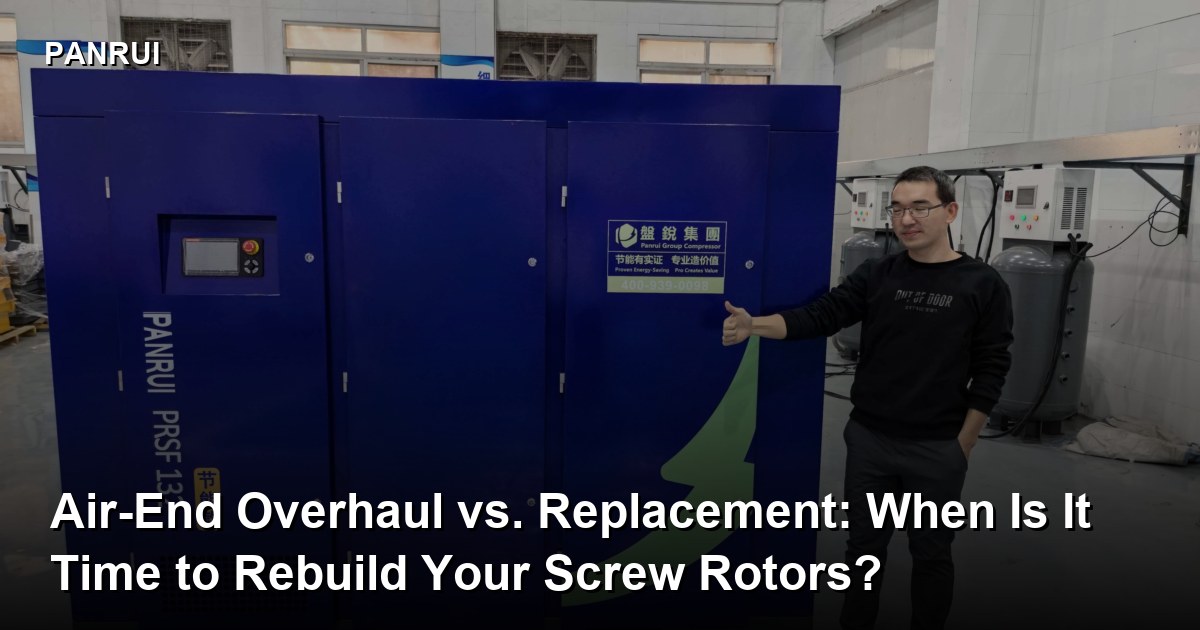
Air-End Overhaul vs. Replacement: When Is It Time to Rebuild Your Screw Rotors?
A 10,000-hour screw airend that starts knocking is a management decision, not a maintenance task. Wait too long and a failed rotor can destroy the casing, turn a rebuild into a replacement, and leave a production line without air for weeks….
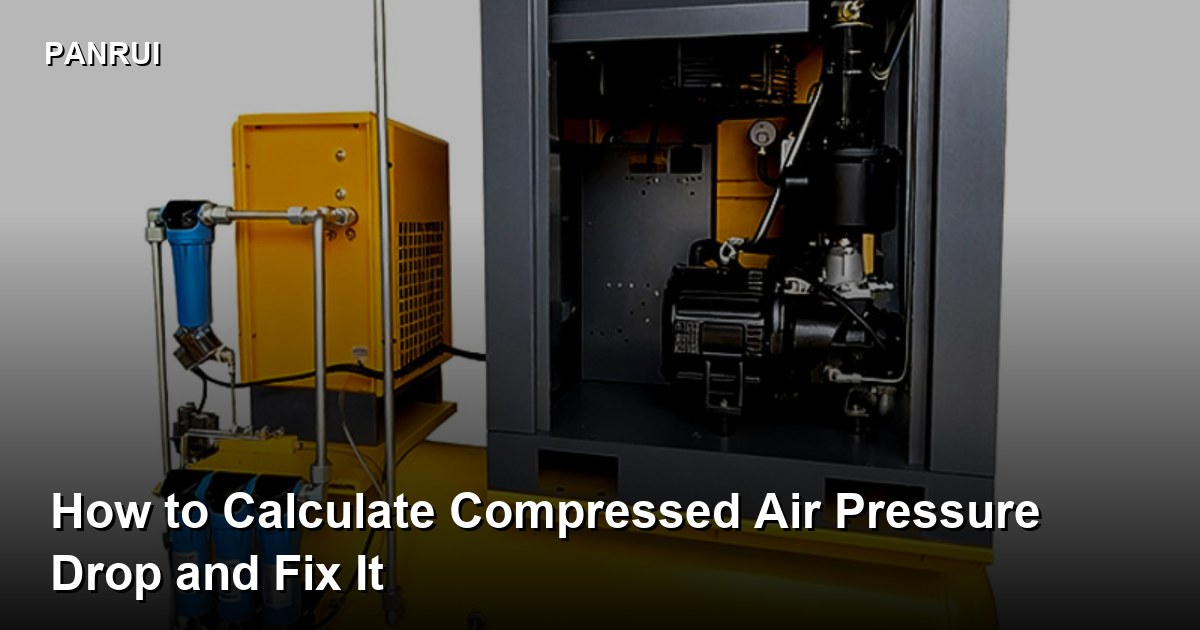
How to Calculate Compressed Air Pressure Drop and Fix It
A plant that needs 6.5 bar at the tool but keeps the compressor discharge at 8 bar is paying for pressure nobody uses. In a compressed air pressure drop calculation, every extra 1 bar (0.1 MPa) of system pressure adds roughly…